Beef & Daikon Radish Stew
萝卜炖牛腩
English: Beef & Daikon Radish Stew
Chinese: 萝卜炖牛腩
Pinyin: luobo dun niunan
Literal: Braised brisket with radish
For much of China’s history, beef was a rare indulgence. Cows were not destined for the table but for the fields - essential partners in ploughing and harvest. A wealthy farmer might own an ox or two, but they were treasured as working animals, not food. At various times throughout China’s history, the slaughter of cattle was forbidden outright, their muscle needed more for the soil than for the stomach.
Today, beef has moved from obscurity to the third most-eaten meat in China, behind pork and chicken. The growing middle class now imports wagyu from Japan, steaks from Australia and the US, and briskets from across the world.
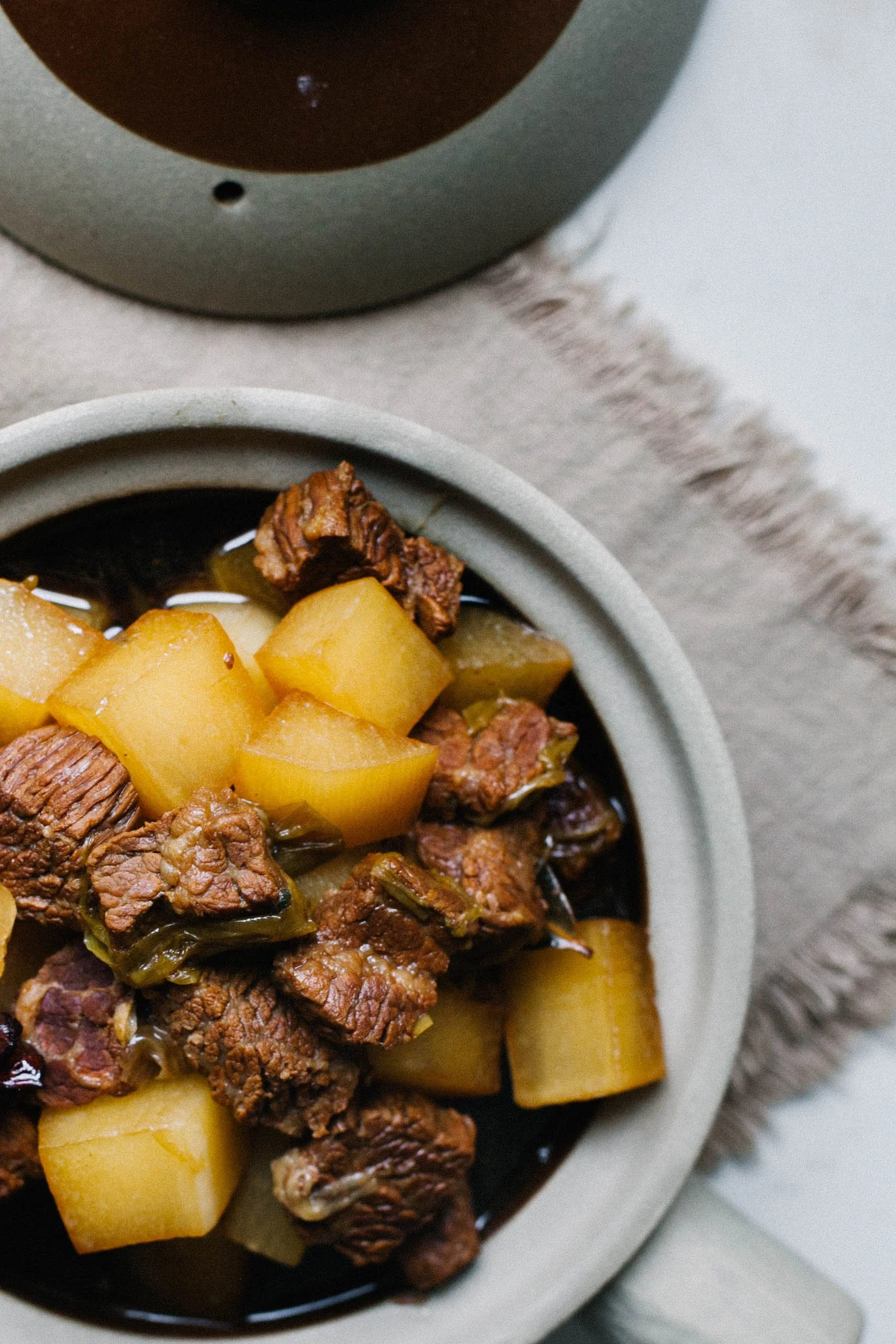
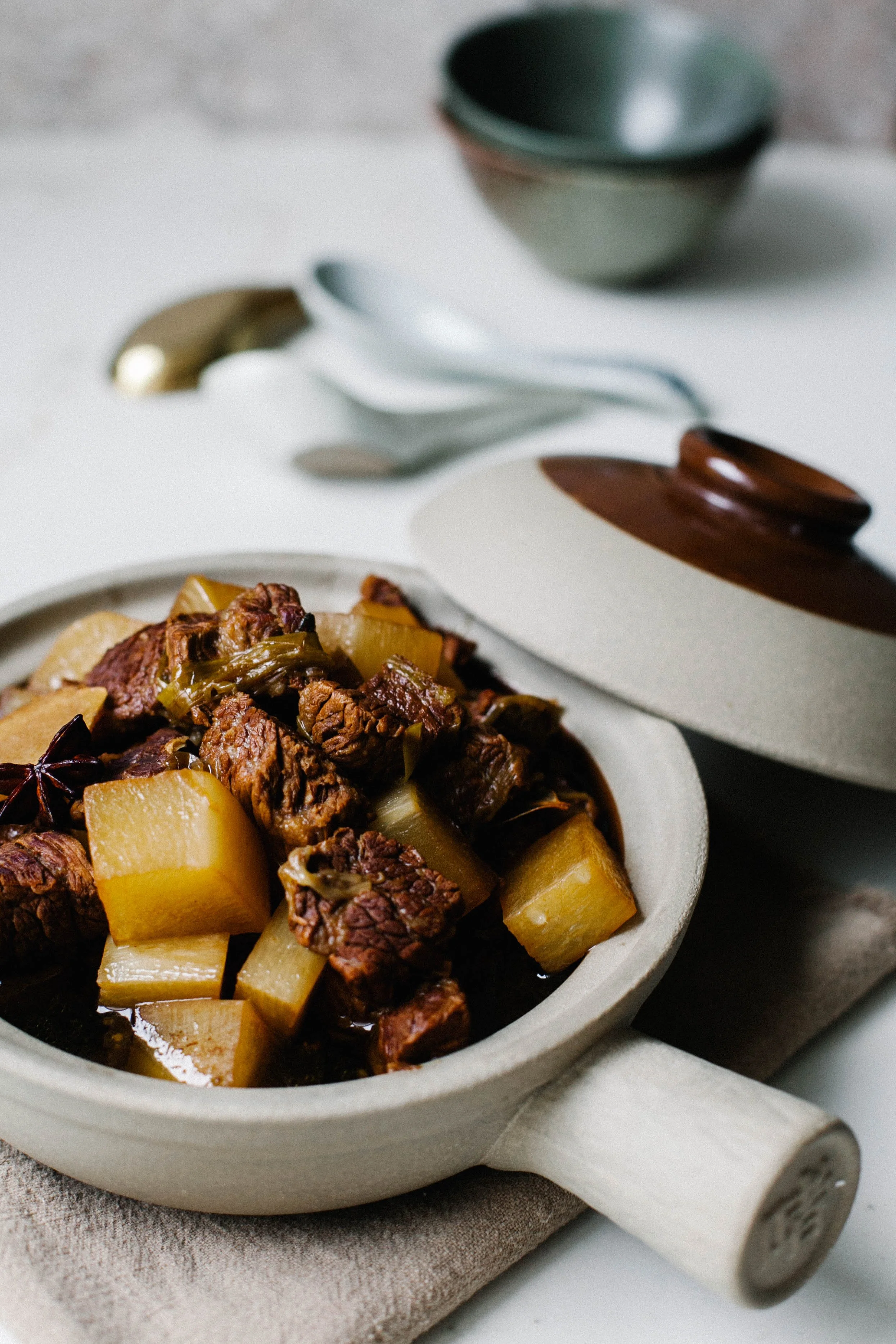
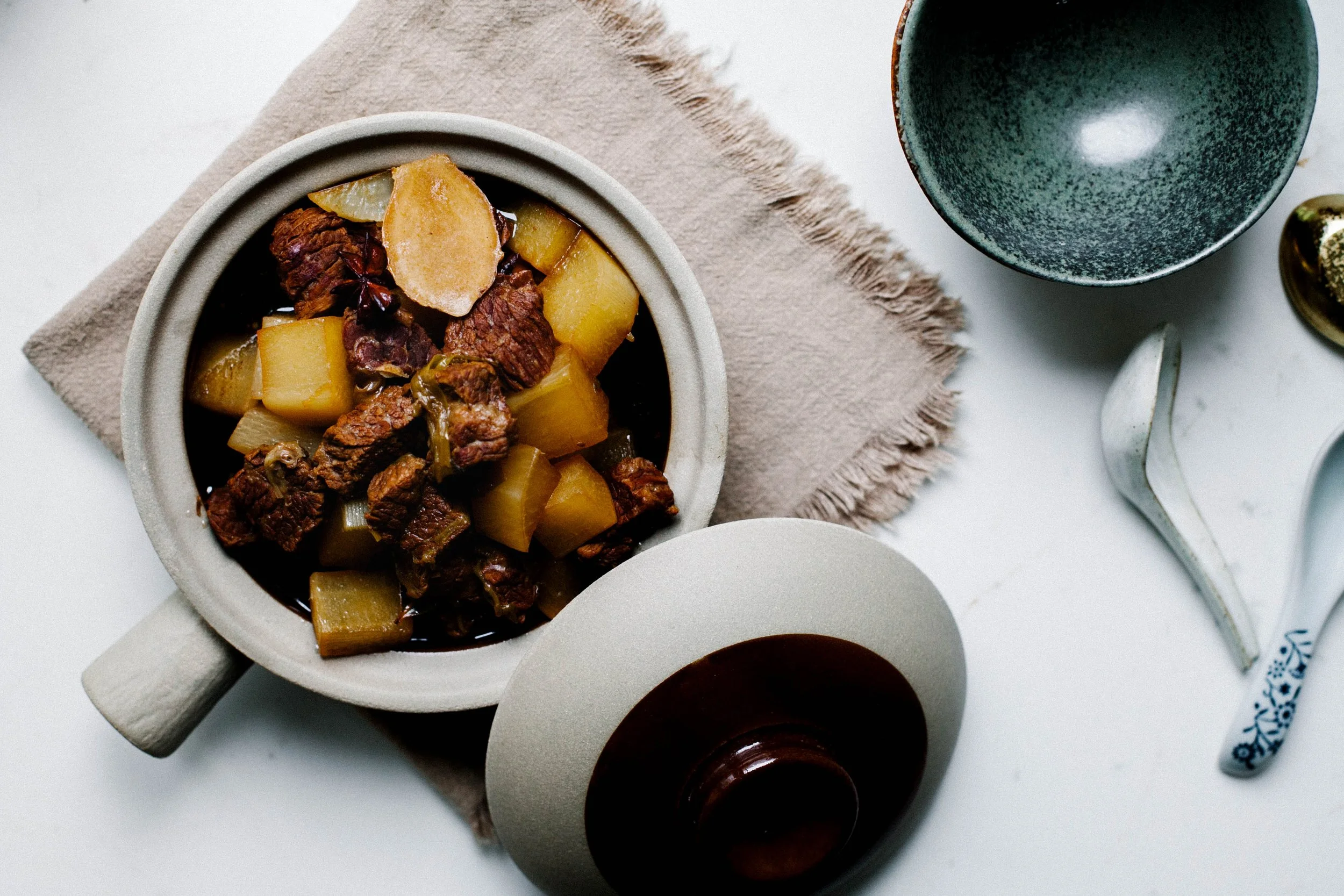
This stew is a winter mainstay of the north, common on restaurant menus and home tables. As you move from province to province, the dish might change ever so slightly - a little extra anise in Hebei, a hint more chilli in Ningxia, more fragrant spice in Gansu. Cantonese cooking has its own version too (柱侯牛腩), but it’s a distant cousin. The southern version is richer, darker, heavy with Chu Hou paste (柱侯酱); the northern one is lighter, more soup than stew, tasting clean and pure.
In Tender, Nigel Slater wrote of radishes “Ignore any suggestions of cooking them; the writer is clearly deluded” and this sentiment is shared by many Western cooks. I hate to go against Nigel, but he is wrong. Even the watery, crisp daikon transforms here into the ideal companion for beef: softer than a potato but holding its shape, soaking up the broth yet never becoming too rich, staying juicy and never dense like swede. It’s a gentle vegetable when cooked, earthy but refreshing.
Like all the best stews, this one improves with rest. A night or two in the fridge deepens its flavour, the broth becoming rounder, smoother, and more deeply satisfying.
Serves 3-4
Ingredients
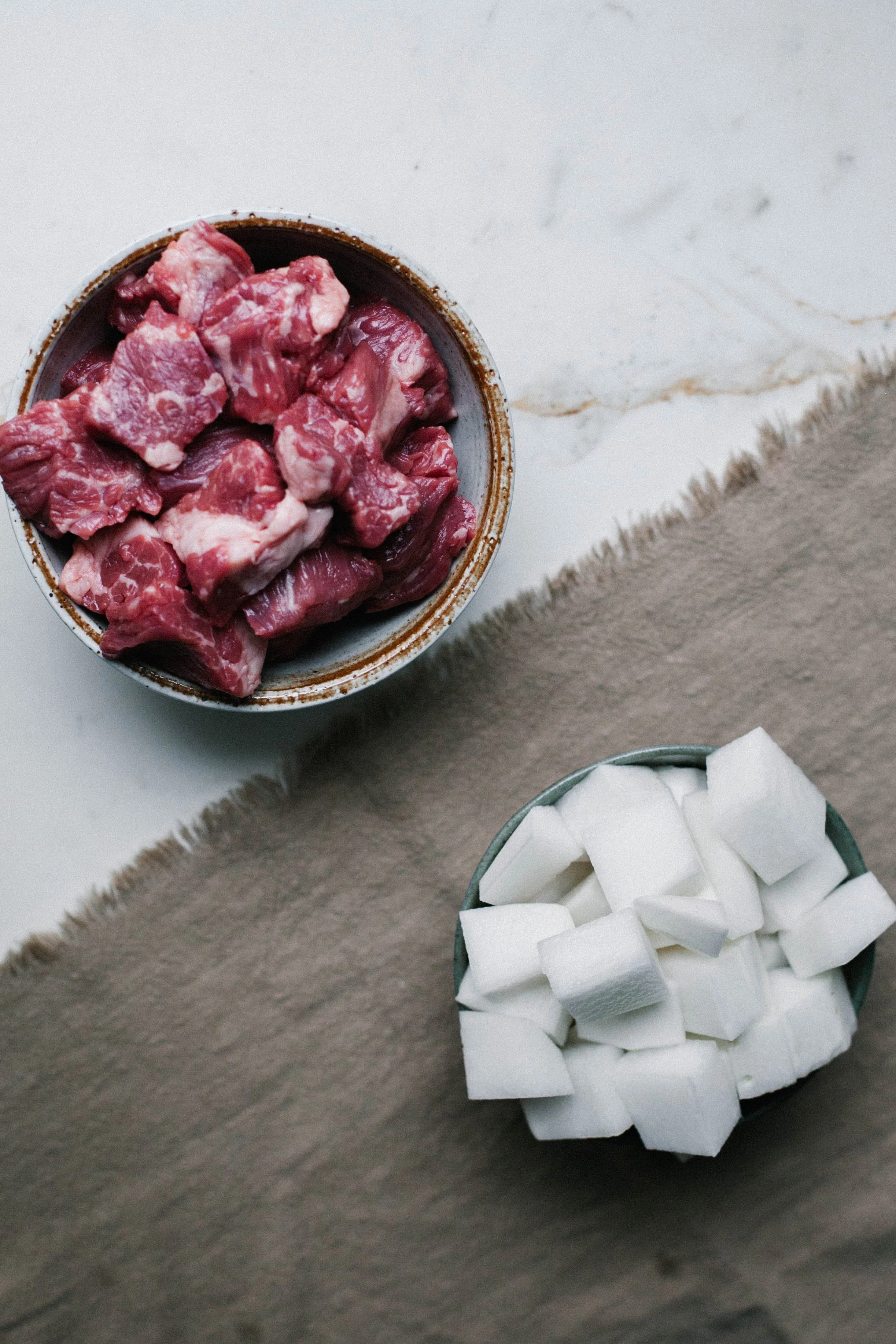
500g Beef - brisket or other stewing cut
500g Daikon radish
2 spring onions - cut into two-inch pieces
3 slices of ginger - skin on
3 star anise
1 bay leaf
2 dried chilli
6-7 pieces of rock sugar
1.5 tablespoons Shaoxing wine
1 tablespoon dark soy sauce
1 ½ tablespoons light soy sauce
700-750ml water
For garnish
1-2 chopped spring onion
Method
Cut the brisket into 3–4cm cubes. Place in a pan of cold water and bring to the boil. Skim off any scum that rises to the surface. Once no more appears, remove from the heat, drain, and rinse the beef. Set aside.
Heat 1 tablespoon of oil in a large pot over medium heat. Add the spring onion, ginger, star anise, bay leaf, and dried chillies. Fry for about 1 minute until fragrant.
Push the aromatics to one side of the pot so they cook gently. Add the rock sugar and a small pinch of salt to the clear side. Let the sugar melt without stirring — tilting the pan if needed. Stirring will cause the sugar to crystallise and lose its syrupy texture.
Once the sugar has melted into a light syrup, add the beef. Stir to coat well and fry for 2–3 minutes until lightly browned on all sides.
Pour in the Shaoxing wine and let it sizzle and reduce for 1 minute. Add both soy sauces and stir, then pour in the water. Bring to a boil, then reduce the heat and simmer gently for 45 minutes.
Peel the daikon and cut into chunks about the same size as the beef. Add to the pot and cook for 20–30 minutes, until the radish is tender and the beef soft but still holding its shape. At this point, remove the chilli as it can sometimes become too overpowering.
Taste and adjust seasoning. Serve hot, garnished with chopped spring onion.