Beijing Pot-Braised Pork
坛子肉
English: Beijing Pot-Braised Pork
Chinese: 坛子肉
Pinyin: tan zi rou
Literal: Pot Meat
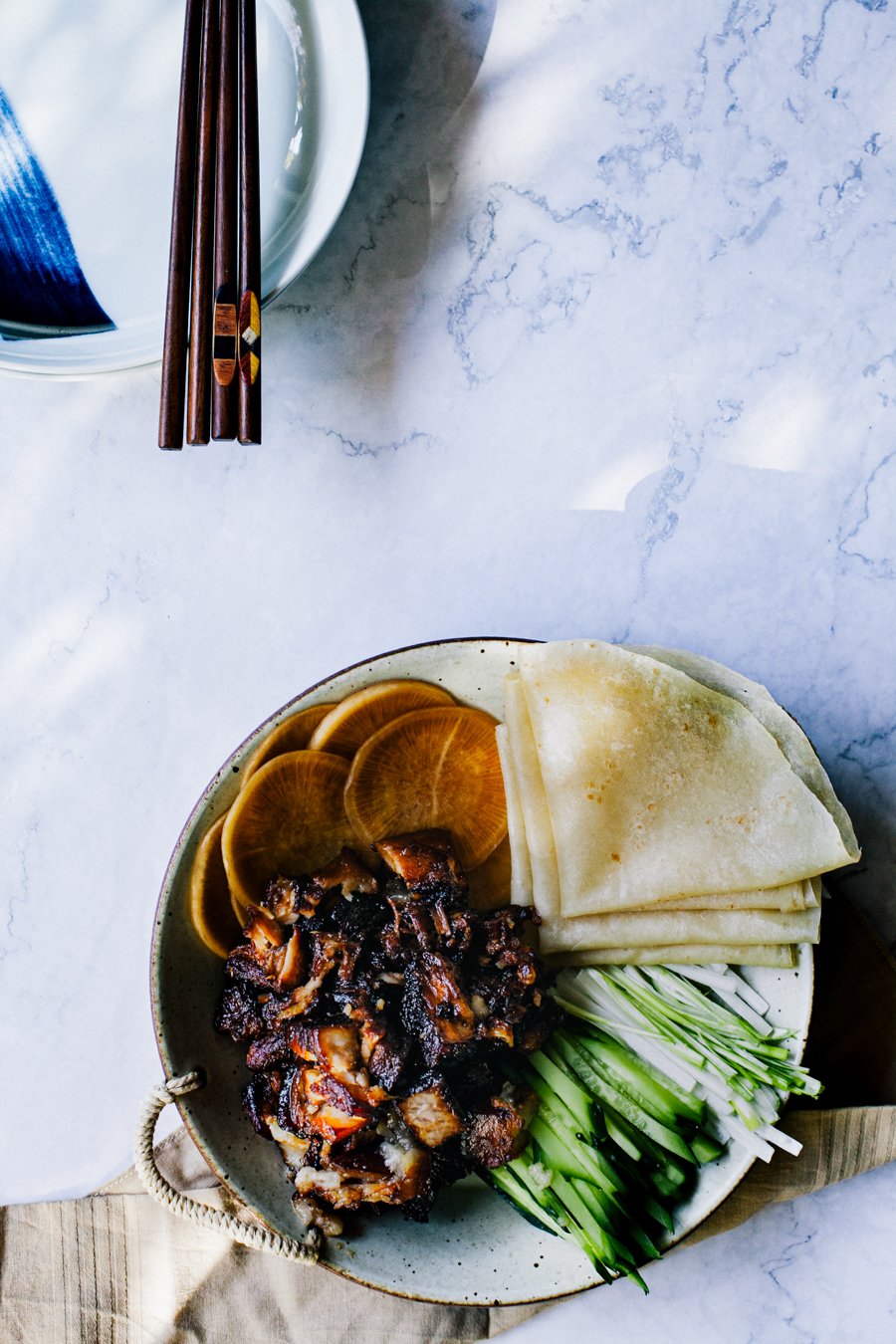
Hongshao rou might be the broad family of Chinese braised pork, with each region or province having their own variation, but tanzi rou is Beijing’s dish, cooked with one single purpose: to be wrapped inside a chun bing. Indeed, this is a dish that only really appears on the table with other chun bing dishes.
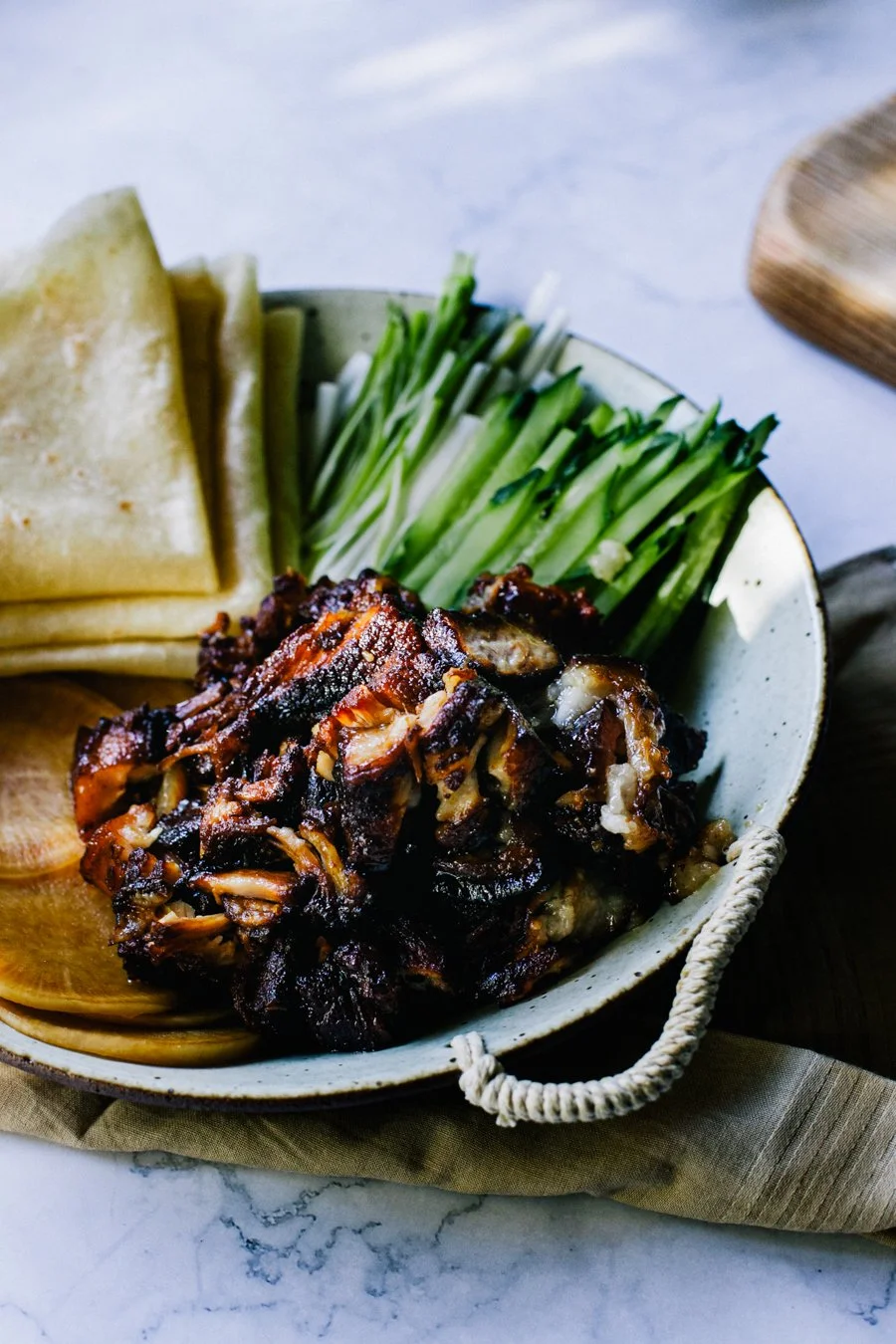
Both hongshao rou and tanzi rou rely on the classic braising ingredients of soy sauce, sugar, Shaoxing wine and aromatics to create glossy, mahogany-coloured pork with a deep savoury sweetness. But where hongshao rou aims for neat cubes that hold their shape, tanzi rou is taken further, slowly cooked until the meat collapses completely and can be gently pulled apart into rich, succulent shreds. The texture is the defining feature: melting, sticky with collagen, and intensely savoury.
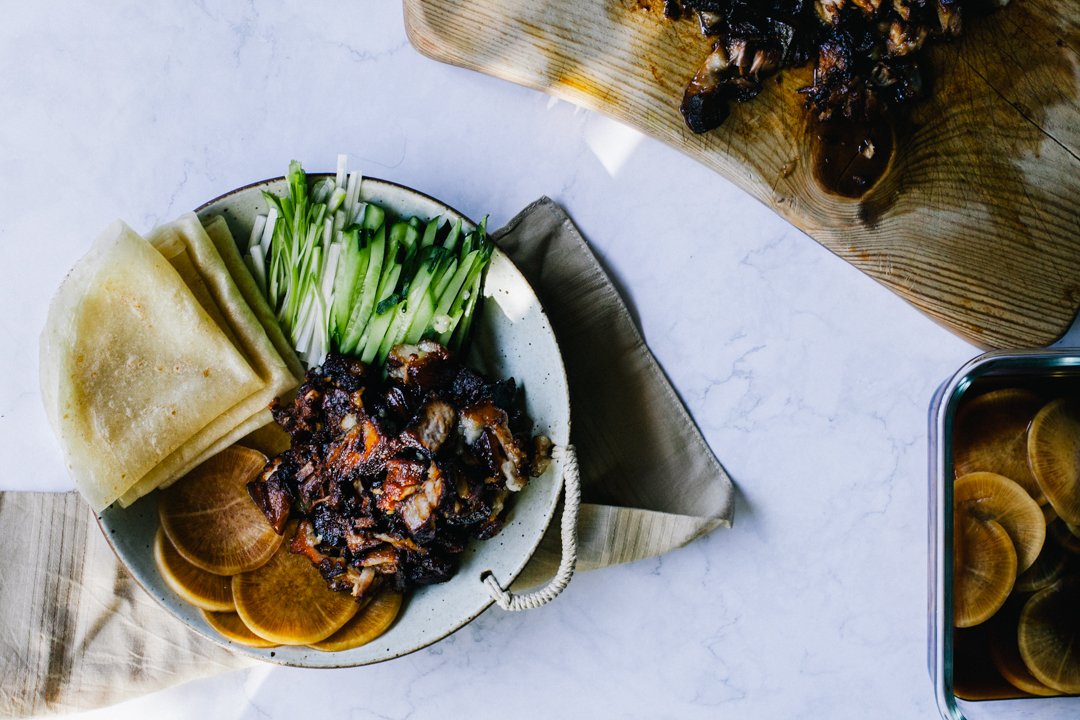
The “pot” in the name refers to the traditional sealed ceramic jar in which the pork is slowly braised. Cooking in a closed vessel allows the fat to render gradually and the layers of lean and fat to soften into one another, producing meat that is too rich by itself, but perfect for wrapping into a pancake with veg. It’s traditional to serve this with a few slithers of Soy-Pickled Radish (page xxx), a sweet and sharp pickle that cuts through the fatty braise.
Serves 4
Ingredients
700-900g pork belly
4 slices of ginger - no need to peel
4 scallions - white parts only - cut into 2-inch pieces
2 star anise
1 small piece cinnamon
2 bay leaves
2 dried chillies
4 ½ tbsp light soy sauce
1 ½ tbsp dark soy sauce
4 ½ tbsp Shaoxing wine
25g rock sugar
½ tsp salt
Water, enough to cover meat
Method
Cut the pork belly into large 5cm (2-inch) cubes. Place the cubes in a pot of cold water. Bring to a boil over high heat and let it blanch for 3-5 minutes, skimming off any scum that rises to the surface.
Drain the pork and rinse under warm water. Pat the cubes very dry with paper towels. You need it dry for a proper sear.
Heat 1 tbsp of oil in a Dutch oven or heavy-bottomed saucepan, over a medium-high heat. Add the dried pork cubes in a single layer (work in batches if needed). Sear until golden brown on two sides only. We only need colour here, not to cook through. Note, the fat will pot and spit violently here so be careful. Remove and set aside.
In the same pot with the remaining oil and fat, lower the heat to low. Add the rock sugar. Let it melt slowly, stirring until it becomes a light amber liquid. Do not let it smoke or turn dark brown.
Immediately add the seared pork back into the pot. Toss quickly to coat each piece evenly with the sugar, which will give a beautiful amber colour and base flavour.
Add the ginger and scallions. Stir for 30 seconds until fragrant.
Pour in the Shaoxing wine and deglaze the bottom of the pan using a spatula. Let it bubble and reduce by half for about 1 minute.
Add the soy sauces, star anise, cinnamon, bay leaves, and dried chilies. Stir to combine.
Pour in enough hot water to just barely cover the pork. The liquid level should be about ¾ up the side of the meat, not completely submerging it.
Bring to a boil, then immediately reduce the heat to the lowest possible simmer. Cover tightly with a lid. If your lid is loose, place a sheet of parchment paper over the pot first, then the lid, to seal in moisture.
Let it braise gently for 2 to 2 ½ hours. Check occasionally to ensure it's at a bare simmer, not boiling, and that the liquid isn't reducing too quickly (add a little hot water if needed).
The pork is done when it is incredibly tender. A chopstick should pierce it with almost no resistance, and the fat should look translucent and jiggly.
Once the pork is tender, carefully remove the pork cubes to a serving dish using a slotted spoon. They will be fragile.
Strain the braising liquid, discarding the solids and then bring the liquid back to a rapid boil, reducing by about one-third until it’s slightly thickened and concentrated in flavour. Taste and adjust with a pinch of salt if needed.
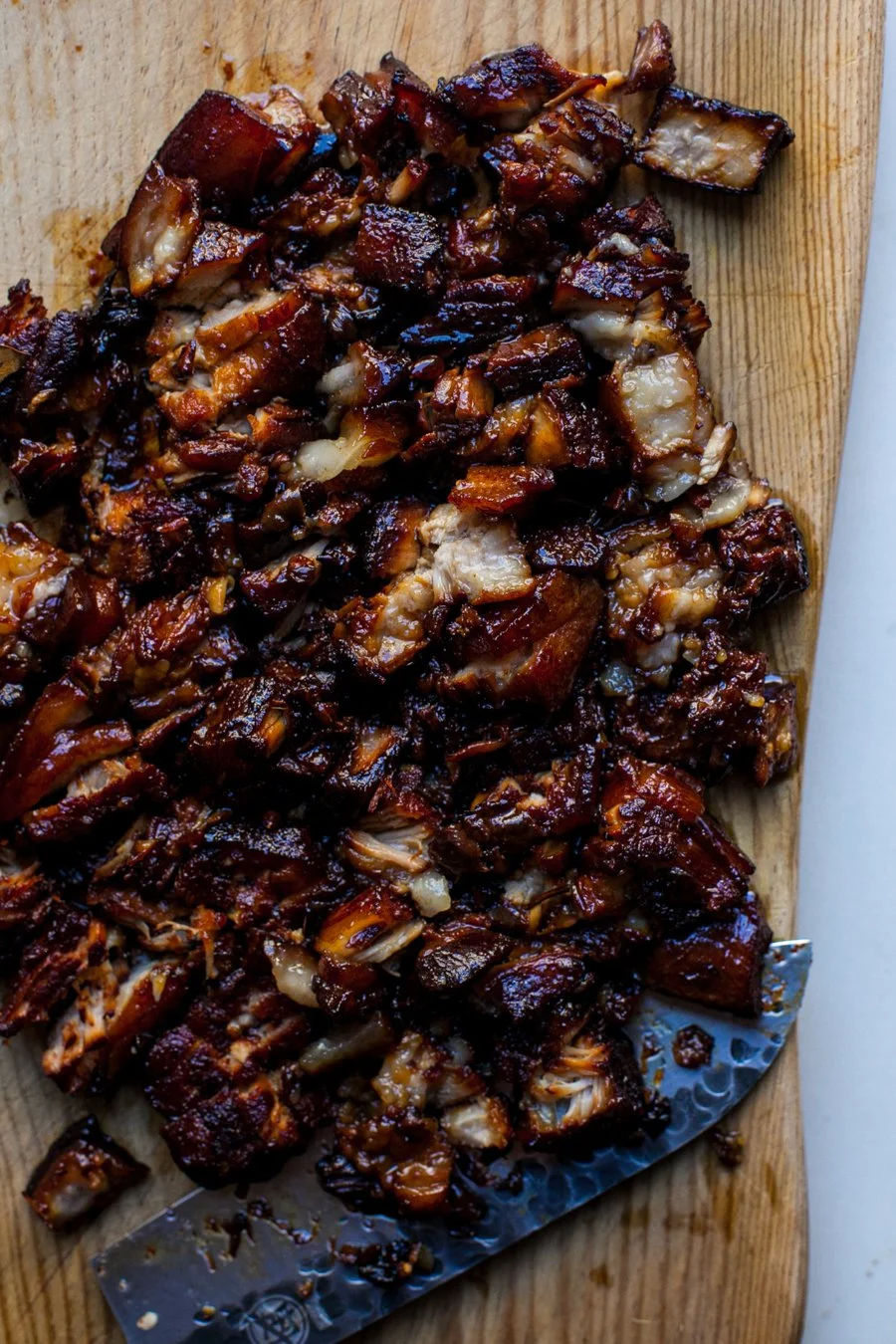
Meanwhile, roughly chop the pork and add back to the sauce for a few minutes to heat up and get nice and juicy from the sauce. Use a slotted spoon and serve with a drizzle of sauce over the top.
Notes:
Patience is Key: The magic happens with low heat and time. A rapid boil will toughen the meat.
Resting: The flavour improves if you let it rest in its sauce for 15-20 minutes before serving, or even make it a day ahead and gently reheat.