Douzhi
豆汁
English: Fermented Mung Bean Juice (Douzhi)
Chinese: 豆汁
Pinyin: douzhi
Literal: Bean juice
Not one for the faint-hearted, douzhi is a fermented mung bean drink, famously funky and sharply tangy. Whenever people discover that I love Northern Chinese food, they often ask what I think of douzhi. My honest answer is that I don’t love it. This is a step too far for me - after a few sips, I’ve had my fill. However, this recipe brings down the funk levels a bit by keeping the fermentation to a short 2-3 days.
The drink began life as a by-product of mung bean starch noodle production. When mung beans are processed, the starch is separated from the liquid: the starch is worked into a dough and made into noodles, while the leftover liquid is left to ferment. Over time, this humble by-product became a drink in its own right - and one of Beijing’s most distinctive flavours.
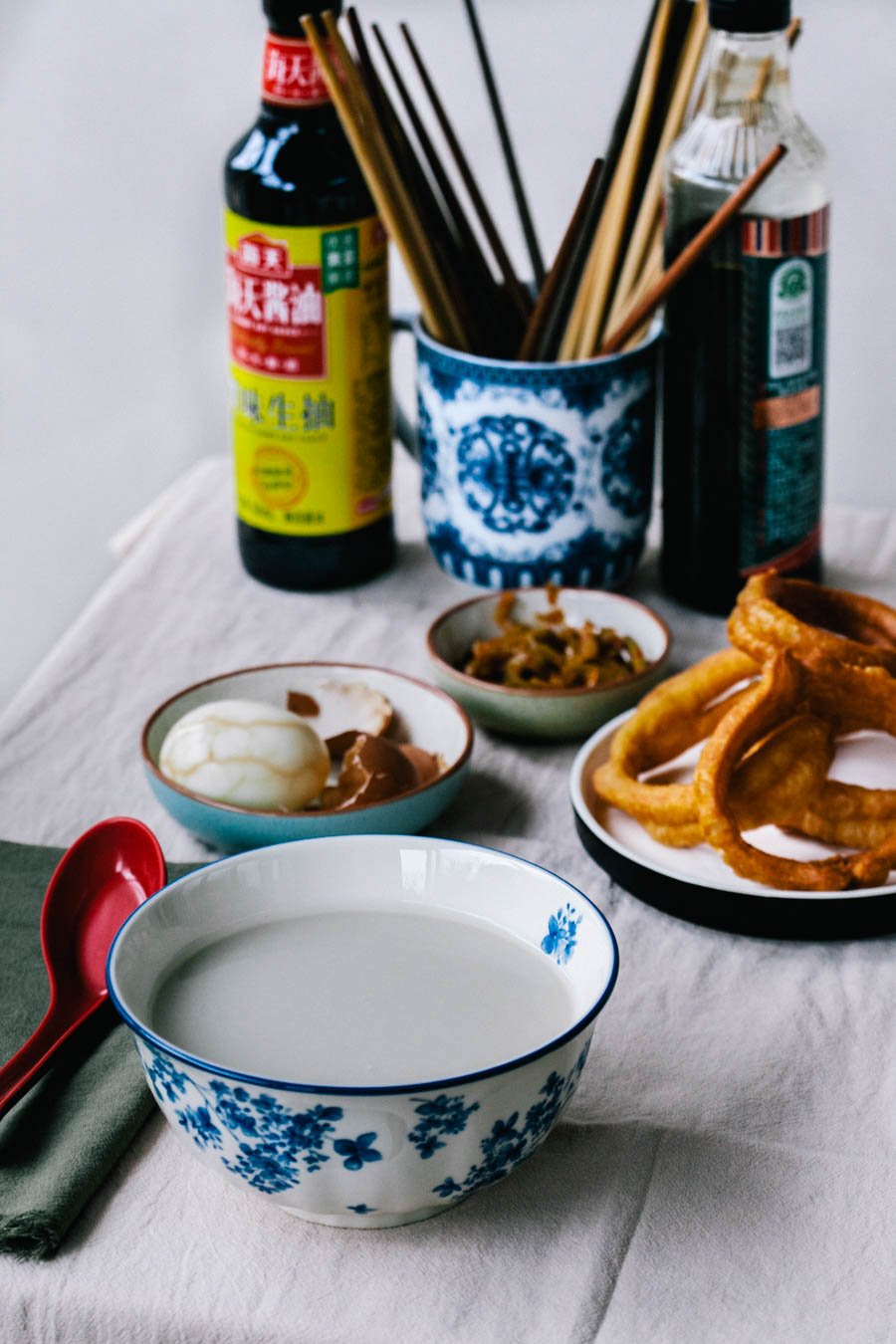
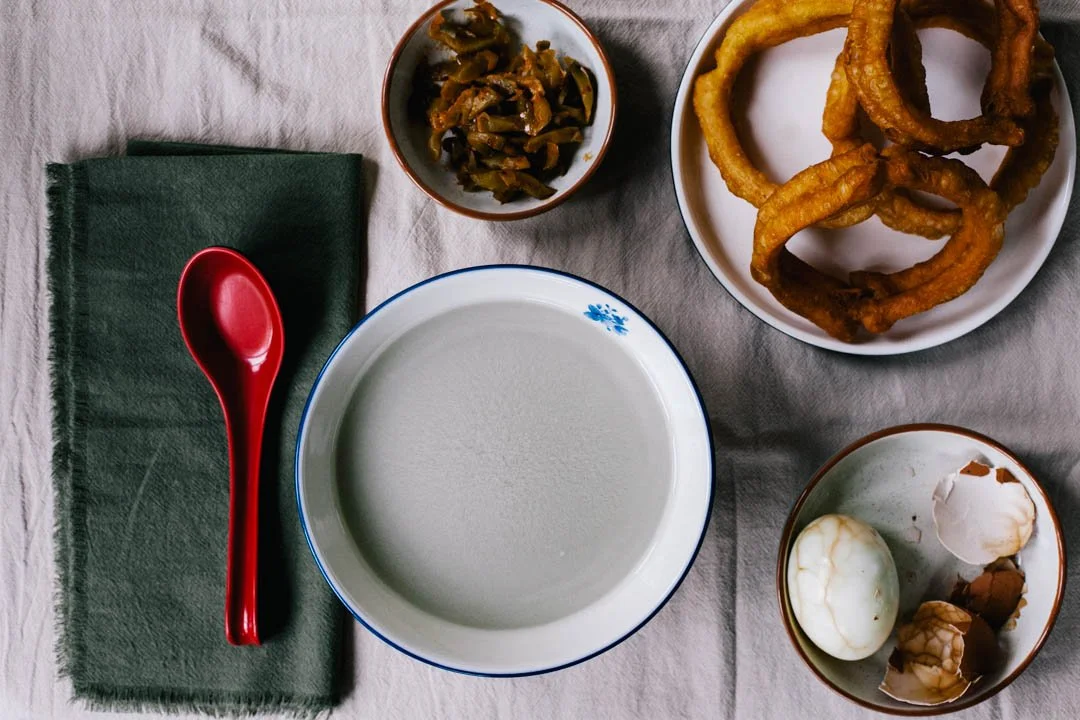
In traditional breakfast shops, douzhi is served with crispy fried dough rings (焦圈 | jiaoquan) and sharp pickled vegetables. The fritters and pickles are placed in the bowl first, then the hot, sour liquid is poured over. The dough rings soften slightly as they soak, and each spoonful brings something different - a crunch of salty pickle, a bite of chewy fried dough, a slurp of bracing broth.
It’s the kind of breakfast that clears the head and shocks you awake, as locals like to say.
I’ve included the recipe for the Fried Dough Rings too, as you really can’t have one without the other.
Ingredients
For the Douzhi
250g dried mung beans
2 - 2 ½ litres water (for soaking and cooking)
¼ tsp salt
For the Fried Dough Rings (jiaoquan):
3250g all-purpose flour
100ml warm water
1 tsp salt
¾ tsp baking soda
1 tsp Alum (明矾) (optional)
35ml oil
1 - 1 ½ litres of oil (for frying)
For Serving (per serving)
1-2 tbsp Zha cai
1 tsp chopped scallions
2-3 fried dough rings
FOR THE FERMENTATION
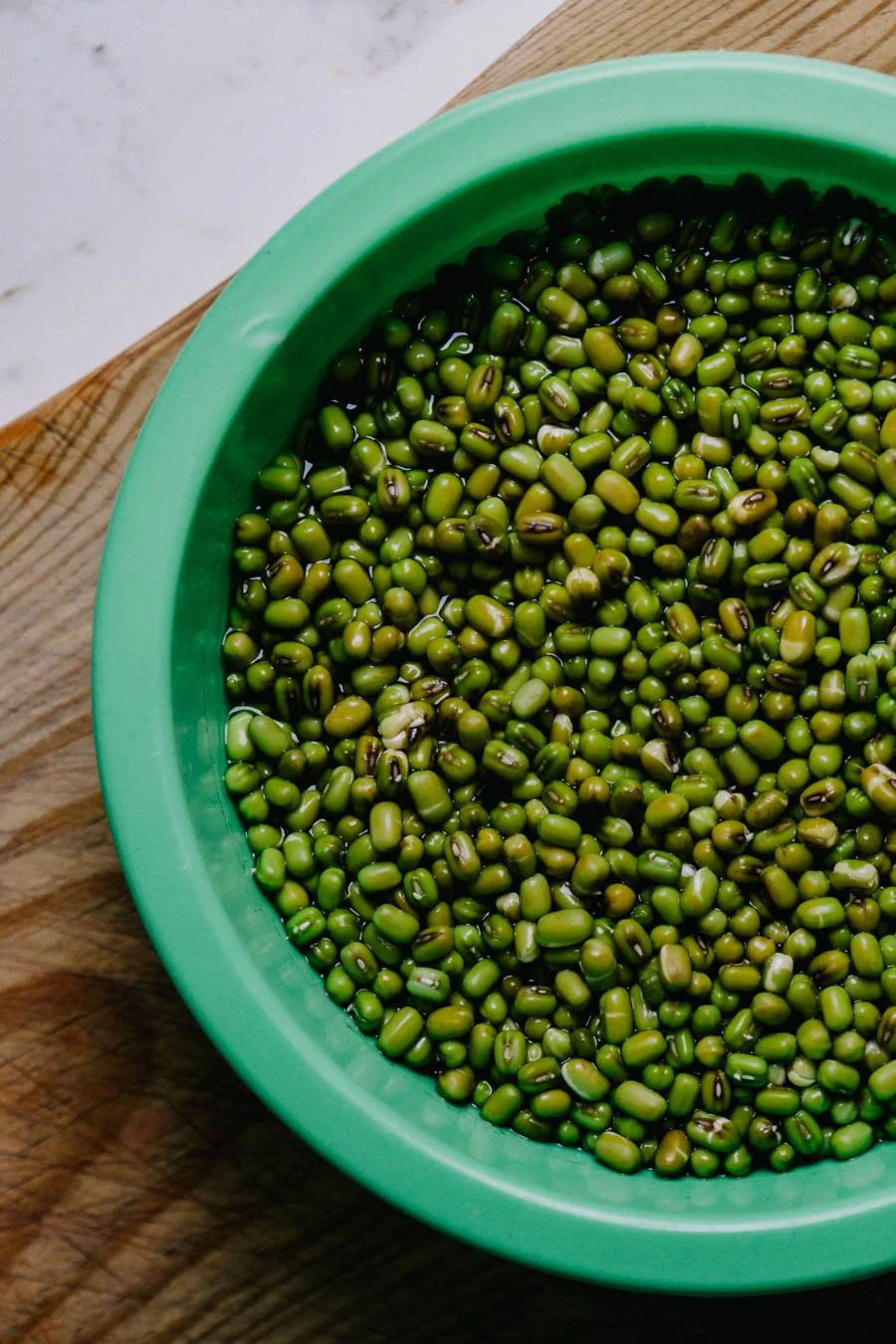
Rinse the mung beans under cold water and the place them in a large bowl and cover with around 750ml of water. Let them soak for 8-12 hour, or overnight.
Drain the soaked means and add to a large pot. Add another 1 ½ litres of water and bring to the boil. Reduce the heat and simmer for 20-25 minutes, stirring occasionally until the beans are very soft and starting to break apart. Skim off any foam that rises to the surface and discard.
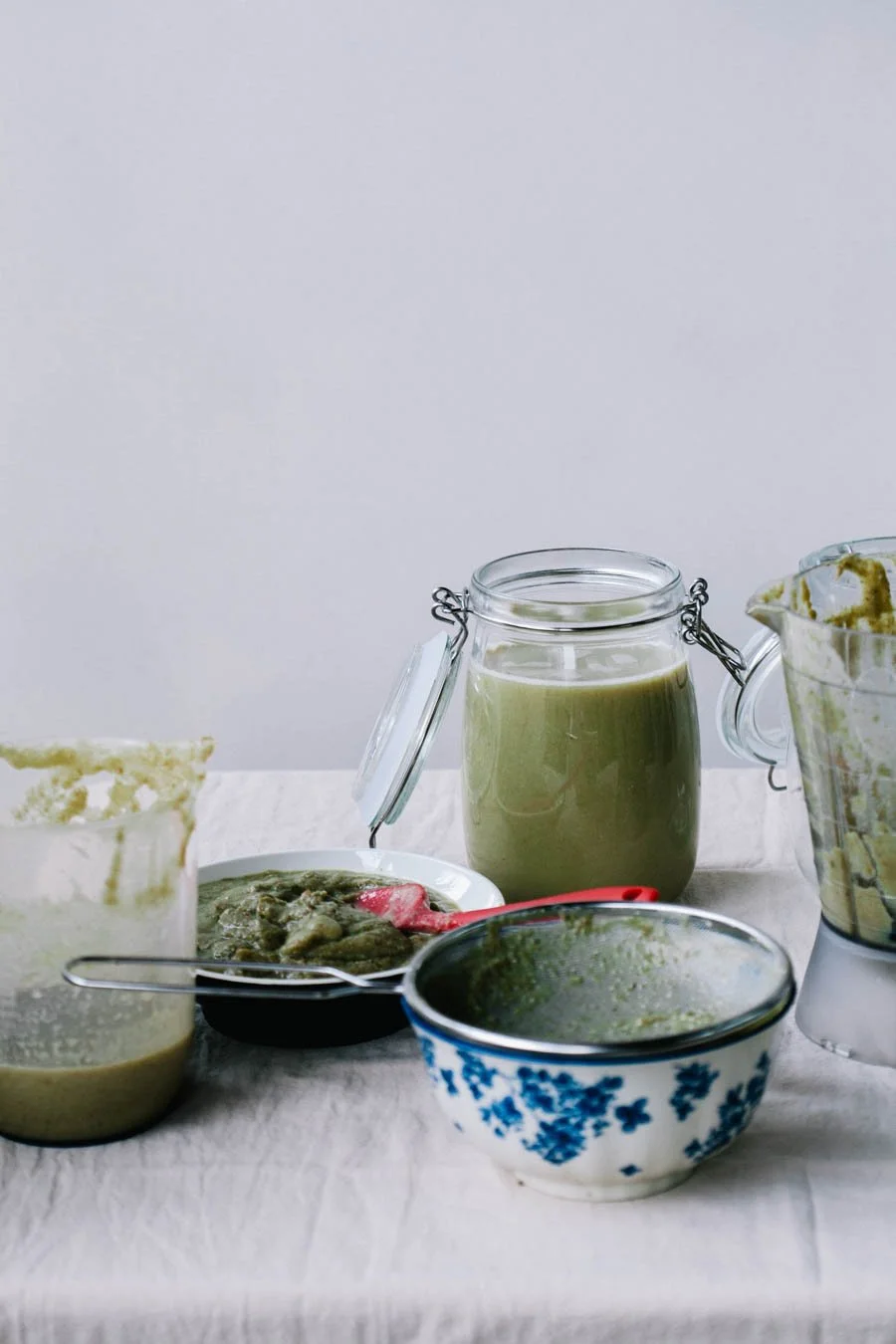
Let the beans cool slightly and then transfer them and the cooking liquid to a blender. Blend until you have a smooth slurry, and then strain through a cheesecloth or fine mesh strainer into a large bowl, pressing on the pulp to extract as much liquid as possible. It should be pourable, not sludgy, which can sometimes happen if too much liquid evaporates during the simmer. If so, just add a bit more hot water into the slurry. This liquid is the base for your Douzhi.
Pour the strained liquid into sterilised glass jars, leaving an inch or two of space at the top for fermentation gases. Cover loosely with cheesecloth or kitchen towels, to allow airflow but keeping dust out. Place in a warm, dark spot (around 25–30°C / 77–86°F) to ferment for 2–3 days .
You know it’s heading in the right direction when small bubbles form (usually day 2), the liquid starts to smell sour and funky, and it turns a greyish-green colour (day 3).
TO SERVE
6. Strain the liquid through a cheesecloth or sieve again, if it’s looking too thick. I usually strain half, just to thin it out a little bit. You can refrigerate here if you want to save it.
7. Pour the liquid into a large pot along with the salt and stir. Heat over a low-medium heat, stirring constantly to prevent lumps. Cook for 5–7 minutes until the mixture thickens slightly and turns glossy. Don't let it boil - boiling can kill the probiotics and change the flavour.
8. Let the Douzhi cool to warm or room temperature (it's traditionally served lukewarm). Ladle into small bowls and serve with pickled vegetables, and crispy fried dough rings for dipping.
Note
Older dried beans may not ferment well, so use high-quality and fresh dried mung beans.
If kitchen is cold, place jars near a warm spot. Above 35°C (95°F) risks spoilage.
FOR THE FRIED RING DOUGH
Dissolve the salt, baking soda and alum (if using) in the warm water until completely dissolved.
Add the flour to a large mixing bowl, pour the water into the flour gradually, mixing as you pour. Add the oil and bring the dough together.
Turn out onto a lightly floured surface and knead for 8-10 minutes until smooth and elastic, or use a stand mixer with a dough hook for 5-7 minutes.
Cover the dough with a damp cloth of plastic wrap, leaving it rest for 2-3 hours at room temperature.
Roll the dough into a large thin rectangular sheet, about 0.5-0.6 cm thick. Cut the sheet into 5cm wide strips. Cut these strips into small rectangles, about 2cm wide
Take two pieces and stack them together.
With a sharp knife, cut the middle but leave about 0.5cm uncut at both ends so you have a rough circle of dough.
Gently stretch the hole slightly so you have a circle of dough, like a bracelet.
FOR FRYING
9. Heat the oil in a wok or deep pan to around 180°C (350°F). Slowly lower 2-3 rings into the oil, making sure they don’t touch.
Use a pair of chopsticks to gently expand the hole of each ring, shaping into a neat perfect circle if you can.
Fry until the underside is golden and then flip. Continue frying until both sides are a deep “date-red” as they say.
Remove and drain on paper towels. They’re best eaten when still hot.
Note
Alum is traditional in the dough for these fritter, but not easy to find, so feel free to omit.