Purple Laver & Egg Drop Soup
紫菜蛋花汤
English: Purple Laver & Egg Drop Soup
Chinese: 紫菜蛋花汤
Pinyin: zicai danhua tang
Literal: Laver seaweed and egg flower/egg drop soup
We are often promised 15-minute meals that will transform our weeknight cooking, yet few rarely deliver, unless you’re the Flash in the kitchen. Chinese soups are often quick, and egg drop soups dependably so. This one can be on the table in under 10 minutes - a small comfort at the end of a long day when you simply have no energy for cooking.
Asian cuisines and Western cuisines differ on their concept of soups. There are few, if any, blitzed or blended soups that I can think of in Asian cooking, and from my experience, Asian palettes find this kind of soup too thick, cloying and creamy. Soups in China are served to be cleansing, to refresh the palette, to sip between bites of other dishes. A soup is essential. To serve a meal in China without a soup would be like serving a meal in the West with no drinks.
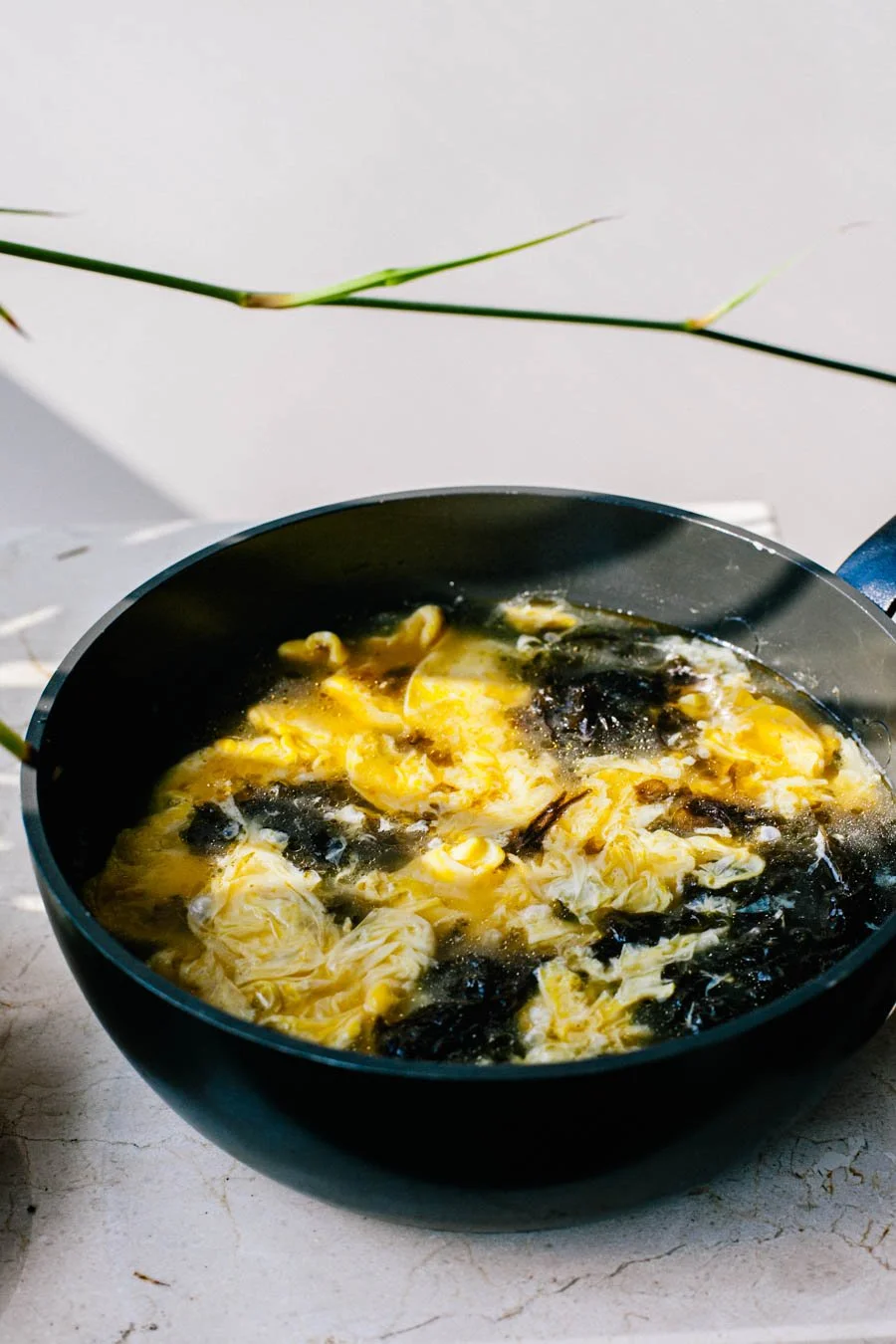
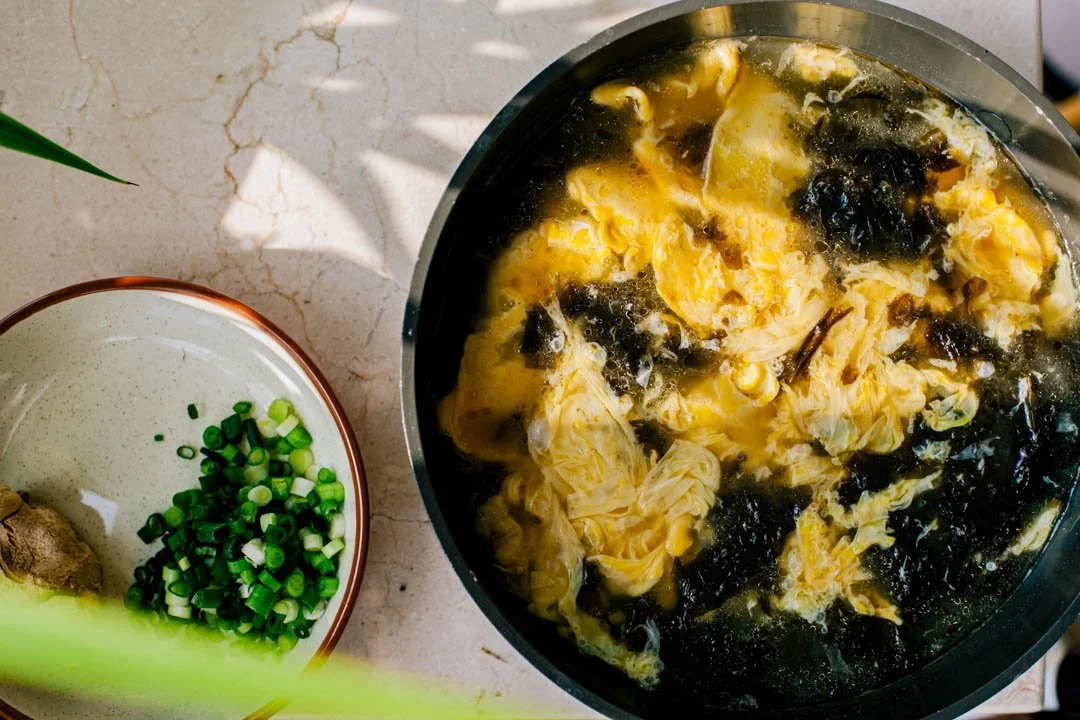
This seaweed and egg soup works both as a side soup, or as a main course. It’s a gentle bowl, but to say simple is inaccurate. The beauty of this soup lies in the small details: a good rich stock as the base will make it. And pouring the whisked eggs slowing into the broth as you swirl the soup will allow the egg to bloom into delicate flowers (danhua literally means ‘egg flowers’) (on a side note, I do wonder why these soups became known as ‘egg drop’ in English rather than ‘egg flower’ - I’m sure someone can tell me).
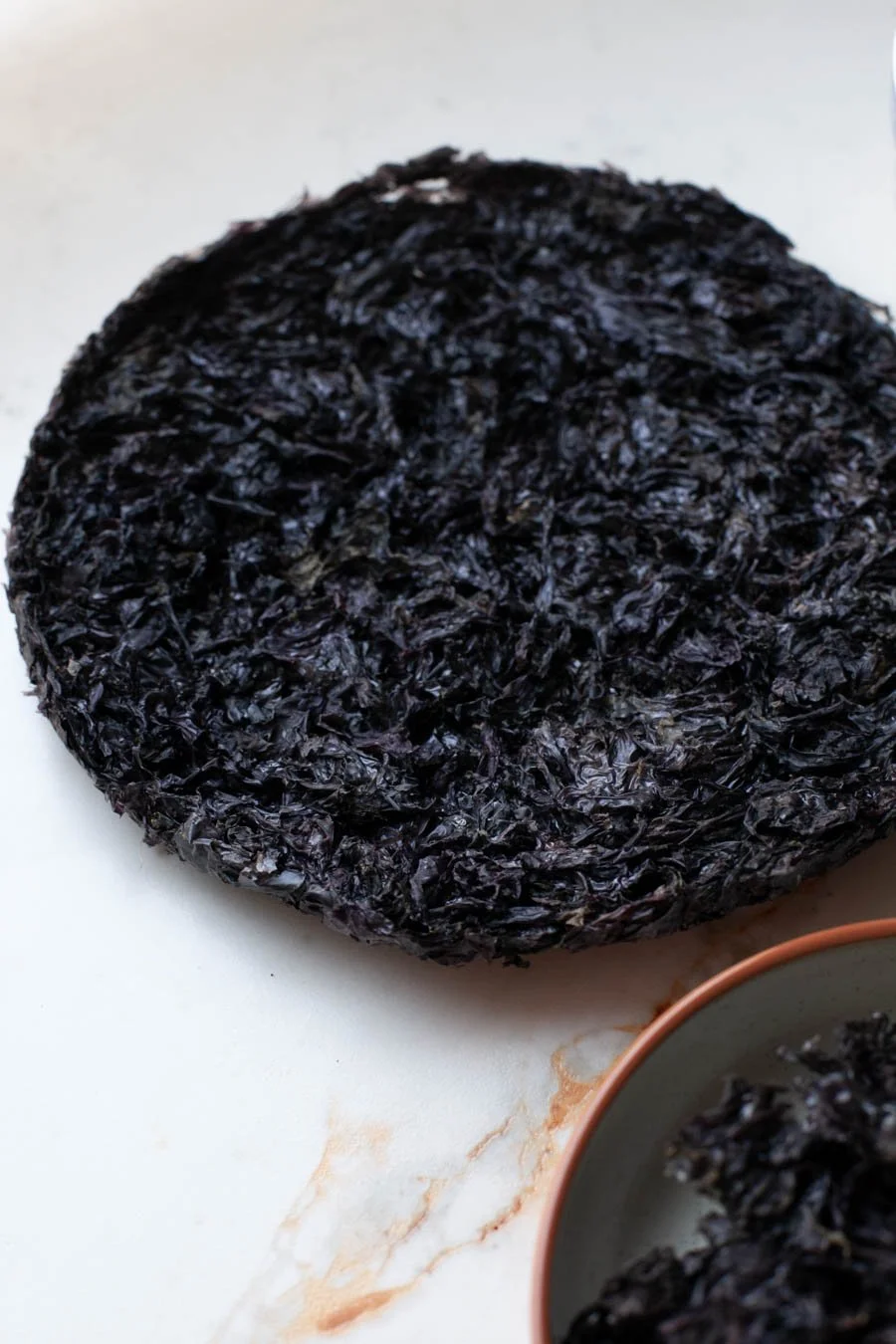
Dried purple laver (紫菜| zicai) usually comes in shaped rounds that shimmer in the light. You pull the seaweed apart into thin papery scrunches and the second it’s added to water, it softens into slippery, quivering pieces that add a taste of the sea. Purple laver is related to Japanese nori, so if you cannot find laver, you could replace, although it might be a touch saltier.
To finish, all that’s needed is a drizzle of soy sauce, a pinch of white pepper, a few drops of sesame oil and a scattering of scallions. If you wanted to make more of a meal from this, chunks of firm tofu would give you some protein, perhaps even some noodles too.
Serves 3-4
Ingredients
2 large eggs
1 large handful (5g) of dried purple laver seaweed (紫菜)
1 litre of chicken or vegetable stock
3-4 thin slices of ginger
1 tbsp of cornstarch + 2 tbsp cold water, mixed into a slurry
1 ½ tbsp of light soy sauce
Salt, to taste
A few pinches of white pepper
To Finish
1 tsp sesame oil
2 scallions, finely chopped
A few drops of Chinese black vinegar (optional)
Method
Crack the eggs into a bowl and beat them until just combined. Don't over-beat. Pour them into a jug with a pourable spout. This makes it easier to pour a thin stream into the soup.
Tear the seaweed into bite-sized pieces and set aside.
Add the stock and ginger slices to a wok or medium pot and bring to the boil. Once boiling reduce to a gentle simmer for 3-4 minutes, allowing the ginger to infuse, then discard the ginger.
Make your cornstarch slurry, give it a final stir and then pour into the simmering stock whilst stirring the stock constantly. The broth will turn from watery to slightly glossy in about 30 seconds. It should not be gloopy, just add a nice texture and will suspend the egg flowers better.
Make sure the soup is at a gentle simmer, not a boil. Slowly drizzle the beaten eggs into the soup, moving the jug clockwise into the stock as you pour. Do not stir the liquid. Let the egg set for 5-10 seconds. If you stir, you’ll end up with tiny specks of egg instead of large silky “flower” ribbons.
Turn off the heat and add the dried seaweed, the soy sauce, salt and white pepper.
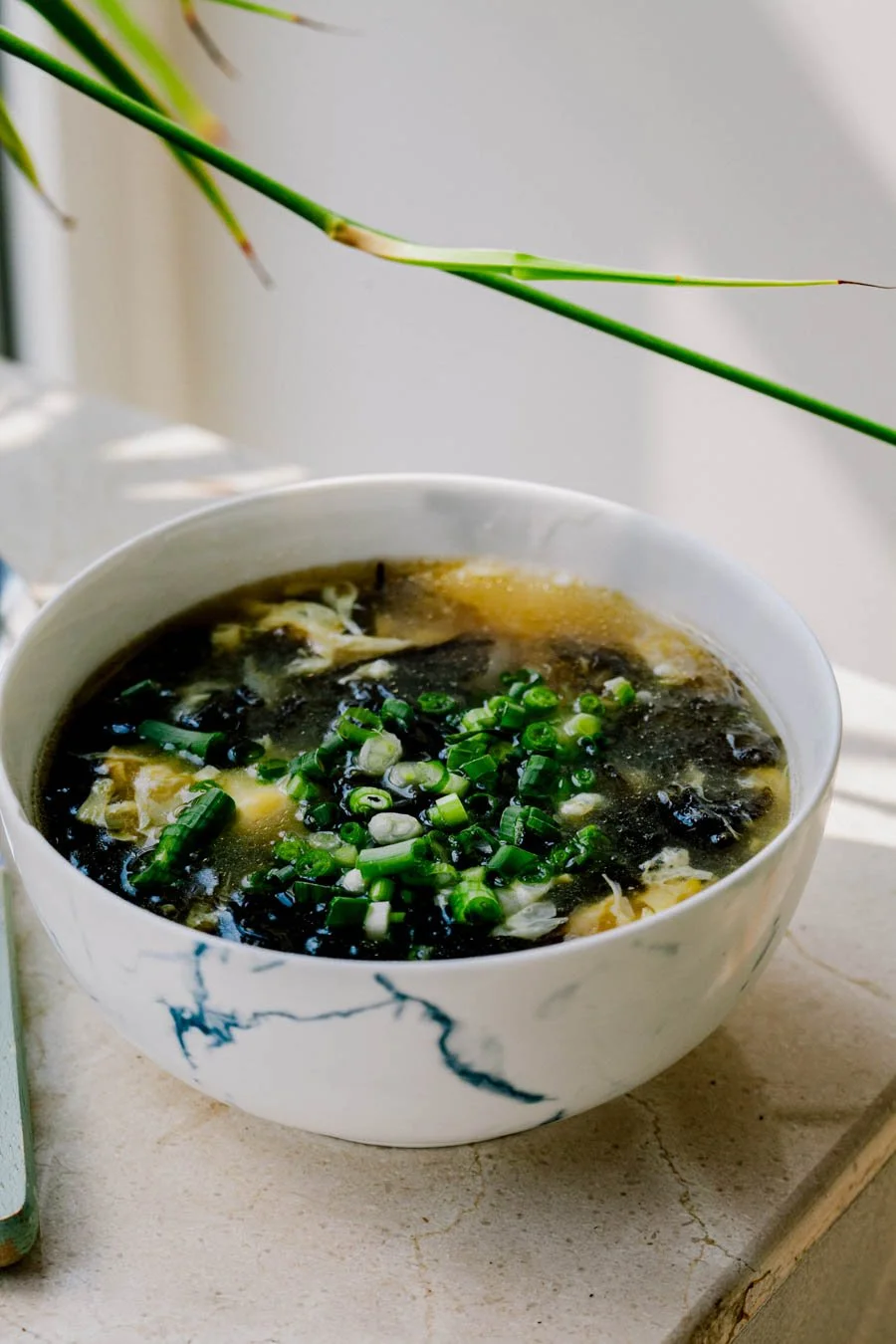
Give the soup one gently stir to mix everything and then ladle into bowls. Garnish with the sesame oil, scallions and vinegar if using.
Note:
Many home cooks make this soup with water and no stock at all. My wife actually prefers the clean flavour of a water-based soup.
For a more substantial meal, feel free to add some cubes of tofu, a diced tomato or even some minced pork.