Braised Napa Cabbage & Chestnuts
栗子扒白菜
English: Braised Napa Cabbage & Chestnuts
Chinese: 栗子扒白菜
Pinyin: lizhi ba baicai
Literal: Braised napa cabbage and chestnuts
Region: Beijing
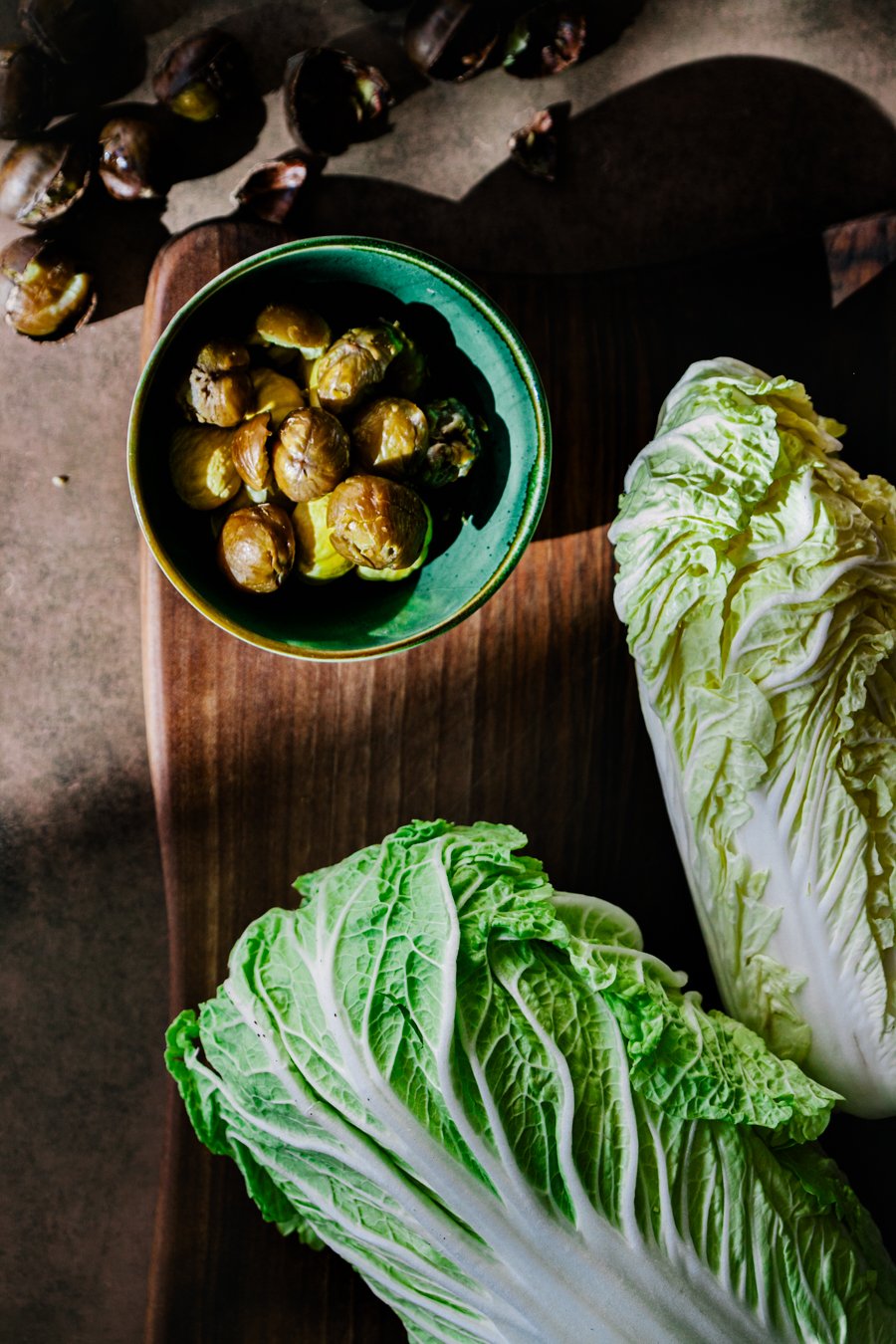
Chestnuts deserve to be known for more than being roasted over open fires at Christmas. In and around Beijing in the winter months, you do see street vendors selling chestnuts straight from the hot barrels, but you’ll also see chestnuts in the kitchen. They pair well with leafy brassicas, and in this case, napa cabbage, adding a nutty sweetness and a crumbly, chewy texture next to the slippery, soft leaves.
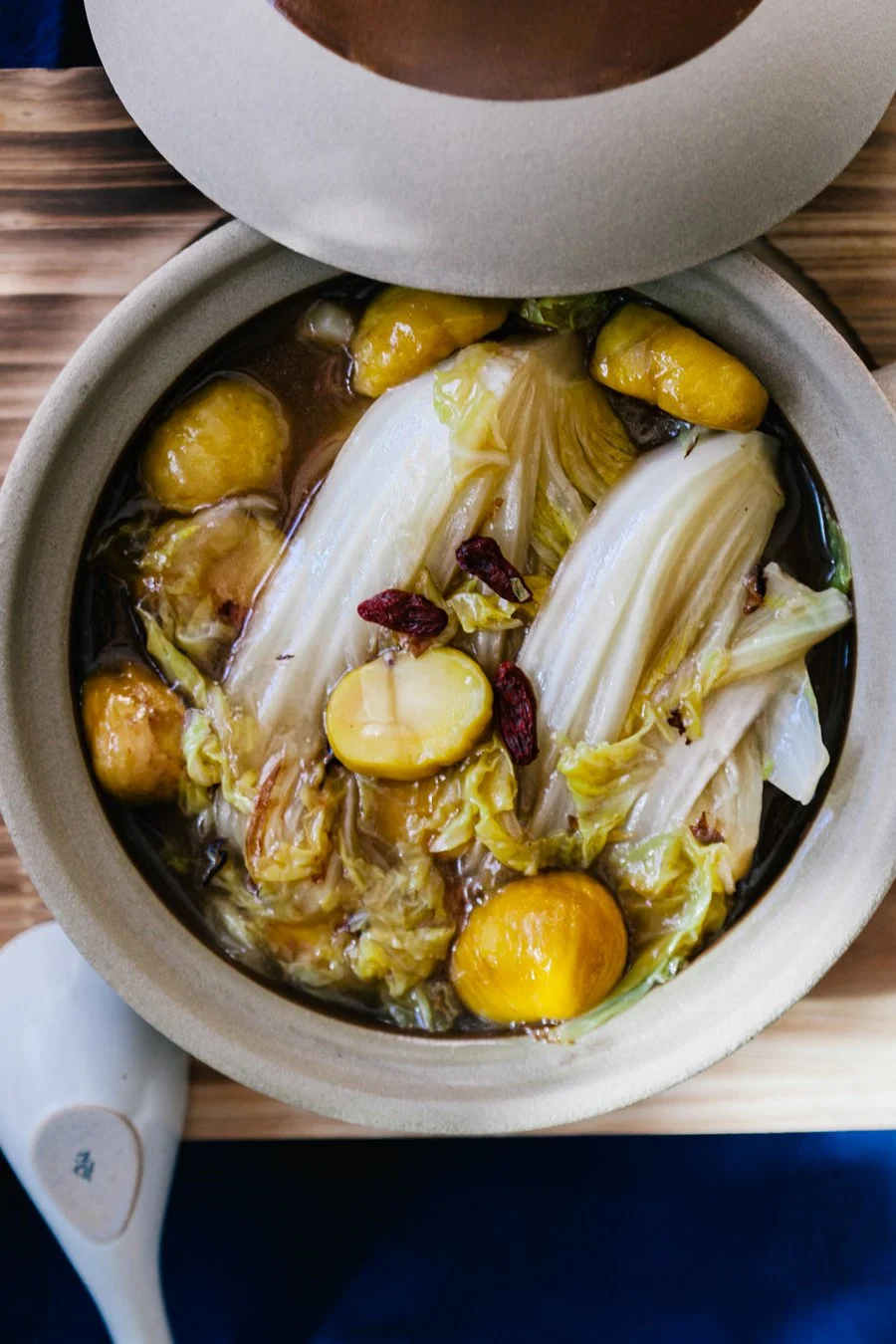
The ba (扒) technique is part of the elaborate and more elegant tradition of northern Chinese cooking associated with Imperial Court Cuisine, and this specific dish is well-known on the menu of Fangshan Restaurant (仿膳饭庄) in Beijing, famous for it’s Imperial-style food. Ba translates as ‘braise’ but it’s a technique where the main ingredients are carefully arranged into the pot or wok and cooked gently in a concentrated stock until tender. The liquid will eventually reduce and is thickened at the end. In this dish, the key is to not move the cabbage, but let it braise until silky.
It’s an elegant dish using local Beijing ingredients that, when paired together, create something worthy of a banquet.
Serves 2
Ingredients
500g napa cabbage
150g cooked, peeled chestnuts
400ml chicken stock
15–20g chicken fat (or duck fat)
1 tsp sugar
½ tsp salt
Pinch white pepper
1–2 tsp Shaoxing wine
1 tbsp potato starch mixed with 2 tbsp cold water
3 goji berries (optional)
Method
Cut the napa cabbage into large sections lengthways. You can quarter it, or cut it into eighths if it’s particularly large, but try to keep the pieces relatively intact at the base.
Heat the chicken fat in a wok or clay pot. Once melted, add the cabbage wedges and cook on each side for 1–2 minutes, until they start to soften and brown ever so slightly.
Pour in the chicken stock, then add the sugar, salt, white pepper and Shaoxing wine.
Arrange the cabbage neatly in the stock and add the chestnuts.
Cover and simmer gently for about 10–15 minutes, until the cabbage is completely tender but hasn’t collapsed.
Remove the lid and reduce the stock until you have a concentrated, savoury broth.
Gradually add the starch slurry, gently moving the wok as you do so, until the sauce becomes glossy and just thick enough to cling to the cabbage.
Finish with a little more chicken fat.
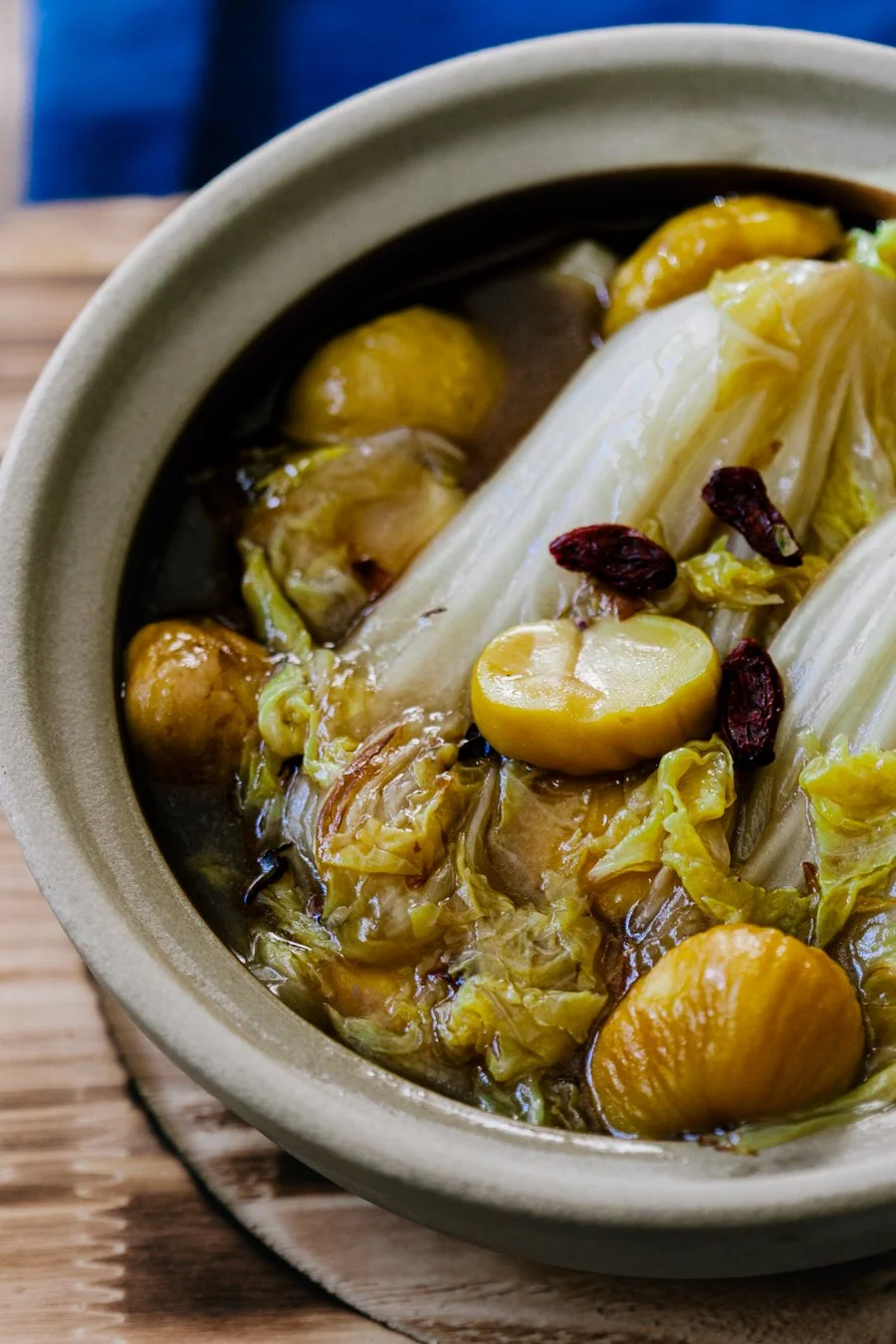
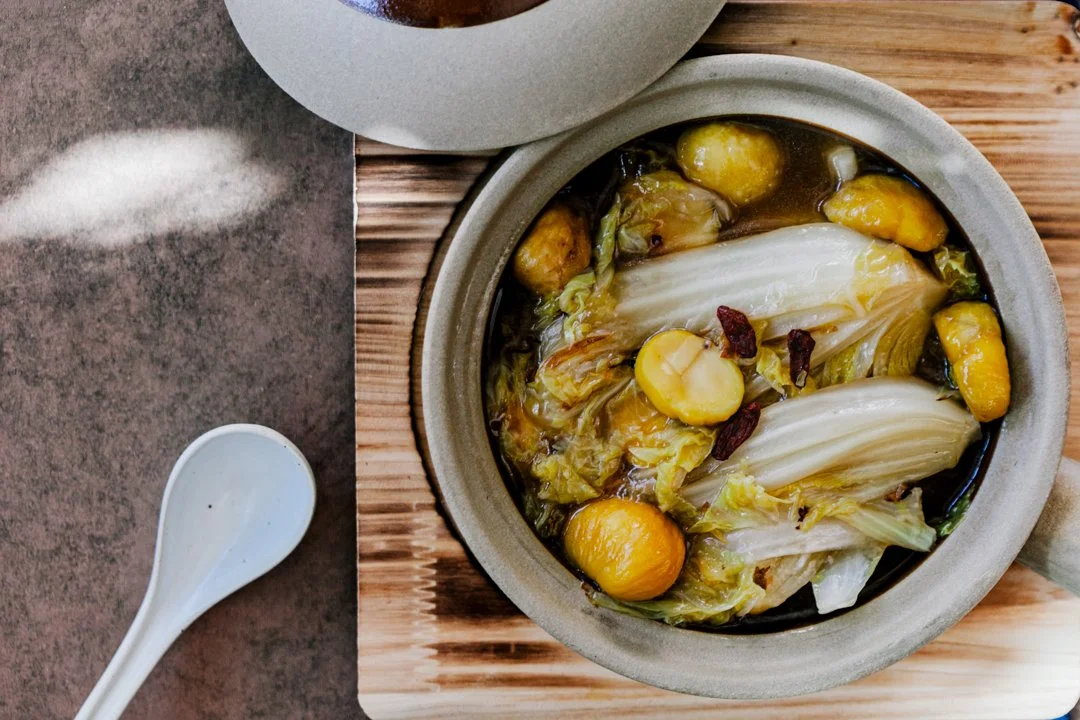
To serve, the traditional presentation is to carefully invert the wok into a serving bowl. If that sounds daunting, carefully lift the cabbage into a bowl, arrange the chestnuts around it, pour over the sauce and garnish with the goji berries. If you cooked the dish in a clay pot, you can simply serve it straight from the pot at the table.