Diced Eggplant Noodles
茄子丁面
English: Diced Eggplant Noodles
Chinese: 茄子丁面
Pinyin: qiezi ding mian
Literal: Eggplant cubed/diced noodles
Diced Eggplant Noodles (or qiezi ding mian | 茄子丁面) may be one of Beijing’s most quietly brilliant bowls of noodles and yet almost no visitor ever eats it. Unlike the city’s famous da lu mian or the ever-present zha jiang mian , this dish exists mostly behind closed doors, in the home kitchens where Beijing’s true jia chang cai - or home cooking - thrives. It’s the kind of noodle bowl people grow up with, not the kind they order in restaurants.
Chinese cooks have an instinctive mastery of the eggplant. Some of my favourite Chinese dishes are eggplant-based, and here’s another. The eggplant is diced small and salted, just enough to keep its shape once it hits the wok. A quick toss in hot oil gives each cube a faintly crisp edge, which later results in a slight smokiness as the eggplant melts into the sauce, but leaves tiny pockets for flavour to hide.
What emerges is a sauce that feels far richer than it has any right to be: silky, savoury, deeply comforting, made from nothing more complicated than everyday pantry ingredients. The first time I tasted it, I was convinced there must be some secret ingredient, some grandmother’s trick - but no. The magic comes from the diced eggplant, transforming itself from something spongy and thirsty into something lush and generous.
It’s a bowl that deserves to stand alongside Beijing’s icons. In its modest way, 茄子丁面 is every bit as satisfying as zha jiang mian - perhaps even more so, because it tastes like home.
Serves 2
Ingredients
250g fresh noodles (200g dried)
For the sauce
2 Chinese eggplants (350g)
100g ground pork
1 leek - finely chopped
3 cloves garlic - finely chopped
1 thumb ginger - finely chopped
2 tablespoon light soy sauce
1 tablespoon dark soy sauce
1 tablespoon Shanxi black vinegar
1 tablespoon oyster sauce
1 teaspoon sugar
1 tablespoon Shaoxing wine
120ml water
Salt, to taste
1 teaspoon cornstarch + 1 teaspoon water
To finish
2 tablespoons coriander (cilantro), chopped
Method
First, cook the noodles in boiling water, according to your packet instructions. When cooked, drain and then drizzle with a dash of oil to stop them clumping together. Next, lay the noodles out flat on a tray and leave to completely cool.
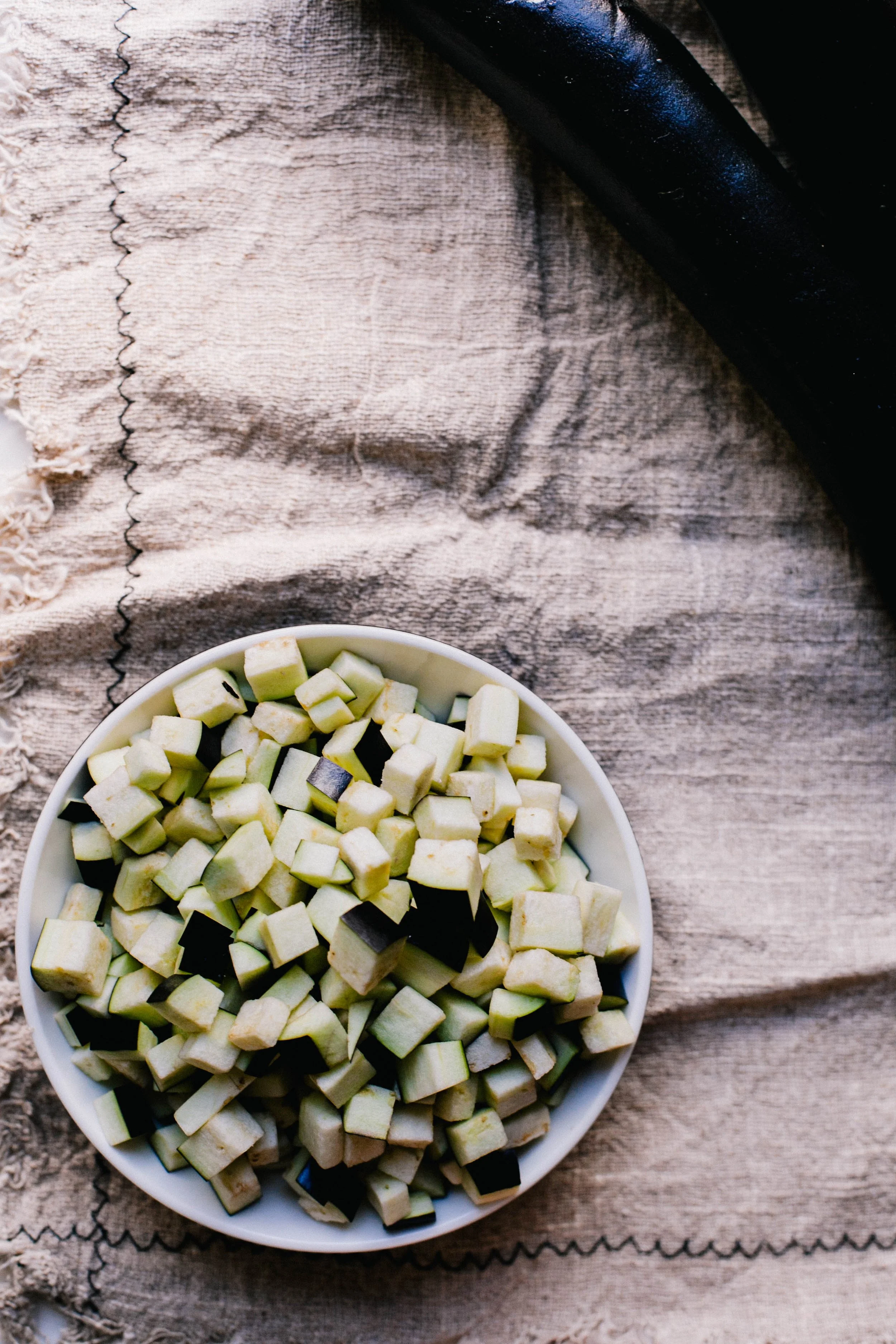
Prepare the eggplant. Wash and then dice it into 1.5cm cubes (about ½ inch). Place the cubes into a colander and sprinkle liberally with salt and leave for 20-30 minutes. This prevents the eggplant from absorbing too much oil later. T
Mix the sauce. In a small bowl, whisk together the light soy sauce, dark soy sauce, vinegar, oyster sauce and sugar. Set aside.
In a separate bowl, mix the cornstarch and water into a slurry and set aside.
When ready, rinse the salt from the eggplant and pat using kitchen towels until very dry.
Heat 3 tablespoons of oil in a wok over a medium heat. Add the eggplant and fry for 3-4 minutes, stirring occasionally until browned on all sides and soft. You may need to do this in batches. Remove the eggplant from the wok and set aside.
In the same wok, heat another tablespoon of oil. Add the garlic, ginger and leek and fry for 30 seconds, or until fragrant.
Increase the heat to high and add the ground pork, breaking it up with a spatula. Stir-fry until no longer pink and the meat is slightly browned. Keep cooking until any liquid has started to evaporate.
Pour the Shaoxing wine down the side of the wok, let it bubble for 20 seconds and then pour in the mixed sauce, letting it bubble for 5-10 seconds.
Add the eggplant into the wok, pour in the water and stir until everything is coated. Reduce the heat, cover and let it simmer for 3-4 minutes, or until the eggplant is very tender and absorbed the sauce.
Give the cornstarch slurry a quick stir, then drizzle it into the centre of the wok while stirring constantly.
Cook for another 30-60 seconds until the sauce thickens and glazes the eggplant and pork beautifully. Remove the sauce from the wok.
Add another tablespoon of oil, add the noodles into the wok. Add 2 tablespoons of the sauce and mix through the noodles, allowing them to get coated in a tiny bit of sauce, then divide between two bowls.
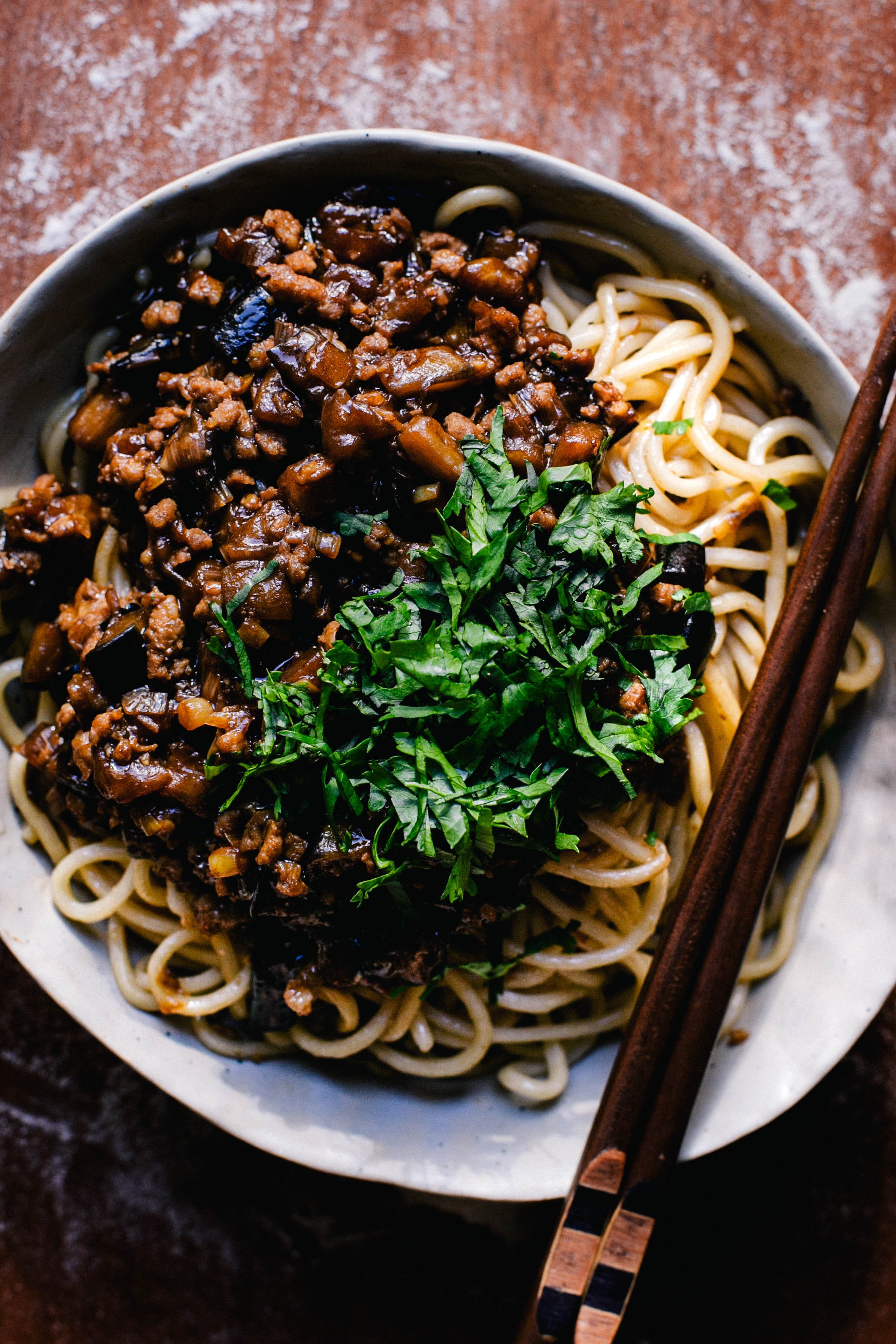
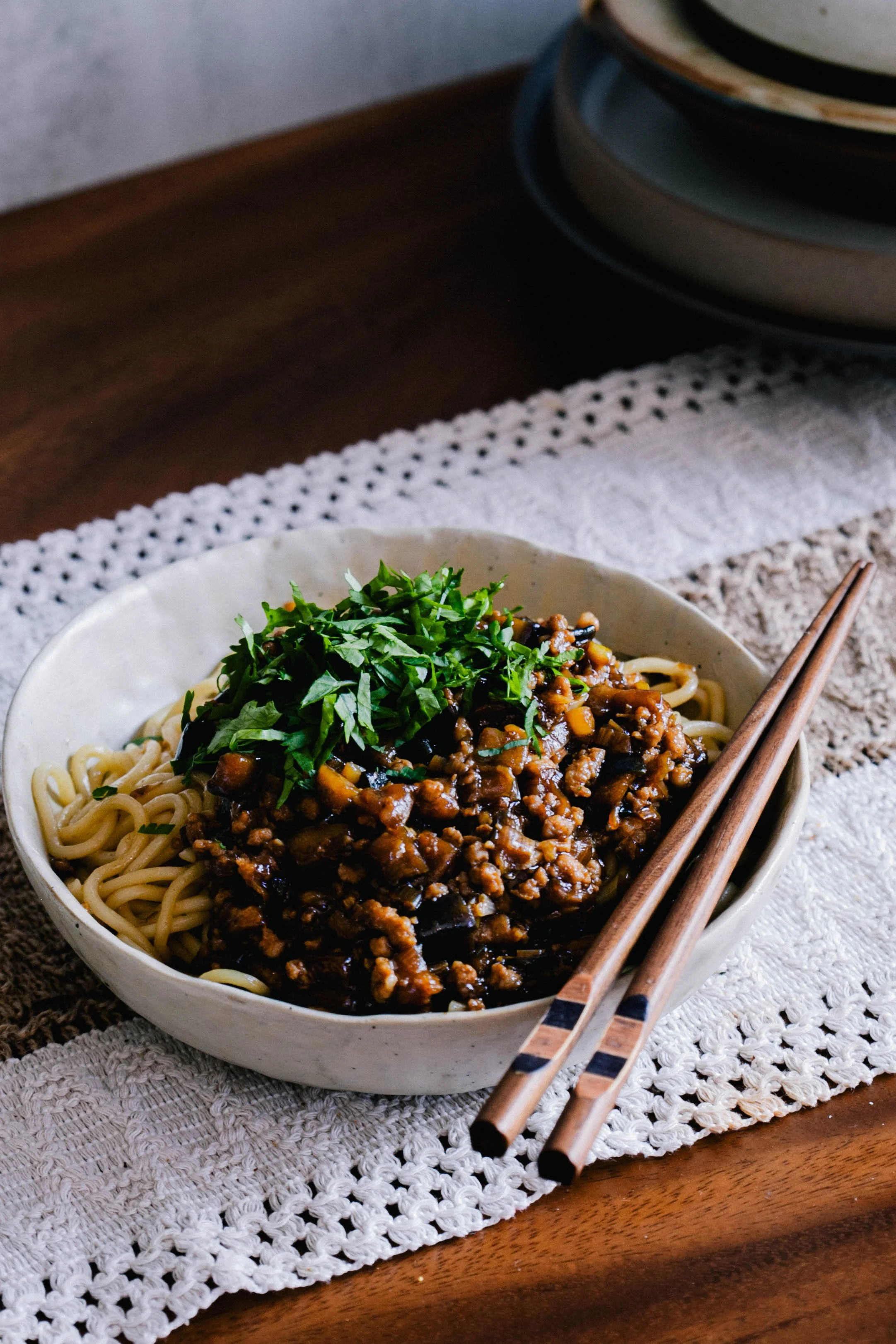
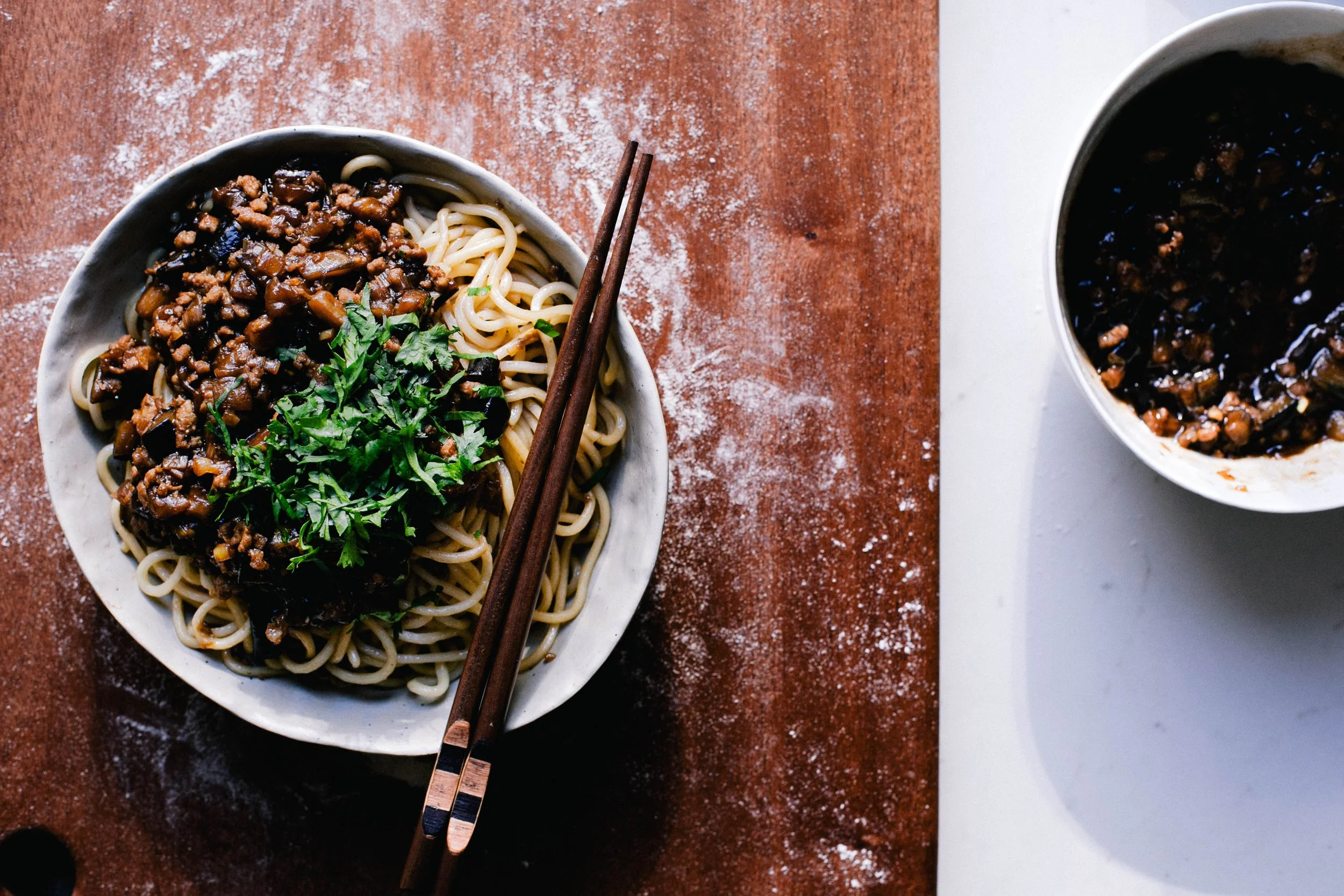
Add half the sauce to each bowl and finish with the coriander.