Lan Long
(Lazy Dragon Roll)
懒龙
English: Lazy Dragon Roll
Chinese: 懒龙
Pinyin: lan long
Literal: Lazy dragon
Visitors to Beijing sometimes sigh at what appears to be an endless parade of wheat doughs: rolled, folded, twisted, stuffed, steamed, baked, griddled - occasionally all at once. To the untrained eye, it can feel like everything is simply “another bun”, rearranged into a slightly different shape. But to Beijing cooks, the distinctions are as obvious as those between pizza and focaccia, or croissants and brioche. Yes, they are all dough, but the pleasure lies in the nuance: the chew, the layering, the softness or the filling.
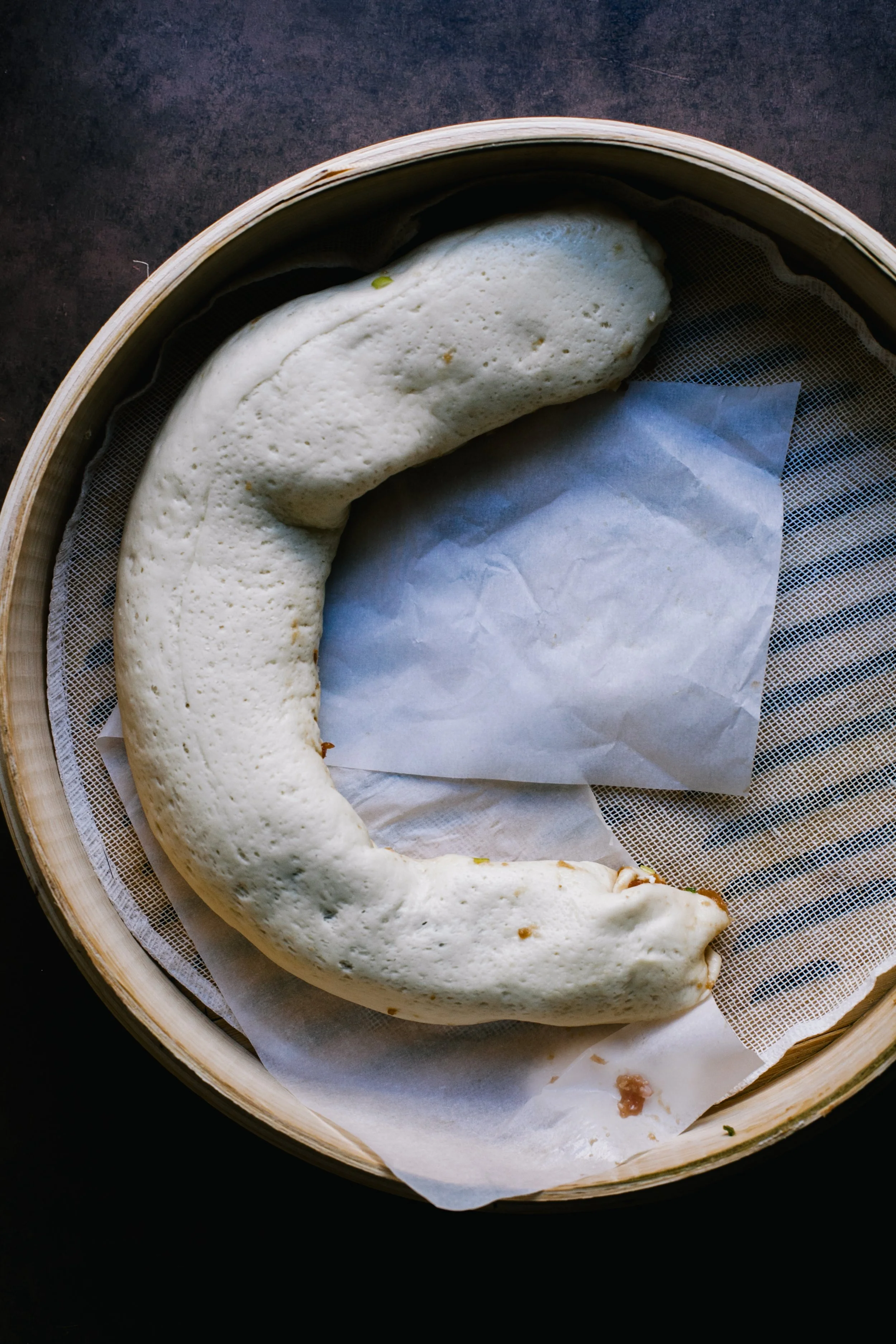
The name lazy dragon is a playful name (lan = lazy, long = dragon) referring to the dough’s resemblance to a dragon stretched out languidly across the steamer basket, instead of coiling up tightly.
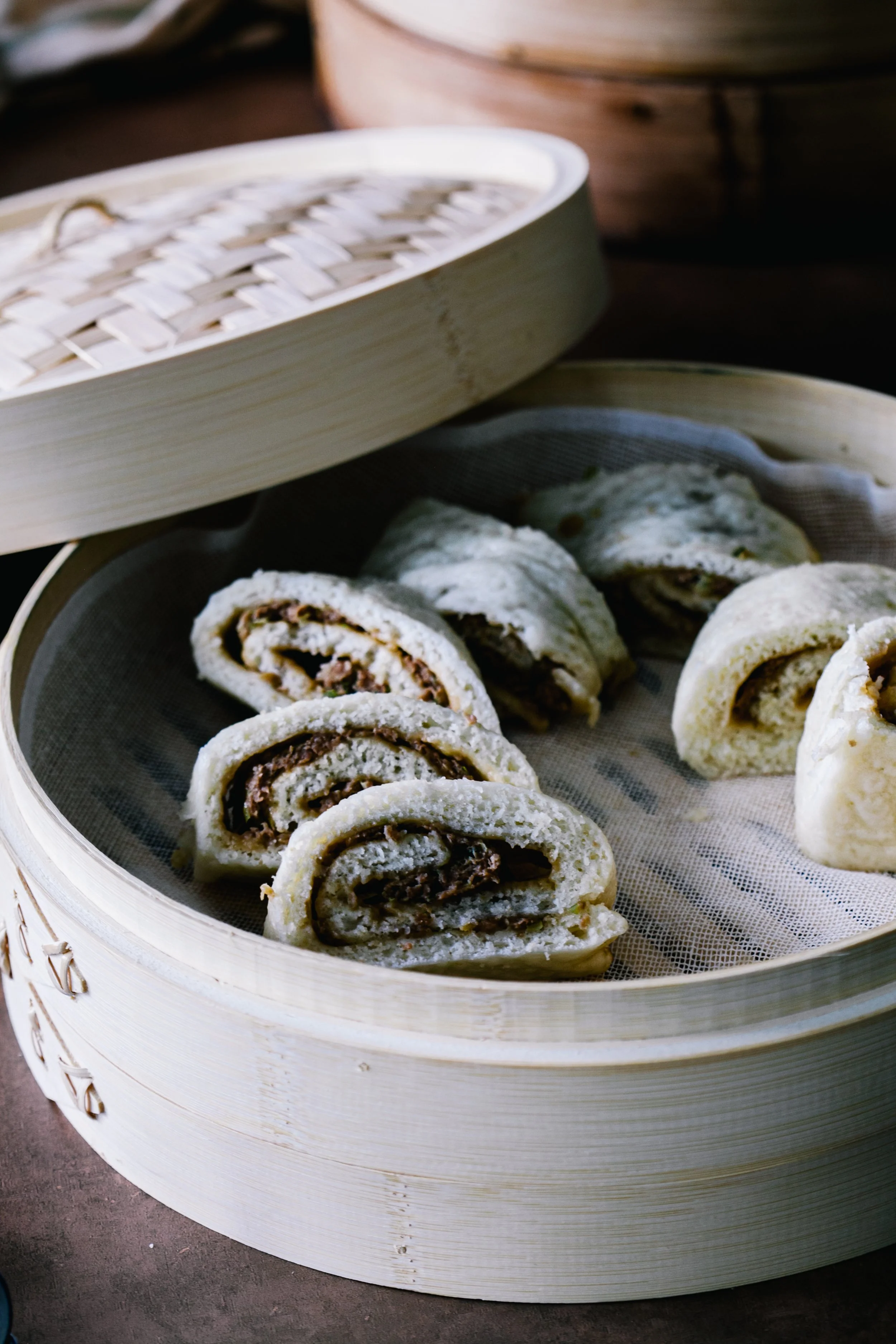
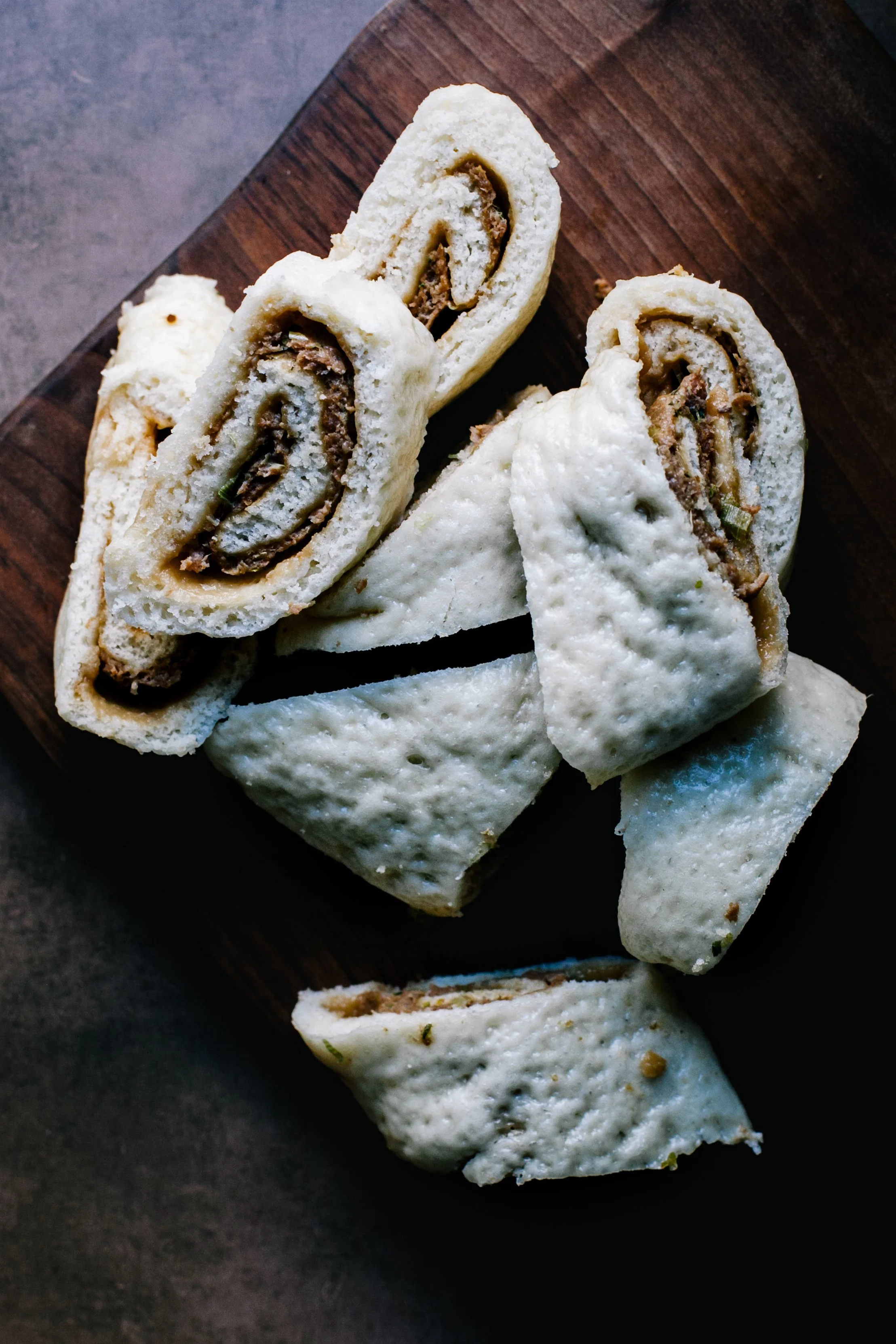
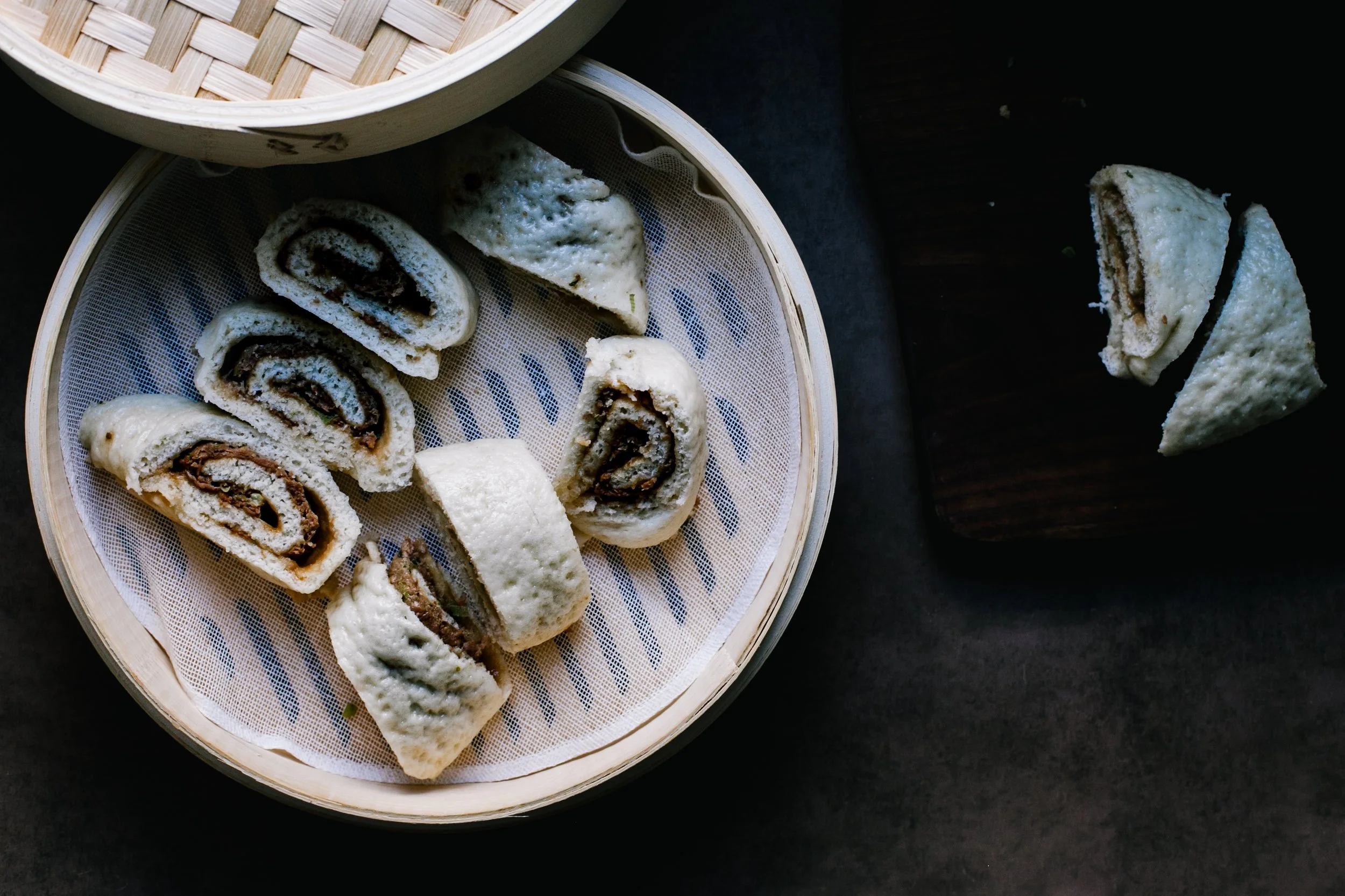
Lan long is essentially a giant steamed meat roll. Once sliced, each piece reveals a neat spiral of savoury filling wrapped in soft white dough. The bread is pillowy yet chewy; the stuffing moist, and fragrant with pork and scallions. It’s the savoury cousin of a Swiss roll.
It is far easier to assemble than baozi or dumplings, but just like those famous buns, when the lid is lifted from the steamer, the rich aroma wafts through the house, drawing curious noses into the kitchen in search of a warm slice.
Makes 2 large rolls
Ingredients
For the Dough
5g instant (dried) yeast
5g sugar
270ml warm water (35–40°C (95–104°F))
500g all-purpose flour
A pinch of salt
For the Filling
400g ground pork (80/20 lean/fat)
1 tbsp ginger - finely chopped
3 tbsp light soy sauce
1 tbsp Shaoxing wine
1 tbsp oyster sauce
½ tsp salt
Big pinch of white pepper
80ml chicken stock
1 large bunch (90g) scallions
2 tbsp sesame oil
Instructions
In a small bowl add the yeast and sugar and then pour over 70ml of the water and let it sit for 5-10 minutes until frothy.
In a large bowl, mix the flour and salt. Make a well and pour in the yeast mixture. Stir with chopsticks or a spatula until a shaggy dough forms.
Turn out onto a lightly floured surface and knead for 8-10 minutes until smooth and elastic. The dough should be soft but not sticky.
Place dough in a lightly oiled bowl, cover with a damp cloth or plastic wrap, and let it rise in a warm place for 1 hour, or until doubled in size.
While the dough rises, make the filling. In a bowl, combine the ground pork, ginger, soy sauce, Shaoxing wine, oyster sauce and salt and pepper. Using chopsticks, stir vigorously in one direction. Slowly add the stock in 2-3 batches, stirring until each batch is fully absorbed. Stir in the chopped scallions and sesame oil last. Cover and refrigerate until ready to use.
Once the dough has risen, punch it down and then divide into two equal halves.
On a lightly floured surface, roll one piece into a large rectangle, roughly 30cm x 20cm (12" x 8") and about 5mm (¼ inch) thick.
Lightly brush the surface with a thin layer of oil. Spread half of the meat filling evenly over the rectangle, leaving a 2cm (1 inch) border at the top edge.
Starting from the bottom long edge, tightly roll the dough up into a log, like a Swiss roll. Pinch the top seam and the ends to seal tightly. The roll should be plump and firm. Some filling might squeeze out, just scrape it up and save for meatballs or something else. Repeat with the second piece of dough and remaining filling.
Place each roll seam-side down on a separate piece of parchment paper. Place them in your steamer baskets (with room to expand). Cover and let them rise again for 20-30 minutes until slightly puffed.
Prepare your steamer and then steam the rolls for 20-25 minutes. Do not open the lid during this time, otherwise they may collapse.
After steaming, turn off the heat. Wait for 5 minutes before lifting the lid (this prevents sudden temperature shock and shrinkage).
Carefully remove the rolls onto a cutting board. Use a sharp knife to cut into thick slices (4-6cm / 2-3 inches wide). Serve hot or warm. If you let them cool, they will no longer be juicy.