Gansu: The Forgotten Silk Road Cuisine

If I were scouting locations for the next Hollywood film set on Mars, I’d choose Gansu.
This long, narrow province in China’s northwest feels almost extraterrestrial: crumbly loess hills, wind-flattened plains, and mountains streaked in improbable bands of red, ochre, and green. It is a place of vast silence. A land untouched by rain. A place that appears empty.
And yet, it is anything but.
Carved deep into its desert cliffs are some of the world’s most extraordinary Buddhist cave complexes, most famously the Mogao Caves near Dunhuang - miles of murals and sculptures that prove centuries of devotion, trade, and cultural exchange at this point on earth. Human beings have not merely survived here. They have flourished, imagined, and built.
Ancient mythology even places early Chinese civilisation in this region. Figures such as Fuxi and Nuwa are closely associated with what is now eastern Gansu. Later, during the Han dynasty, Emperor Wu of Han pushed westward, securing the strategic Hexi Corridor - a narrow strip of fertile land that would become one of the most important arteries in world history.
Cities such as Wuwei, Zhangye, Jiuquan, and Dunhuang became fortified outposts and trading hubs along what we now call the Silk Road. For over a millennium, silk, jade, horses, spices, ideas, and religion passed through this corridor. Buddhism flowed east. Islam travelled inward. Gansu absorbed it all.
A Culinary Crossroads
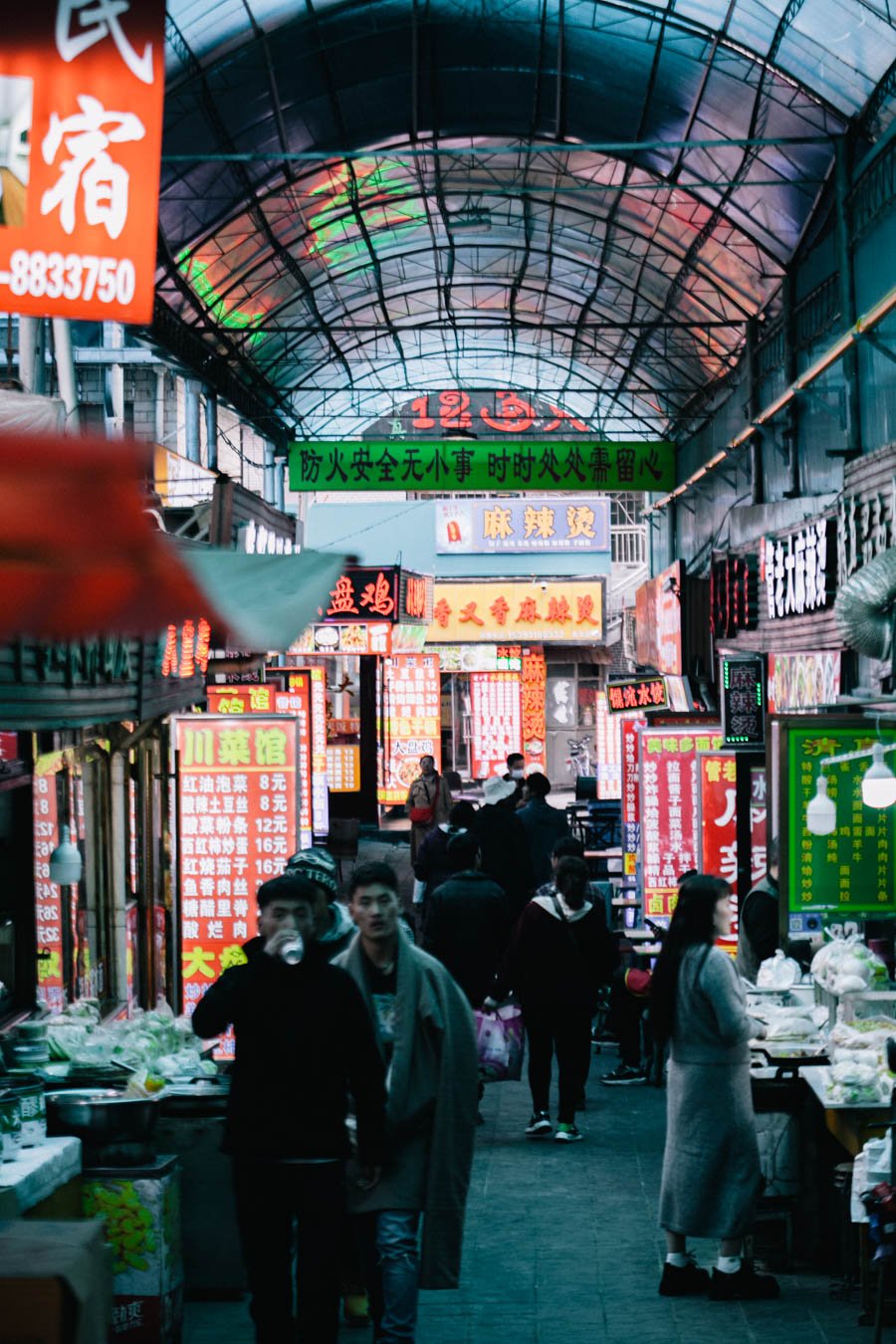
When people discuss Northern Chinese food, they tend to move from Beijing to Shanxi and Shaanxi, then leap westward to Xinjiang - skipping Gansu entirely. This is a mistake.
Gansu’s cuisine is one of the most distinctive in Northern China, shaped heavily by Hui Muslim communities rather than the Uyghur culture more commonly associated with northwestern food. Pork is largely absent. Instead, beef and lamb dominate. Wheat is king. Chillies are used, but sparingly compared to neighbouring Shaanxi. Flavour comes from clarity, fermentation, spice blends, and exceptional technique.
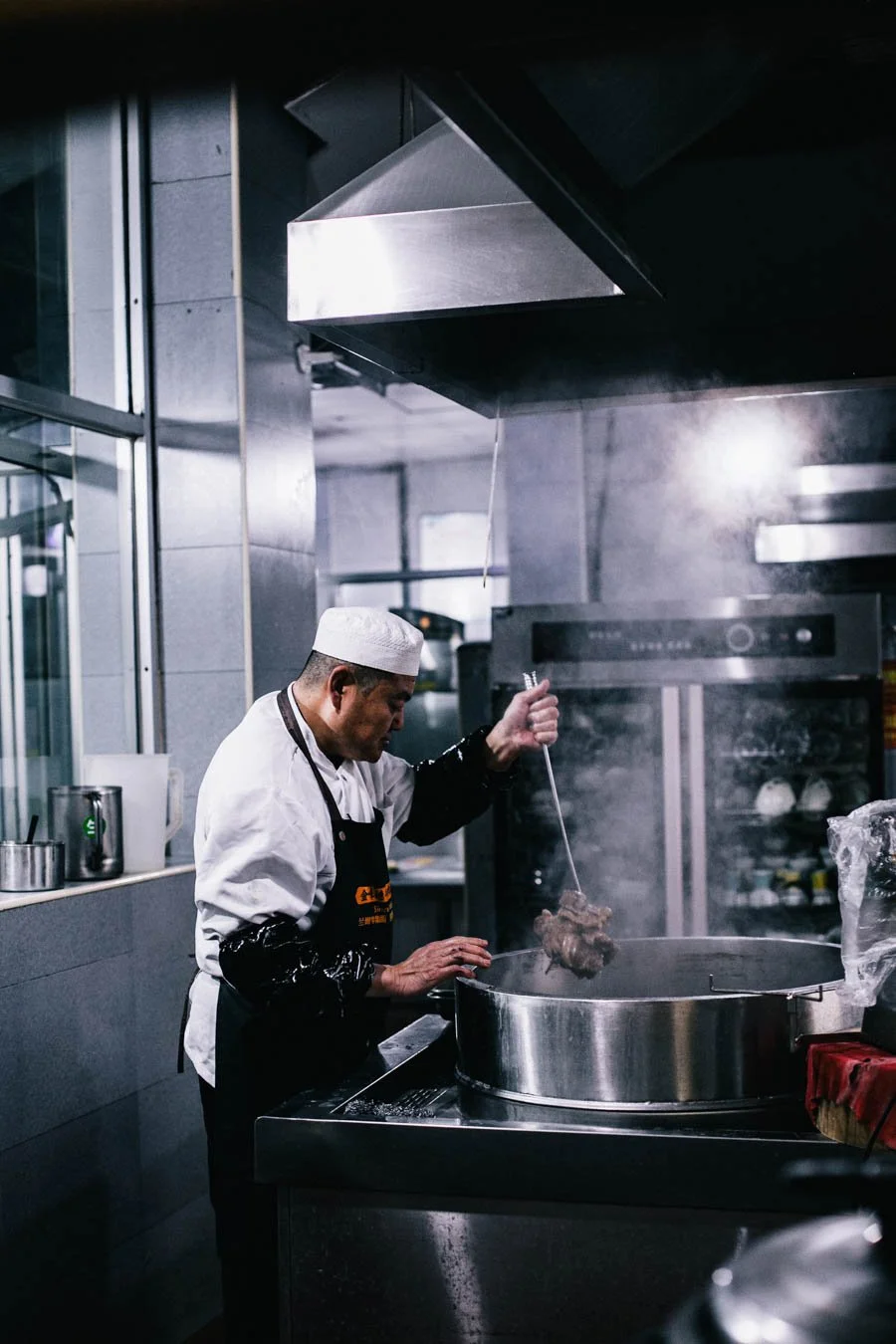
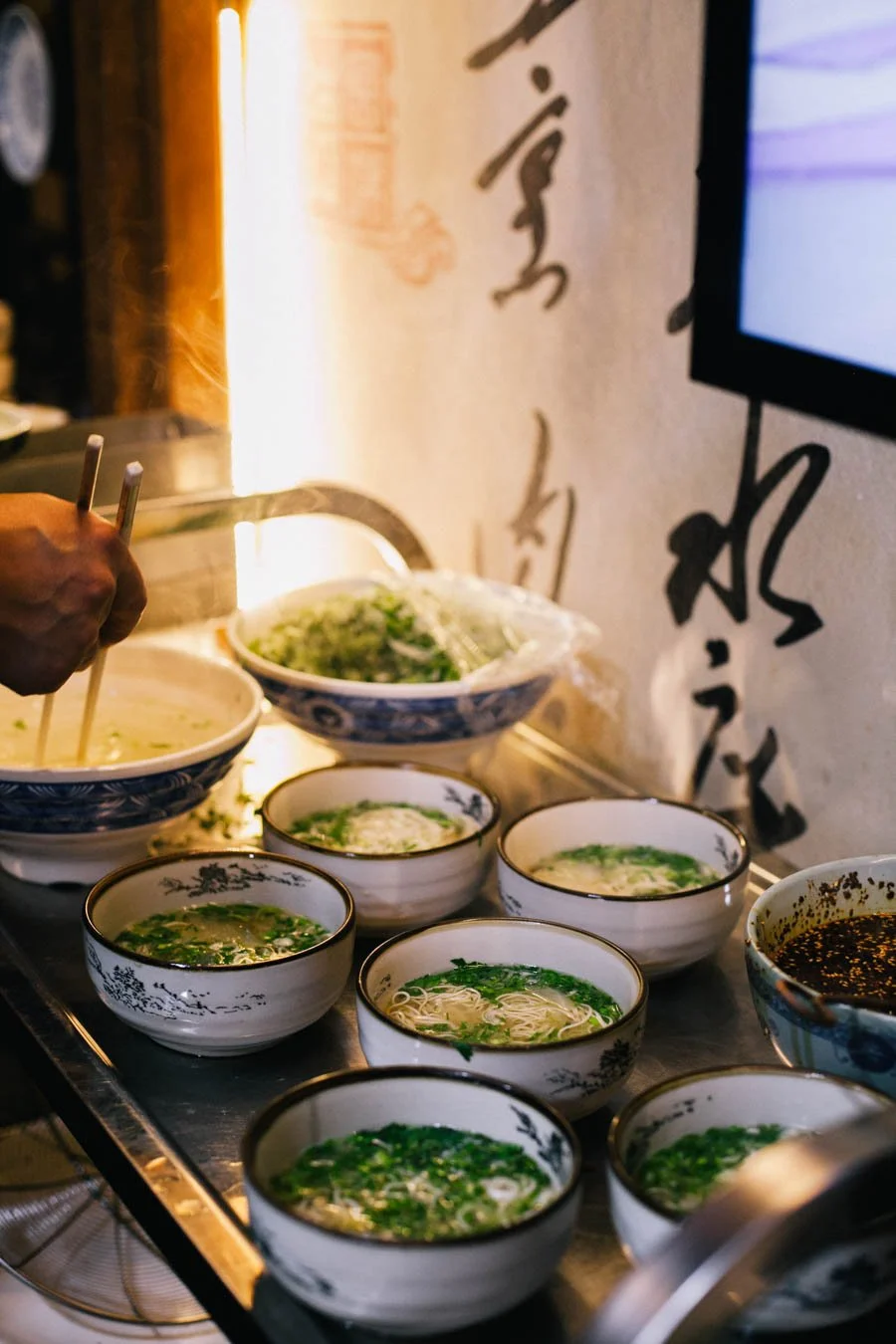
The most famous dish, of course, is Lanzhou Beef Noodles (兰州牛肉面). Locals simply call it niurou mian - never “lamian.” A proper bowl is a study in precision: clear beef broth, hand-pulled noodles of a specified thickness, white radish slices, bright chilli oil, garlic chives, and tender beef. It follows the famous standard of yi qing, er bai, san hong, si lü, wu huang - one clear, two white, three red, four green, five yellow.
But to reduce Gansu to one bowl of noodles would be a shame. Gansu cuisine is some of my favourite in Northern China.
Beyond the Famous Bowl
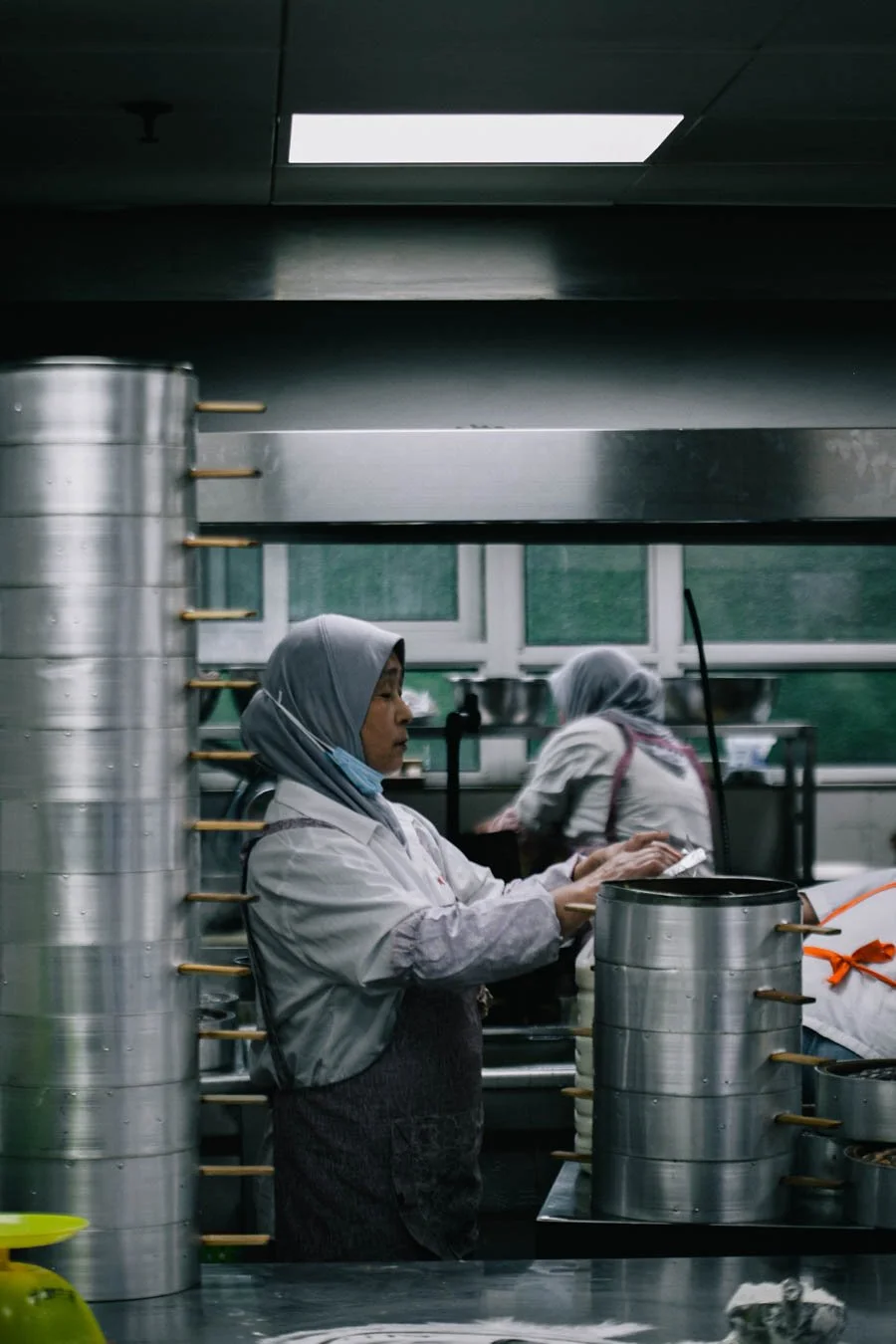
When I first travelled through Gansu, I based myself largely in Lanzhou, the provincial capital. The locals are keen to talk about the famous “five snacks” of the city, which I tried multiple times, but there’s so much more - hand-torn noodles, fat beef baozi, baked flatbreads, stir-fried desert greens, bean jellies drizzled in chilli and vinegar and my favourite: fermented grains. This is intuitive food — born of necessity and geography. The land is dry, the winters severe. Wheat, millet, beans, and hardy vegetables dominate. Sheep and cattle thrive where pigs do not. Spicing reflects trade routes: cumin and coriander seed whisper of Central Asia, while chilli arrived later, via global exchange.
Below is the essential guide to Gansu cuisine. I have been playing with some of these dishes in my kitchen, so expect recipes to follow soon.
The Five Snacks of Lanzhou
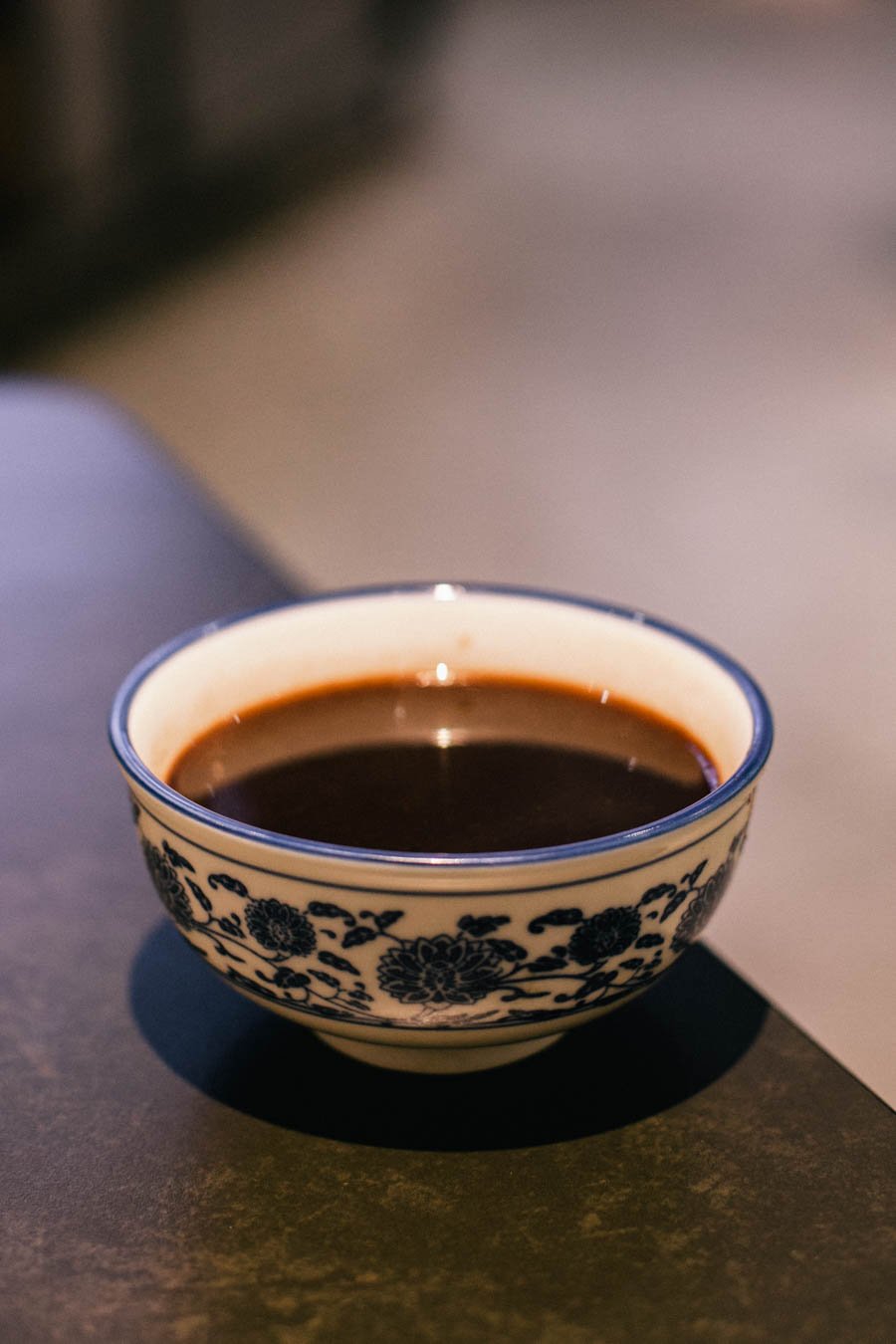
Red Bean Soup | 灰豆子 | hai dou zi - Hai dou zi is a thick, dark and rich red bean soup. Made from slow-simmered beans, the soup cooks for hours with red dates until the beans collapse into a thick, almost blackened sweetness. Traditionally, a pinch of peng hui (蓬灰) - an edible alkaline ash made from desert plants - is added which tenderises the beans and gives the soup its characteristic deep colour and faint mineral complexity. The result is earthy, gently sweet, and unexpectedly elegant; perfect in the cold desert winter.
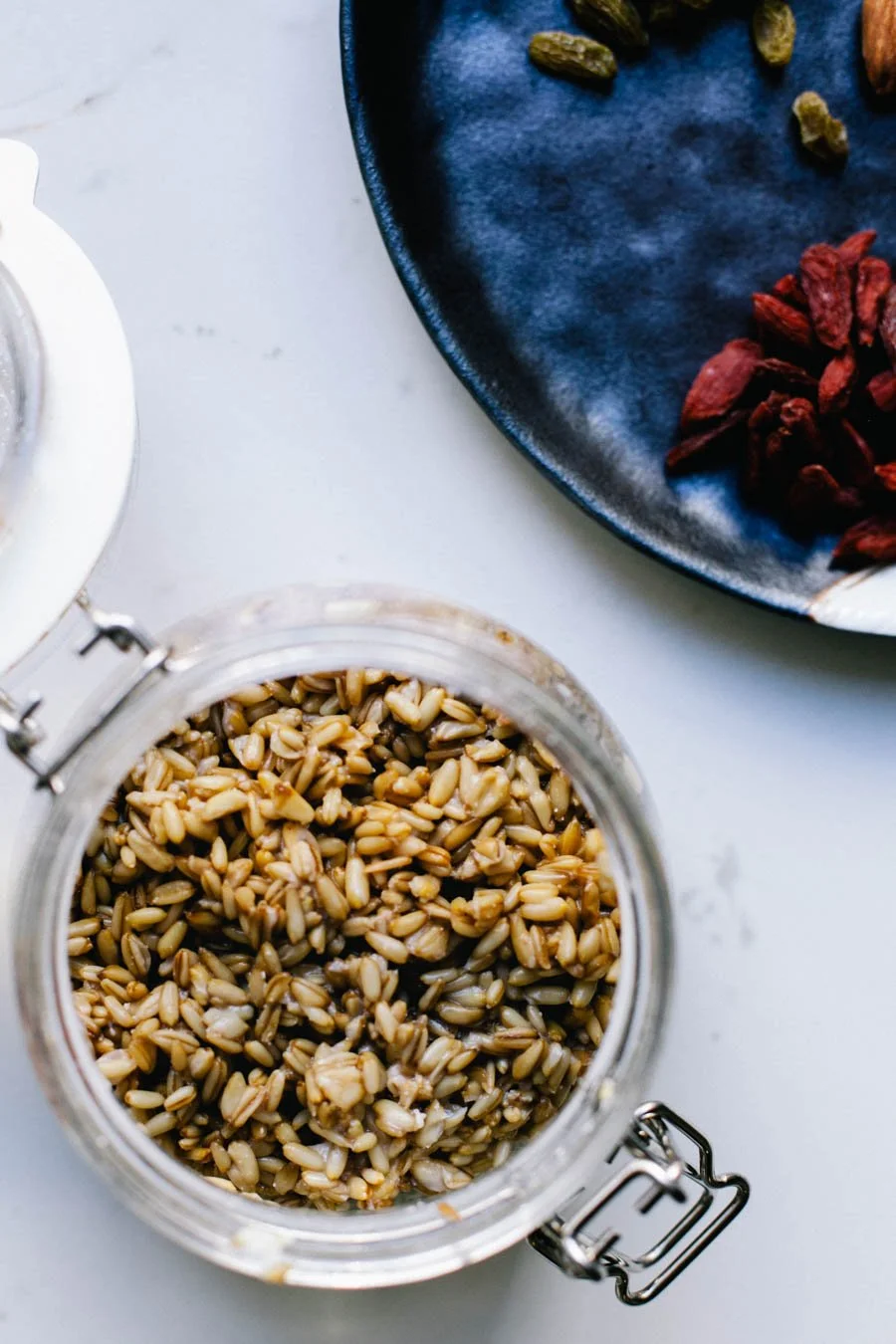
Fermented Naked Oats | 甜醅子 | tian pei zi - If hai dou zi belongs to winter, tian pei zi belongs to summer. Made from hulled barley or naked oats, the grains are fermented with yeast for a few weeks. The result is chewy, fragrant, and gently effervescent - sweet at first, with a mild alcoholic tang. Traditionally it’s eaten with a splash of cool water, the grains suspended in their lightly fermented liquor. In recent years, it has found new fame as the base of tian pei zi milk tea,. I love stirring a few spoons through my morning porridge too. Tian pei zi is one of my favourite Gansu discoveries. Check out my recipe here.
Homemade Yogurt | 酸奶子 | suan nai zi - Across Gansu and the wider northwest, suan nai zi is yogurt in its purest form. Thick, spoon-standing and often set in ceramic bowls. The best kind develops of layer of milk skin (奶皮) on top that adds a contrast of textures as you push your spoon through the chewy skin into the creamy depths. Northeast yogurt is unapologetically sour - most locals sprinkle a little sugar and dried fruit over the top, but even plain, it’s amazingly creamy.
Eight Treasures Tea | 三泡台 / 八宝茶 | sanpaotai/ babao cha
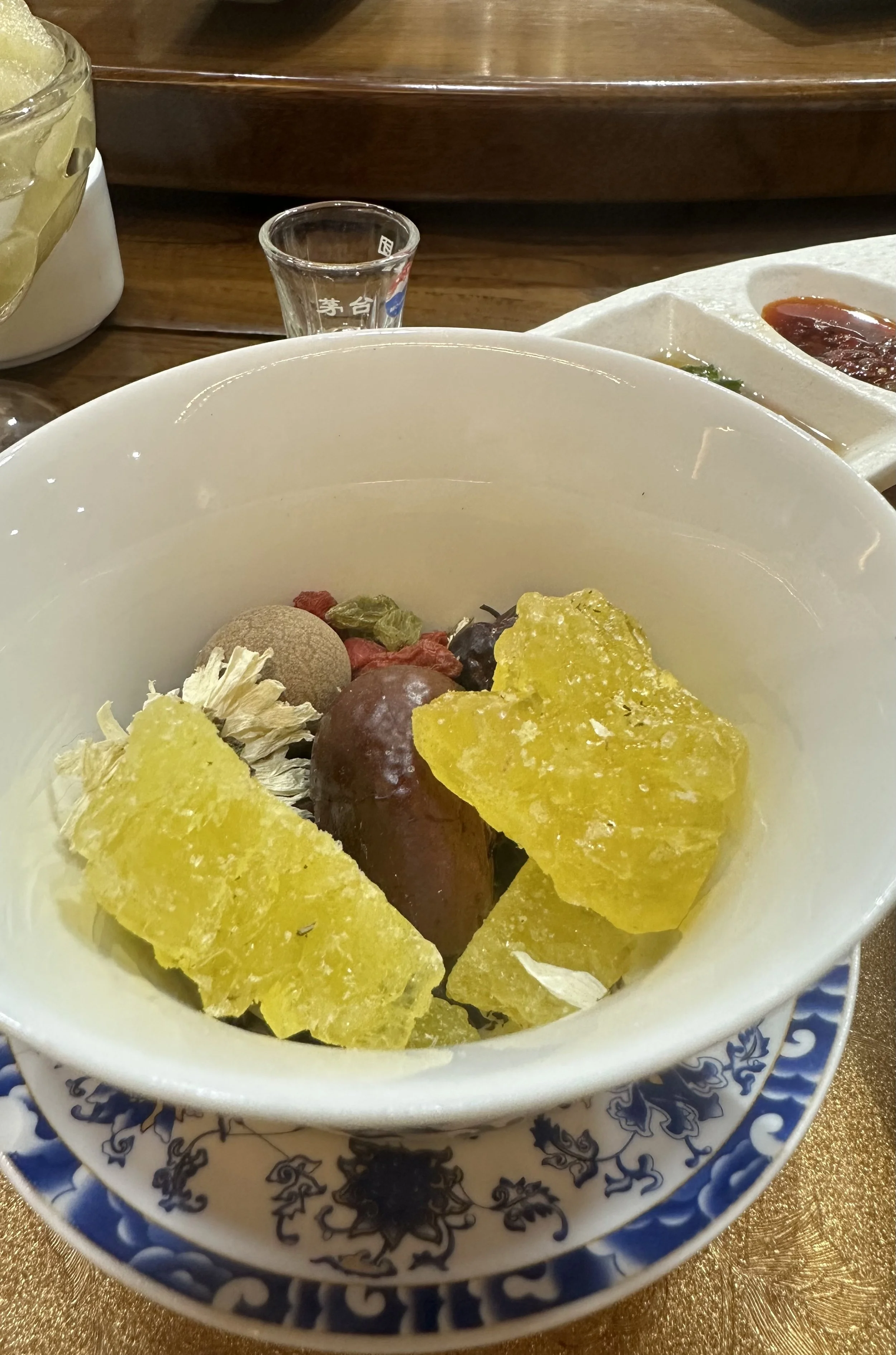
More ritual than drink, sanpaotai, also known as babao cha, is a symbol of Hui hospitality. Served in a lidded gaiwan-like cup, it combines green tea with red dates, goji berries, chrysanthemum or rose, longan, rock sugar, dried fruits, and nuts. The name “Three-Poured Bowl” (sanpaotai) refers to the tradition of repeatedly topping up the cup with hot water, allowing the flavours of each “treasure” to unfold gradually.
Cold Noodles | 酿皮子 | niang pi zi
Often grouped with liang pi but distinct in texture, Gansu’s niang pi is a cold wheat-based noodle dish cut into thick ribbons. It’s dressed with black vinegar, chilli oil, garlic, sesame paste, and - crucially in Lanzhou - a sharp hit of mustard (or wasabi). The nose-tingling mustard sauce is what sets this apart from other Northern cold noodle dishes. Served cool, slick, and bold, it is a summer staple and one of the most satisfying street foods in the city.
Beyond the Five
Milky Fermented Rice | 牛奶醪糟 | niu nai lao zao
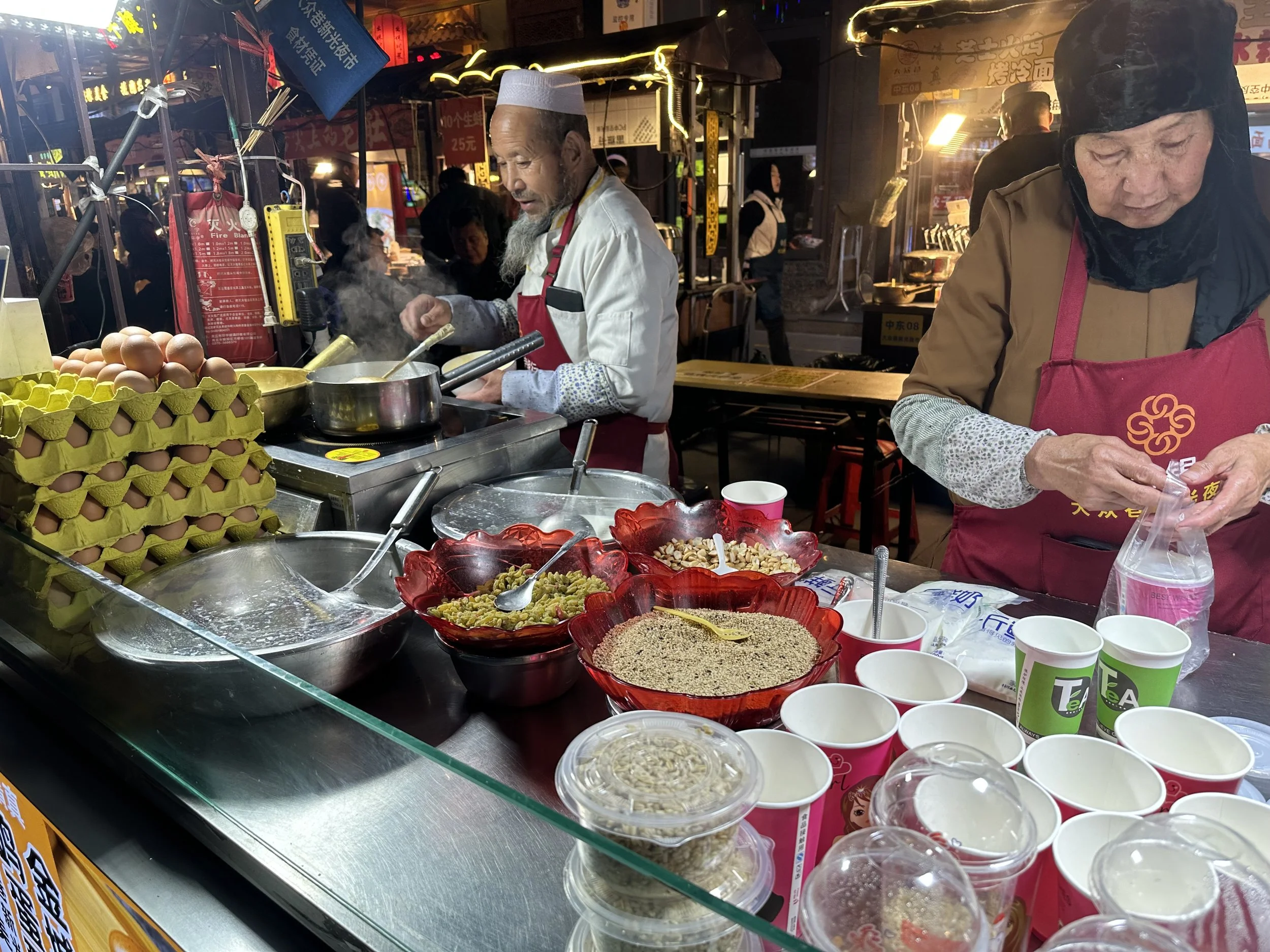
In every night market in Lanzhou, you’ll find local Hui couples serving up their homemade fermented rice drink: lao zao. First, they ferment glutinous rice over a week or so until it turns sweet and tangy, then they cook it gently into warm milk with ribbons of egg, raisins, goji berries and sesame seeds. Another classic dish I’ve rarely seen outside of Gansu. Check out my recipes for both lao zao and the milky version.
Hand-Grabbed Lamb | 手抓羊肉 | shou zhua yang rou
Perhaps the purest expression of northwestern meat culture. Chunks of lamb are simply boiled, then served on the bone, eaten with the hands. The seasoning is minimal — salt, maybe a dipping mix of cumin and chilli. although I prefer a roasted lamb, I enjoy eating a dish so simple it’s roots stretch back centuries - there’s mention of boiled lamb ribs in Gansu texts from thousands of years ago.
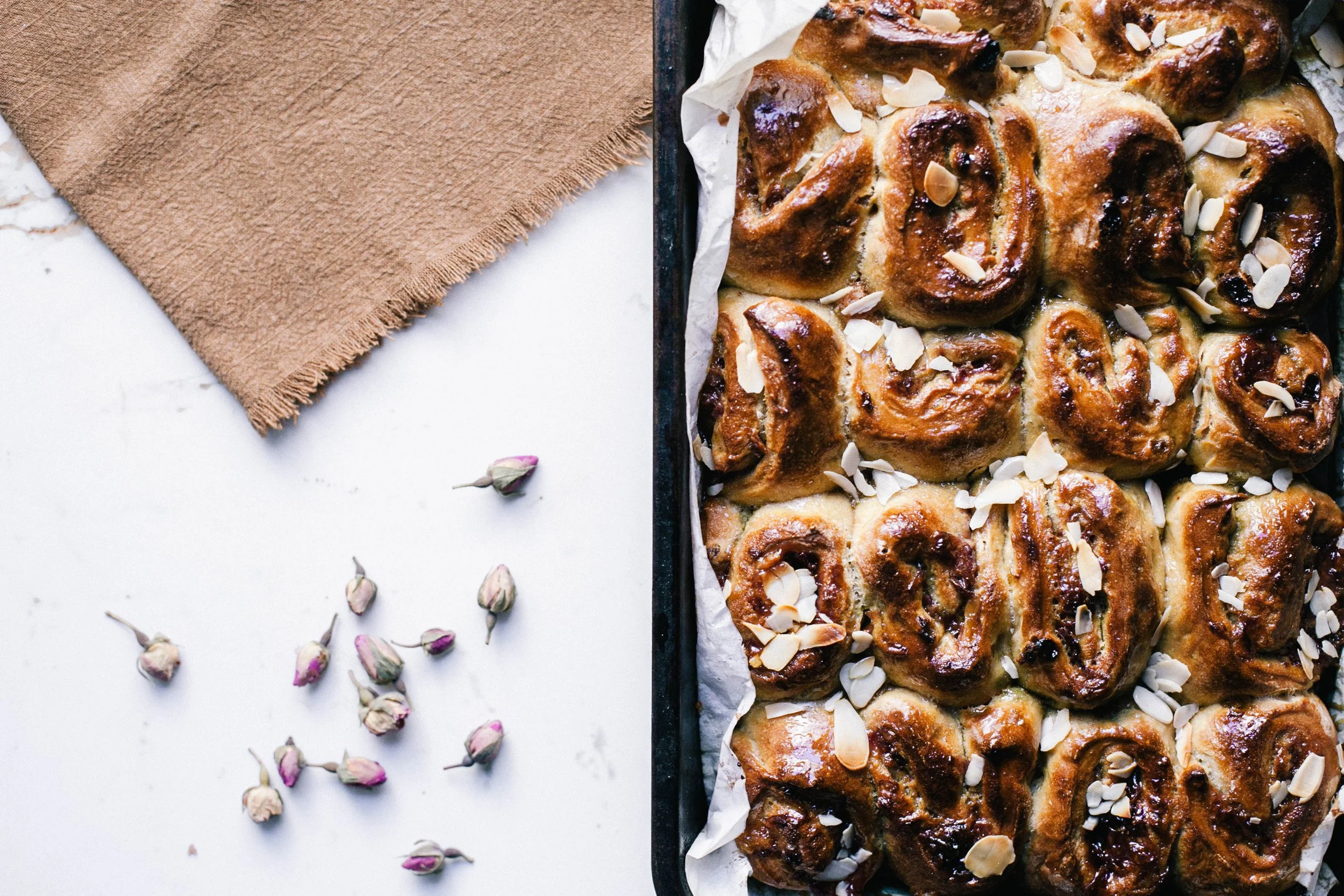
Guo Kui | 锅盔 | guo kui
Some of the best buns and breads in China are from Gansu - from stuffed flatbreads, fat baozi, oven-baked naan and crispy, oily pancakes, but one of my favourites is guo kui. They are similar to a Chelsea bun, little rolled breads stuffed into a tin and baked until they expand into each other. Guo kui can be packed with meat and vegetables, or sweeter versions are smeared with rose jam, nuts or spices. Once baked, they’re served whole, kind of like a tear-and-share. I wrote a recipe for the rose jam version here.
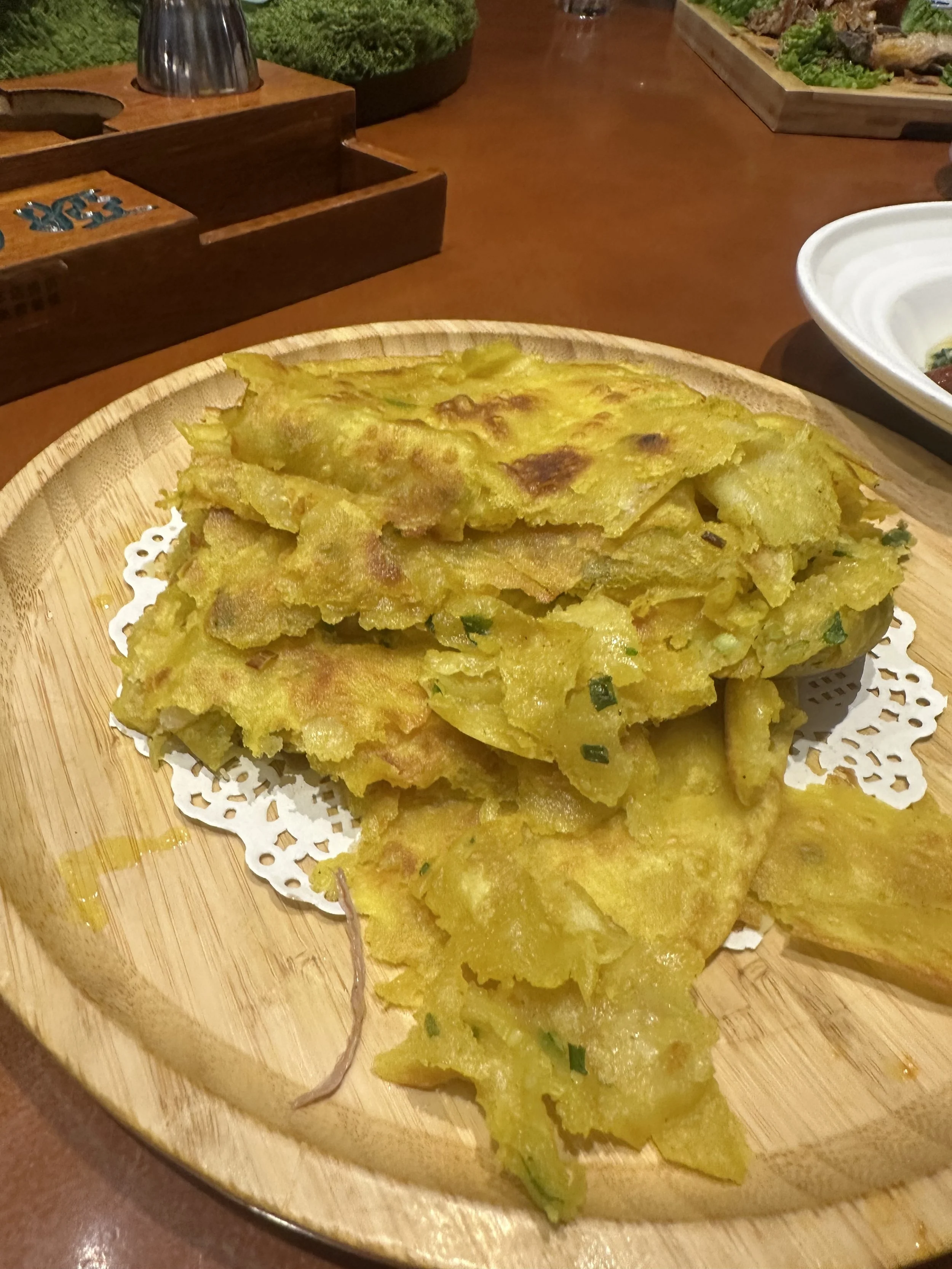
Hand-Pulled Pancake | 手撕饼 | shou si bing
A flaky, layered and oily pancake that’s first baked and then hand torn. With a crispy exterior and soft inside, it’s a kind of half flatbread, half pastry. Once I start on one of these, I cannot stop.
Baked Baozi | 烤包子 | kao baozi
Closer in spirit to Xinjiang than eastern China, these are baked - not steamed - buns filled with lamb, onion, and cumin. The crust is golden and firm, the filling juicy and fragrant. They taste of caravan routes and open fire.
The King: Lanzhou Beef Noodles | 兰州牛肉面
The undisputed monarch of Gansu cuisine. Hand-pulled noodles in a crystal-clear beef broth, topped with sliced beef, white radish, chilli oil, garlic chives, and coriander. It might seem simple, but this is a dish that requires absolute patience - a slow simmered broth alongside hours of practice to get the noodles pulled just right.