Almond Tofu
杏仁豆腐
English: Almond Tofu
Chinese: 杏仁豆腐
Pinyin: xingren doufu
Literal: Almond (apricot kernel) tofu
Chinese desserts are little known in the West, partly because they are not eaten as desserts in the way we understand them. In a traditional Chinese meal, a sweet dish - if there is one at all - often arrives alongside everything else, not as a grand finale.
The sweetness from sugar was found as too simplistic for Chinese chefs - why have something sweet, when you can have it sweet and sour, or sweet and salty, or sweet and spicy? Chinese chefs then, see sweet as an integral part of all dishes, not just desserts.
Because Chinese palates were not historically accustomed to refined sugar, sweet dishes tend to draw their sweetness from nature: fresh and dried fruits, red beans, honey, and vegetables such as corn, pumpkin, and peas. These ingredients were far more abundant than sugar cane. These sweet treats were eaten occasionally, often alongside tea, and frequently given as gifts rather than everyday indulgences.
Almond tofu is one such dessert. Despite its name, it contains no tofu at all, but is a softly set almond milk pudding, pale and gently quivering. Almonds were prized in the Qing imperial court, valued for both their flavour and their supposed digestive benefits, and this dish was admired for its quiet elegance and silken texture. Over time it travelled widely - across China and into Japan - picking up variations along the way: fruit, syrups, nuts or beans.
I like to keep it as simple as possible - a few dried fruit, a sprinkle of nuts and nothing more. Cool, clean, and faintly floral - this is a cleansing dessert that’s as far away from a double-chocolate sundae as you can possibly get.
Serves 4
Ingredients
60g blanched almonds
250ml water (for soaking and blending)
200ml milk
2 tablespoons sugar
Gelatine, enough to lightly set about 450–500ml liquid (see method)
4 tablespoons cold water (for blooming gelatine powder, if using)
½ teaspoon osmanthus syrup
½ tablespoon dried fruit — soaked goji berries or raisins (optional)
½ tablespoon pumpkin seeds or crushed almonds (optional)
Method
Roughly chop or lightly crush the almonds. Place them in a bowl with the 250ml water and soak for at least 4 hours, or overnight.
Transfer the almonds and soaking water to a blender and blend for 2–3 minutes, until completely smooth.
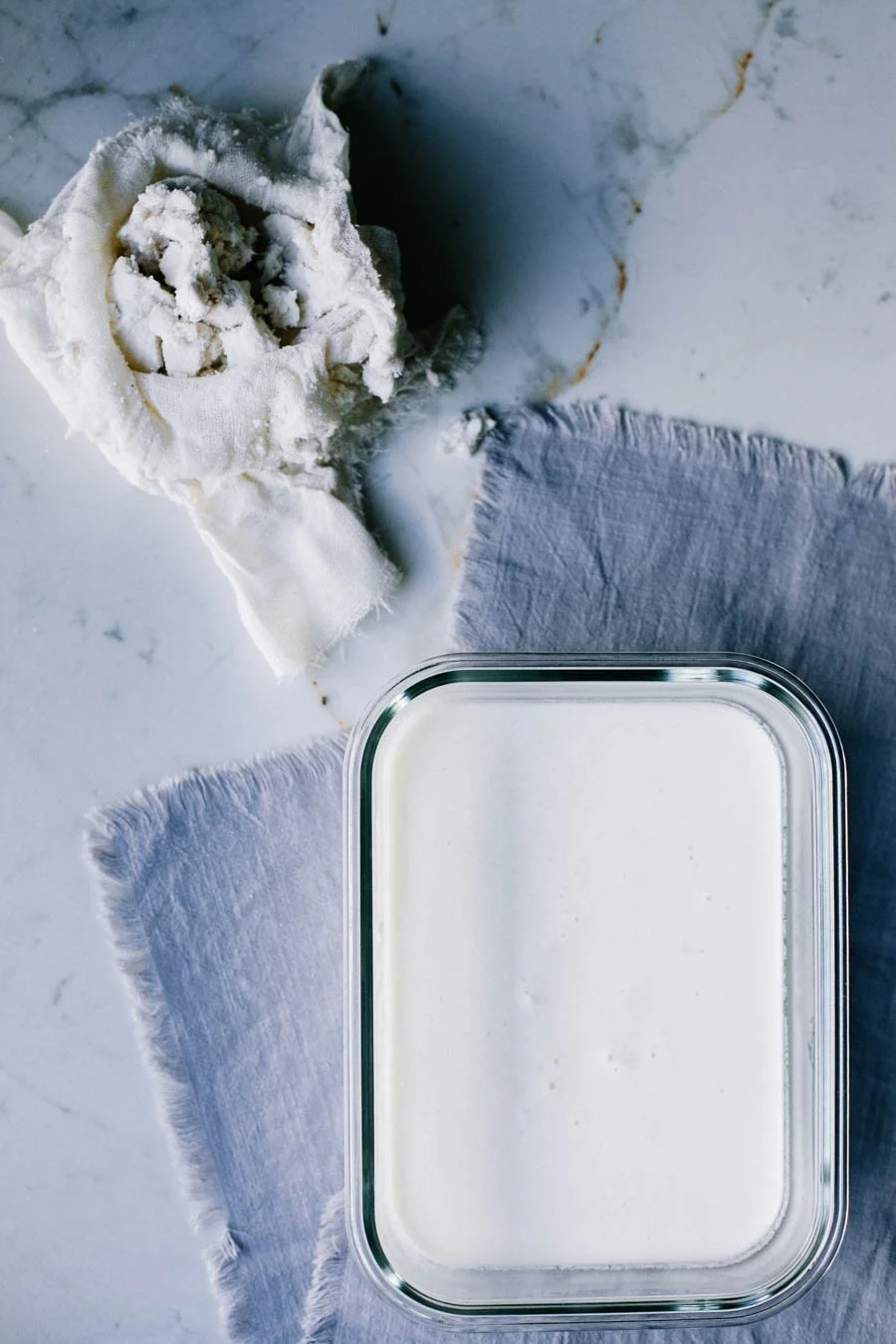
Strain through a fine cheesecloth or muslin into a bowl, squeezing firmly to extract as much liquid as possible. Strain again if needed — the milk should be clean and free of grit. Squeeze out the cheesecloth until you’ve got as much almond milk as you can.
Pour the almond milk into a saucepan. Add the milk and sugar.
Heat gently over a low flame, stirring occasionally, until the mixture just comes to a boil and begins to rise. Remove from the heat immediately.
If using gelatine powder, sprinkle it over the 4 tablespoons of cold water and allow it to bloom for 5–10 minutes until spongy. If using gelatine leaves, soak them in plenty of cold water until soft, then squeeze out excess water.
Add the bloomed gelatine (powder or leaves) to the hot almond mixture and stir gently until fully dissolved. Use the amount recommended by your brand to lightly set around 450–500ml of liquid — the texture should be soft and yielding, not rubbery.
Pour the mixture into a small square tray, loaf tin, or shallow dish. Aim for a depth of about 2–3cm; avoid using a large tray where the mixture will spread too thin.
Refrigerate for 3–4 hours, or until fully set (or overnight if you prefer).
Remove from the fridge about 30 minutes before serving — almond tofu should be cool, not fridge-cold.
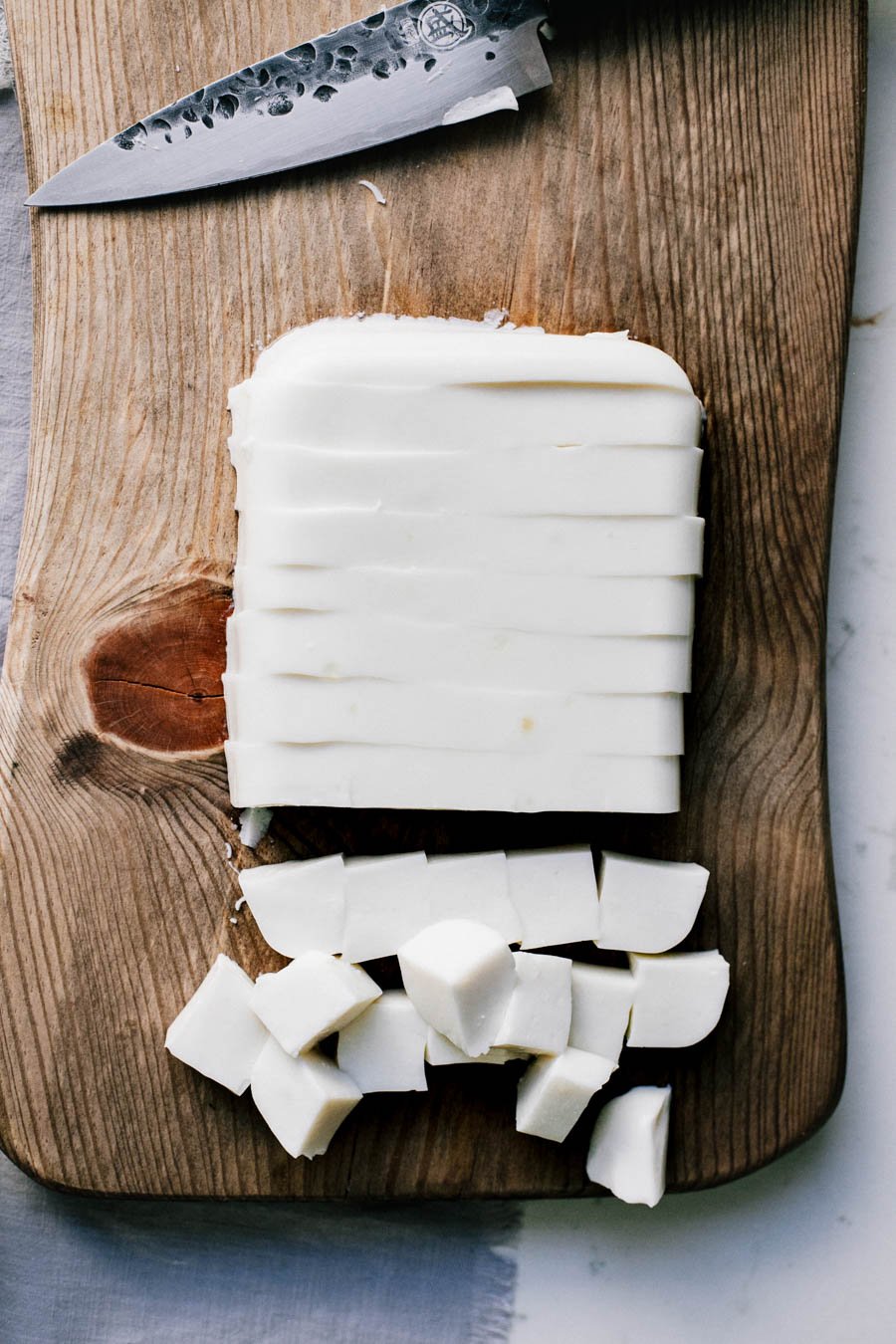
Run a knife around the edges, turn out onto a board, and slice into slabs about 2–3cm thick, then into neat cubes.
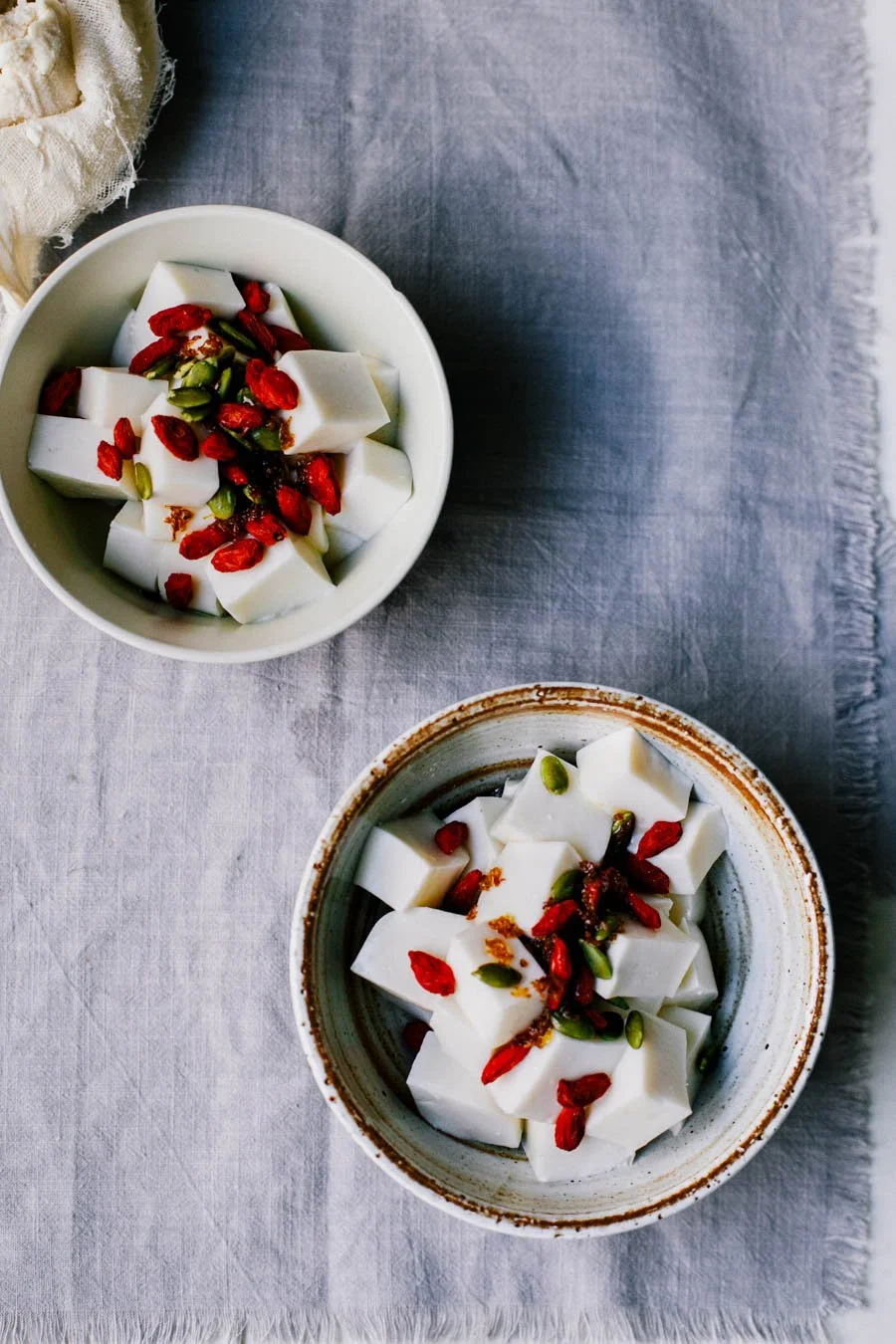
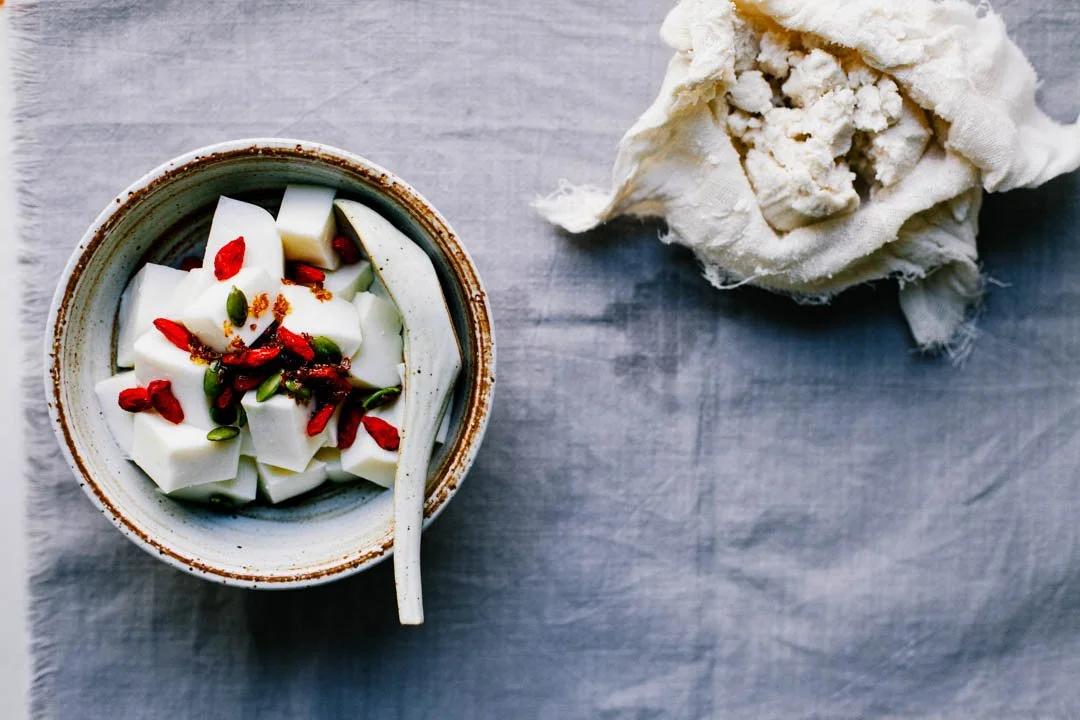
Transfer the cubes to a serving bowl. Scatter over the dried fruit and nuts, if using, and drizzle lightly with osmanthus syrup and serve.