Gansu Fermented Naked Oats
甜醅子
English: Gansu Fermented Naked Oats
Chinese: 甜醅子
Pinyin: tian pei zi
Literal: Sweet fermented grains
In Lanzhou, the capital of Gansu province, tian pei zi is everywhere. Ladled from enamel bowls in night markets, sold in paper cups on the roadside, or in plastic tubs in the supermarkets. And yet, beyond Gansu, it’s almost completely unknown.
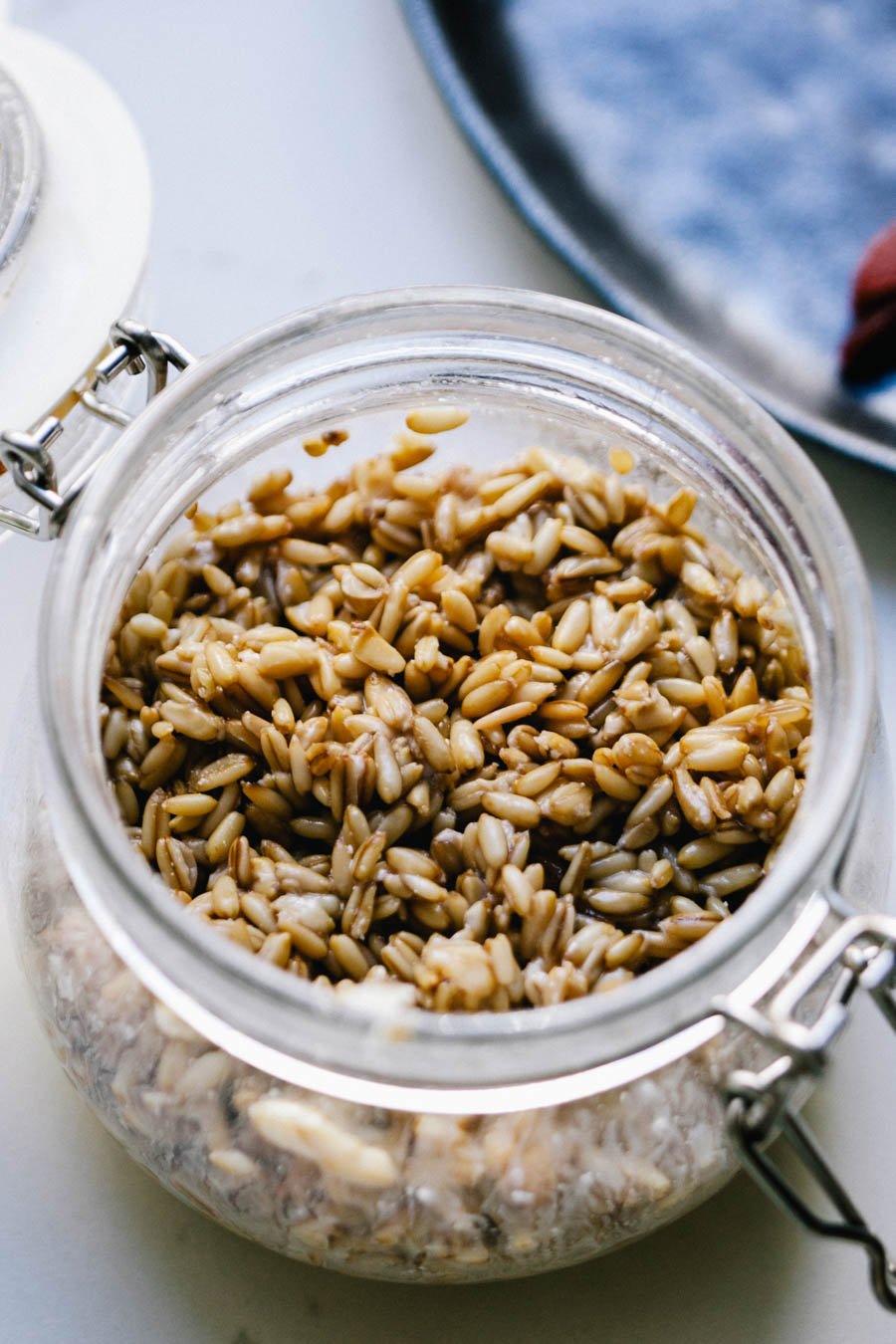
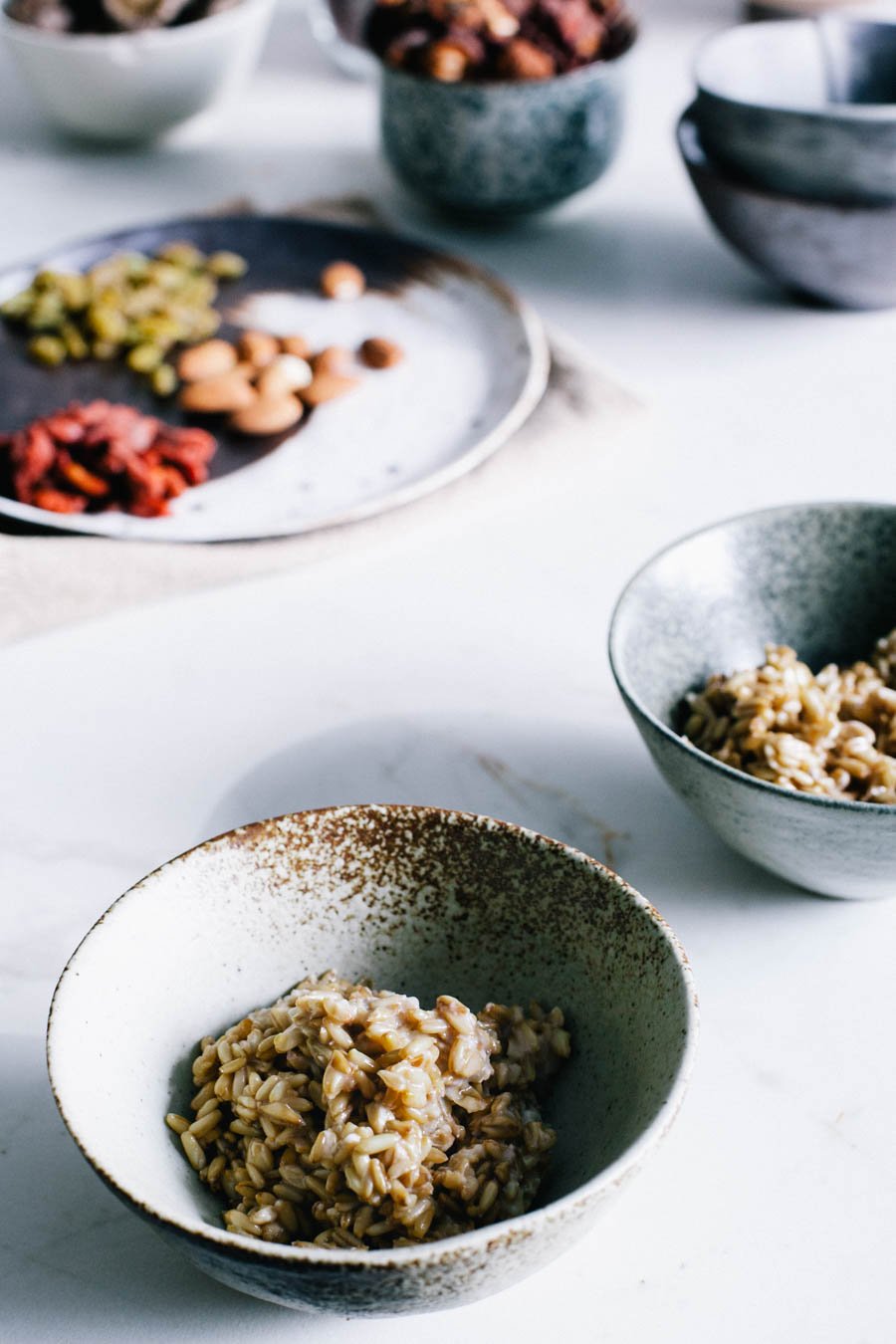
It is one of Lanzhou’s famous “five snacks”, though to call it a snack feels too small. Tian pei zi is one of my favourite Chinese food discoveries over the years. Made from nothing more than naked oats, wine yeast and a splash of water, over time, the raw grains transform into soft and chewy oats, submerged in a slightly sweet and tangy liquid.
The cuisine of Gansu is influenced largely by the local Hui minority, which in turn, was shaped by the climate and harsh landscape of the province. The land is dry, with no rainfall for months on end, the winters are long and the growing season short. Luckily something thrives here: naked oats - sometimes called oat rice. They are resilient, able to grow in water-limited soil where other grains fail. Unlike common oats, their hull is loosely attached rather than tightly fused to the grain, making them easier to process and, crucially, ideal for fermentation.
The method is simple. The steamed oats are mixed with a little wine starter (the same fermentation culture used for lao zao), then kept warm - around 30°C - and left alone. After a day or two, if all goes well, the oats begin to change. A gentle alcoholic fragrance rises. But unlike lao zao, however, tian pei zi can be temperamental. It dislikes the cold. I once tried to coax a batch into life in the depths of winter, only for it to sit stubbornly silent. It needs warmth - an airing cupboard, a spot beside the radiator, somewhere gently cosseted. Treat it kindly and it will reward you.
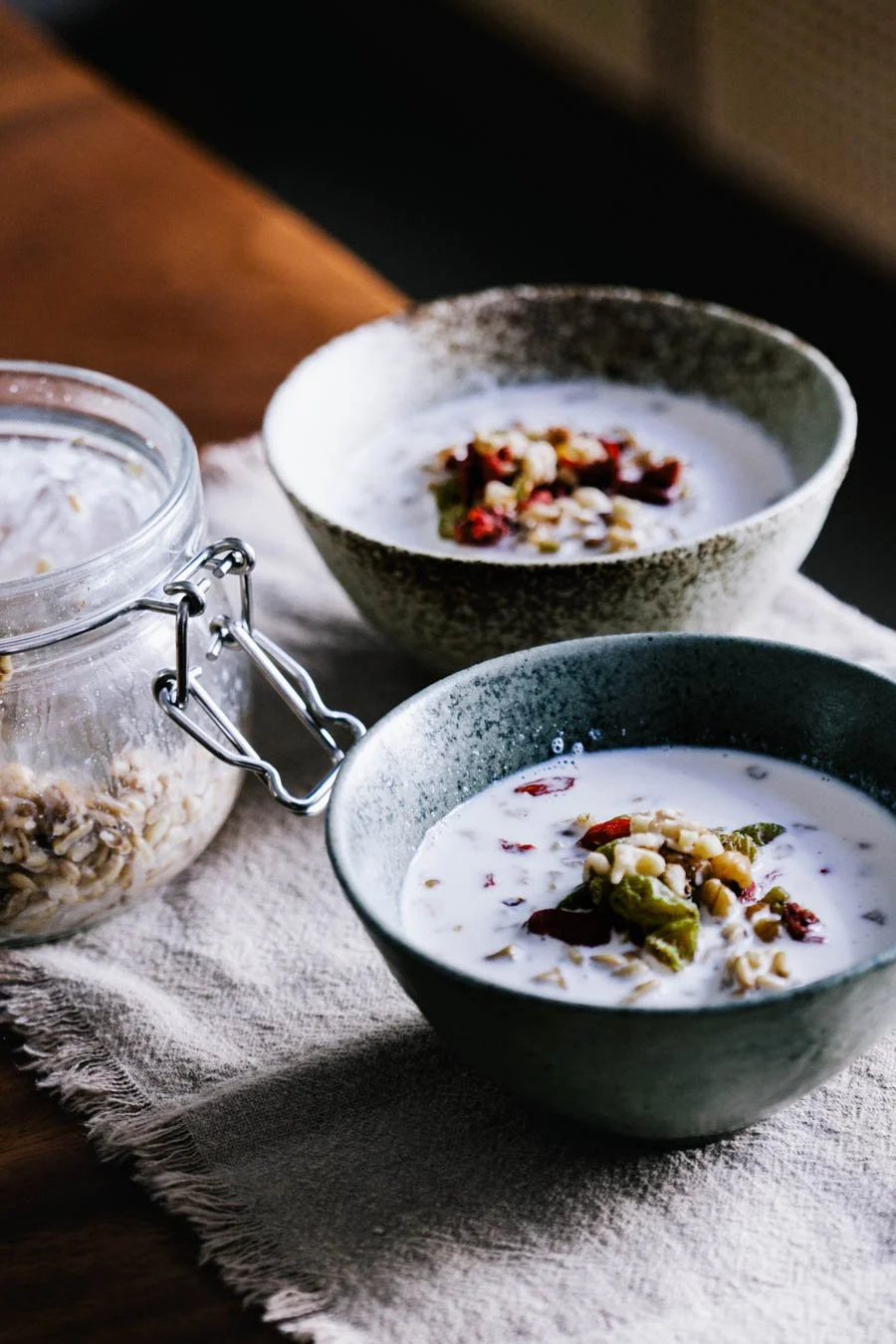
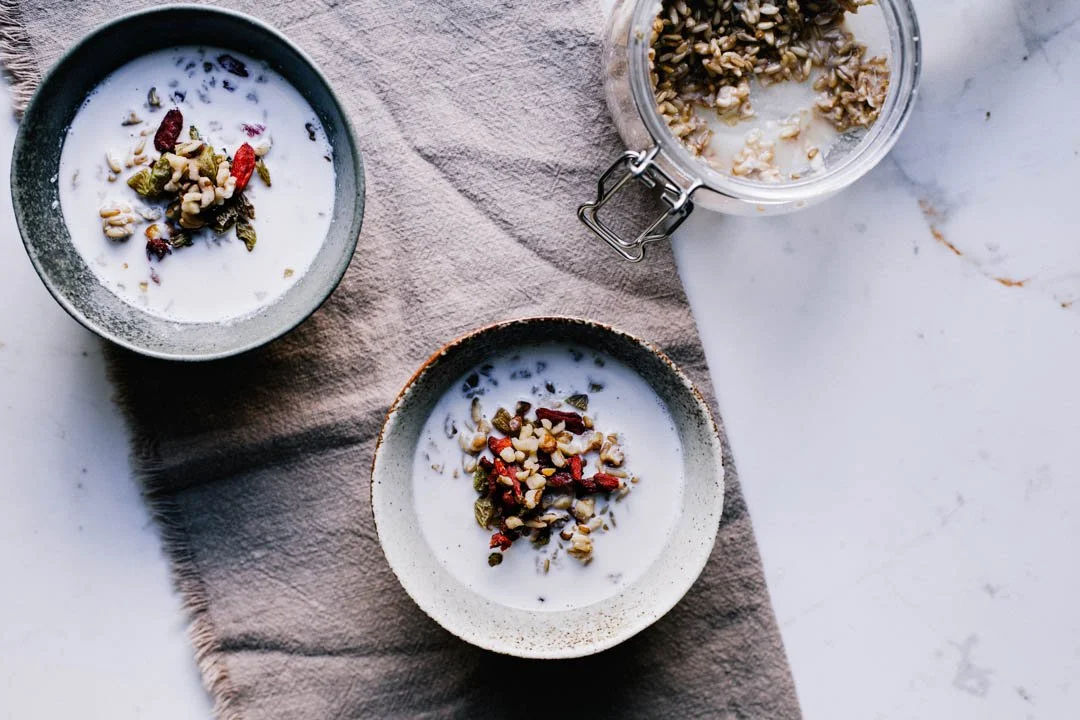
I love keeping a jar in the fridge. A spoonful stirred into porridge gives breakfast a quiet lift. Mixed with warm milk, it becomes soothing and faintly floral. Sprinkled over yoghurt with nuts and seeds, it adds both chew and brightness. In Lanzhou, a few spoonfuls are even stirred into milk tea, creating a drink that is softly sweet, slightly sour, and entirely its own.
It is a humble food, born of an arid landscape and practical necessity, but it is easily one of my favourite ingredients, one of the recipes I come back to again and again.
Makes about 250ml
Ingredients
250g naked oats (油麦)
2-3g Chinese “jiuqu” wine yeast (甜酒曲)
25-30ml warm water
Method
Note: Success here rests on two things: scrupulously clean equipment and a steady warm temperature. Get those right, and this Northwest Chinese classic will reward you.
Rinse the oats thoroughly to remove any dust or grit. Soak for at least 2–3 hours, or overnight, until the grains are plump and fully hydrated.
Drain, then rub the oats vigorously under running water, using your fingers to massage the grains against each other. This removes any surface fuzz and washes away excess bitterness. Rinse until the water runs mostly clear.
Spread the oats evenly over cheesecloth in a steamer basket. Steam for 40–60 minutes, until soft and chewy. A grain should split easily when pressed between your fingers, but it should not collapse into mush.
Transfer the steamed oats to a large, clean, oil-free bowl. Spread them out and stir occasionally with chopsticks to release excess heat.
This step is critical: allow the oats to cool to 30–35°C (85–95°F). They should feel pleasantly warm - never hot - when you touch the side of the bowl with the back of your hand. Too hot, and you’ll kill the starter. Too cool, and fermentation may struggle to begin.
Whilst the oats are cooling, dissolve the sweet wine starter (jiuqu) in a small amount of warm water (around 30°C / 85°F).
Pour the dissolved starter evenly over the oats and mix quickly but thoroughly, ensuring every grain is coated.
Transfer the oats into a clean, oil-free, sealable container - a Kilner jar or ceramic pot works well. Gently press the grains down to compact them slightly, then make a small well in the centre. This hollow allows you to monitor the liquid that will collect as fermentation begins.
Seal the container and place it somewhere warm, ideally 25–30°C (77–86°F). A yoghurt maker is ideal. In summer, a warm corner of the kitchen may suffice; in winter, wrap the jar in a towel and place it near a radiator or on a gentle heating pad. Consistent warmth is more important than high heat.
Wait and watch. Fermentation usually takes 2–3 days, though in colder weather it may take up to 5. You’ll know it’s working when a sweet, wine-like fragrance develops and clear liquid gathers in the well. The longer it ferments, the more pronounced the alcoholic bitterness becomes - taste and stop when it suits you.
Once it reaches your preferred balance of sweetness and tang, transfer to the refrigerator. It will continue to ferment slowly. Best eaten within 5–10 days.
To Serve
You can add a few spoons to anything - your oatmeal, yogurt or into a bowl of warm milk. However, a classic breakfast recipe is:
125ml warm milk
2-3 tablespoons fermented naked oats
1 tablespoon chopped nuts - walnuts, almonds etc.
1 tablespoon seeds - sesame, chia, etc.
1 tablespoon dried fruit - Chines dates, goji berries, raisins etc. - soaked and chopped