Cold Dressed Sand Onion
凉拌沙葱
English: Cold Dressed Sand Onion
Chinese: 凉拌沙葱
Pinyin: cui pi qiezi
Literal: Crispy-skinned eggplant
Region: Inner Mongolia
Not a lot grows in the deserts of Inner Mongolia, and it’s not easy growing veggies on the grasslands either, where winds are high and temperatures are extreme. But luckily for the dry Northern provinces, sand onion is native and thrives in sandy and gravelly soil. It’s thus, become a reliable vegetable in Inner Mongolia, one I find served with almost every meal in the province.
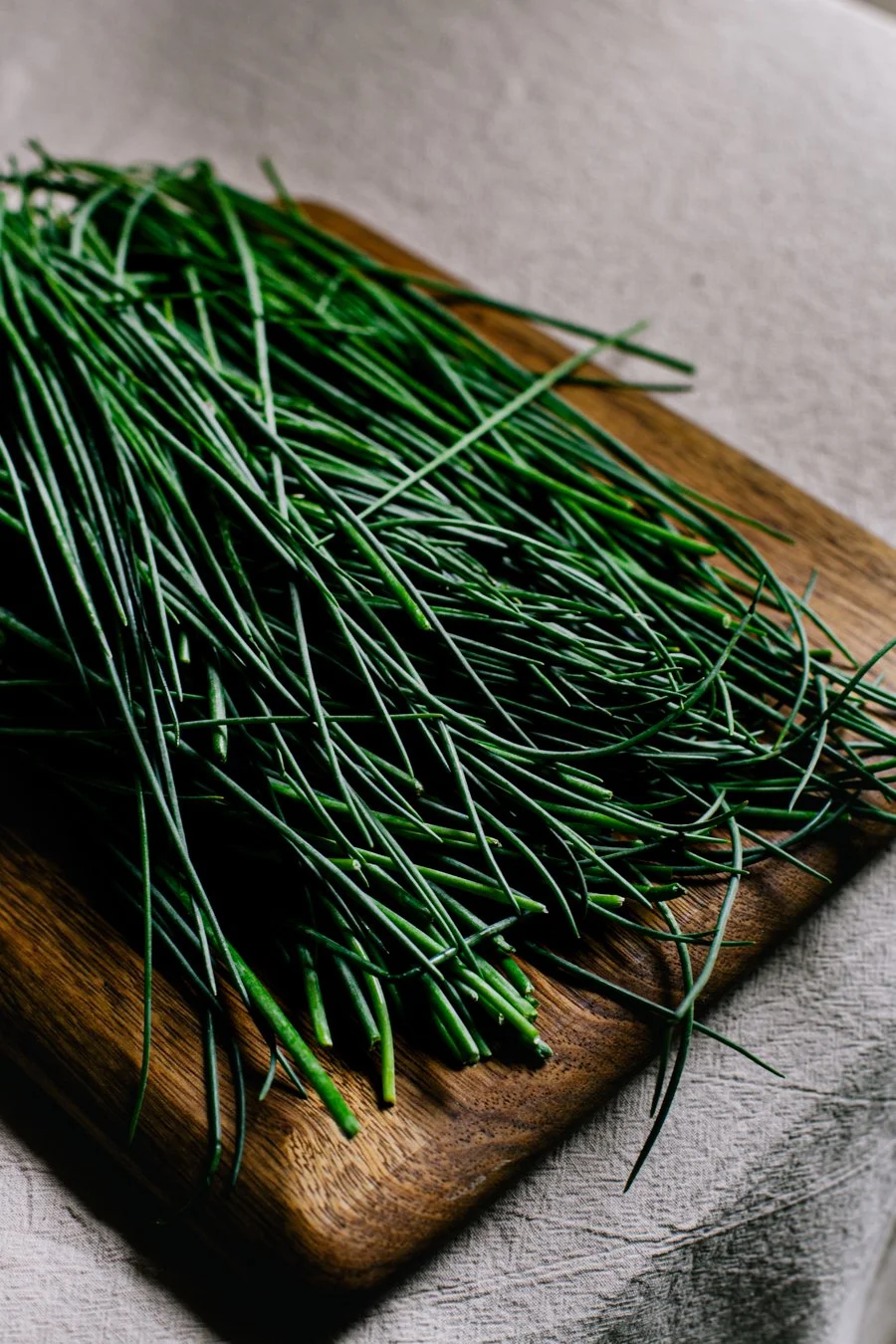
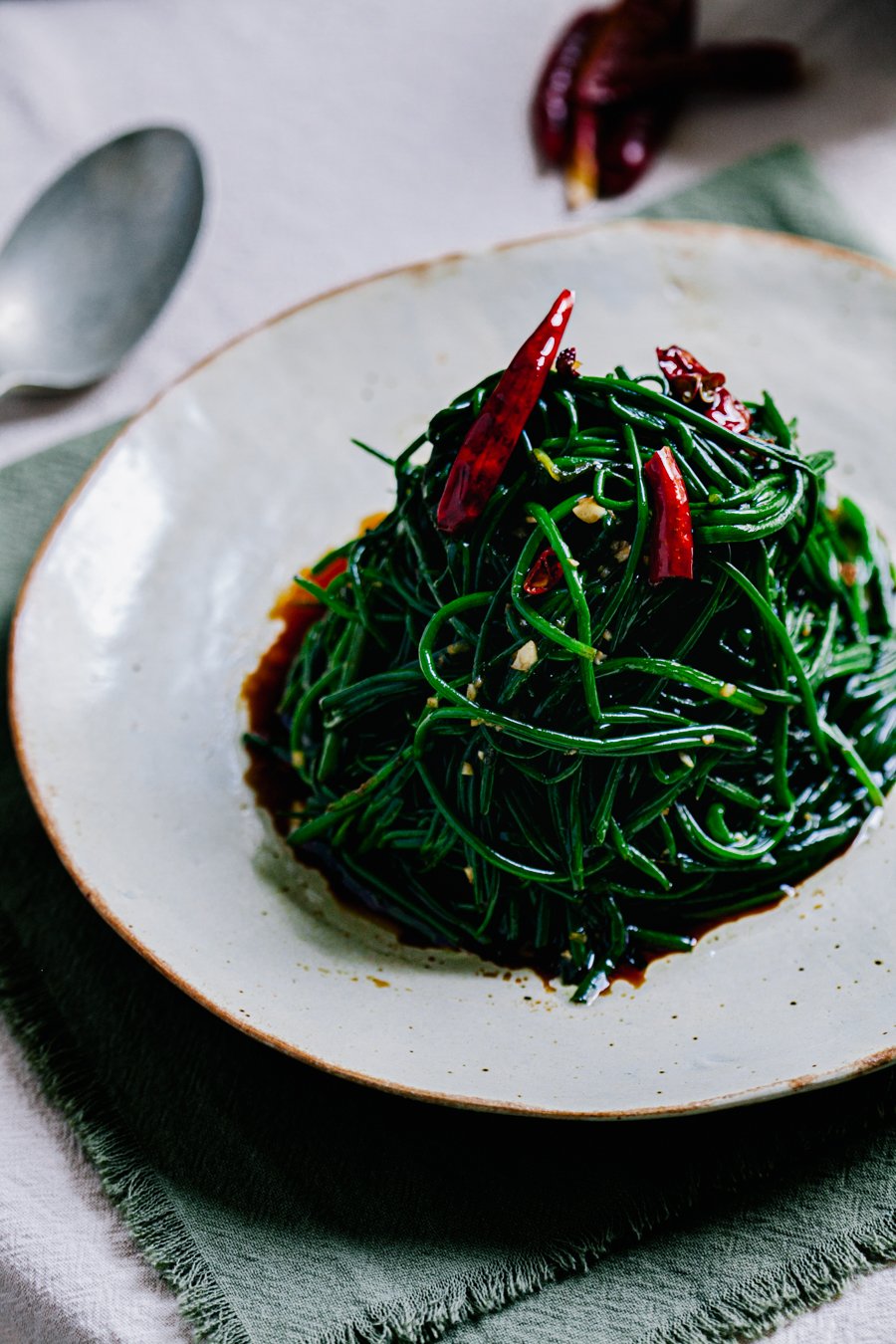
Another meal, another dish of Sand Onion. But it’s unusual enough to not get dull. It tastes like a cross between chives and spring onions - in both flavour and looks. After blanching and dressing, it has a bite most similar to the coast plant marsh samphire, if you’ve ever had that. But whereas samphire is usually served in nothing more than butter, sand onion is blanched and then tossed with a punchy dressing. The dressing is made using the 炝 (qiang) technique which is heating oil in the pan until it’s smoking, then pouring over raw aromatics, in this case, raw garlic and dried chilli. When the oil hits the garlic and chilli, it creates a beautiful, fragrant, warm and gentle spice that when mixed with vinegar, is all that’s needed for sand onion.
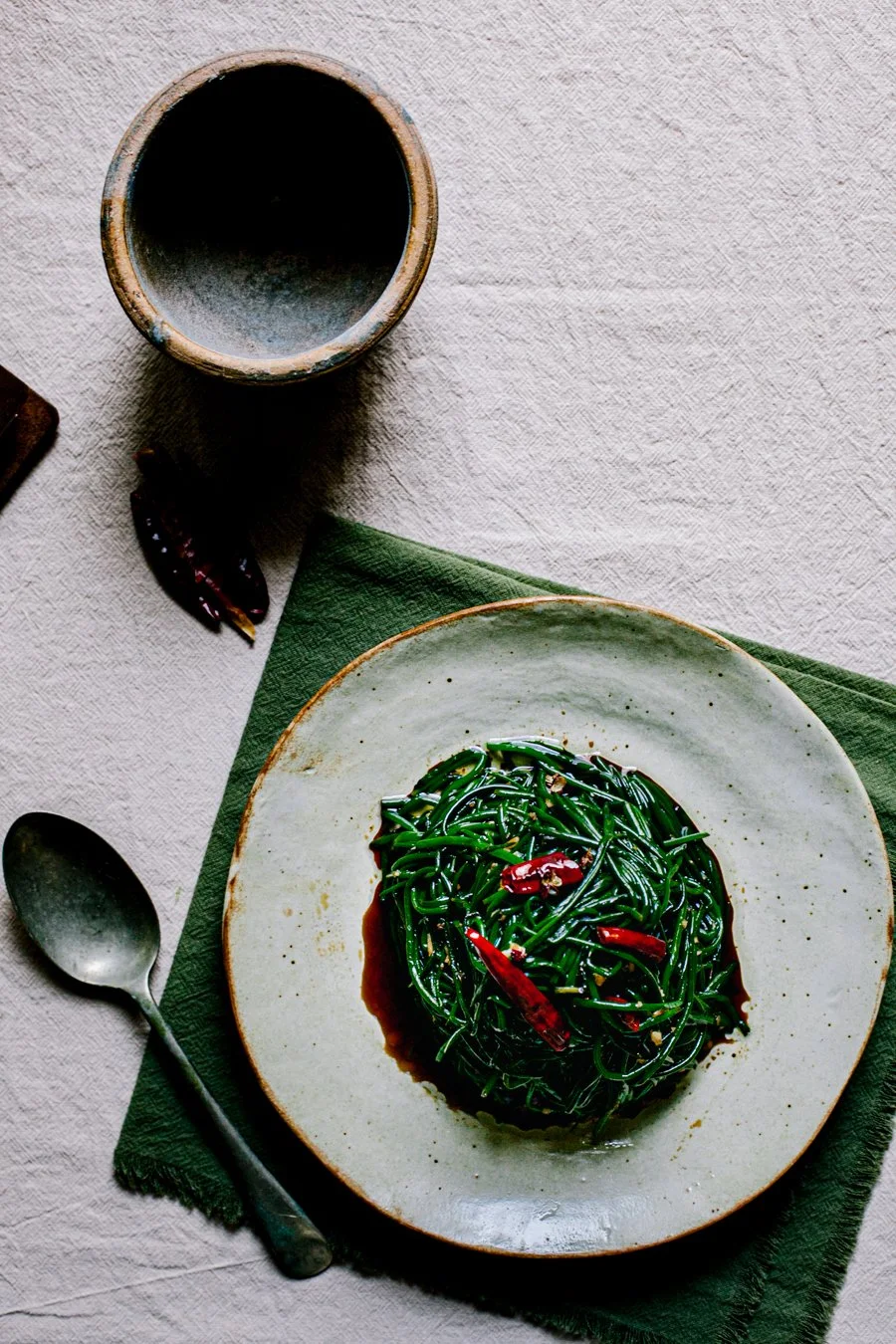
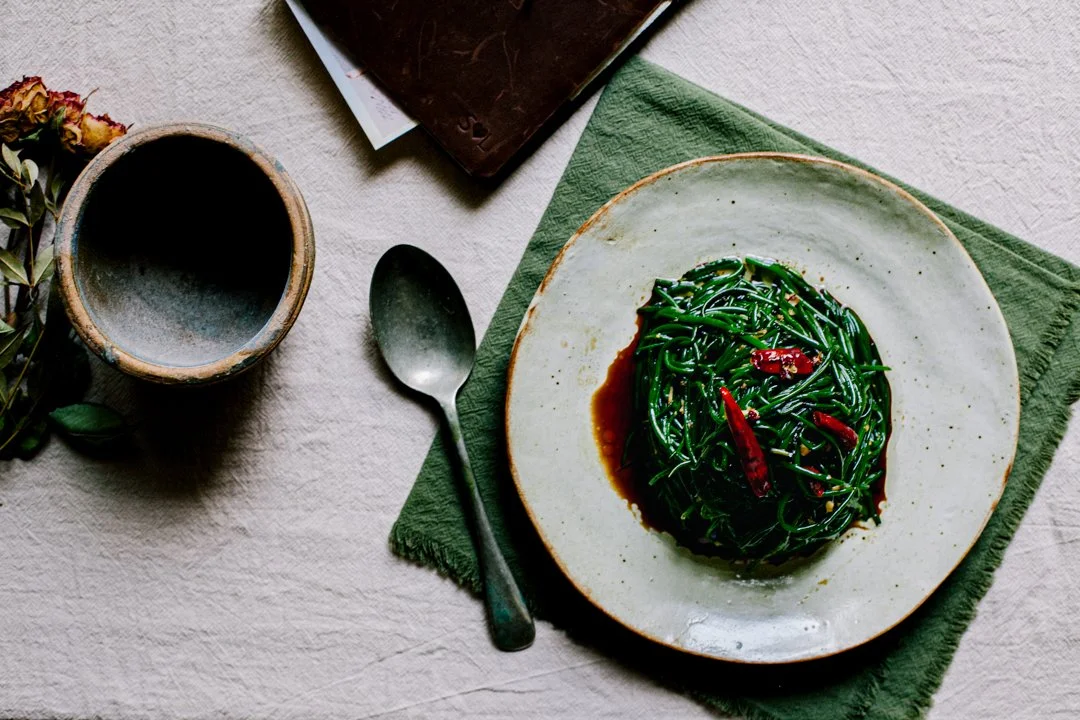
This is the most common way to serve sand onion in Inner Mongolia, the version you’ll see almost everywhere. Below is the recipe.
Serves 2
Ingredients
250g fresh sand onion (沙葱)
For the aromatics
4–5 cloves garlic, finely minced
2 dried chillies, broken
2 tbsp neutral oil
For the sauce
1 tbsp light soy
1 tsp Shanxi black vinegar
Pinch sugar
Method
Rinse the sand onion thoroughly under running water 2–3 times. Sand onions hides a lot of sand and grit, so be generous with the washing.
Bring a pot of water to a rolling boil. Add the sand onion and blanch for 30 seconds to 1 minute – just until the colour turns a deeper green and the leaves soften slightly. Immediately transfer the blanched sand onion into a bowl of ice water (or very cold running water). This stops the cooking process and locks in that signature crunch.
After it's fully cooled, drain well, then gently squeeze out excess water with your hands (but don’t crush the vegetables otherwise they will taste grassy) and dry with paper towels. Place the sand onion in the fridge for an hour, I’ve found it continues to release water.
When ready to serve, pour away any water, dry again and cut the sand onion into smaller pieces, about 8-10cm, and place into a mixing bowl.
Place the finely minced garlic and broken chillies in a small heatproof bowl.
Heat the 2 tablespoons of oil in a wok or pan until it’s hot and shimmering (about 180°C / 350°F). It must be very hot so that you get what’s called the “炝" (qiang) flavour.
Carefully and evenly pour the sizzling hot oil directly over the garlic and chillies. It should sizzle and release a waft of amazing fragrance.
Stir the soy sauce, vinegar and sugar into the oil and mix until the sugar has dissolved.
Immediately pour the prepared sauce mixture over the sand onion and toss together. Place the sand onion onto a plate and serve immediately or let it rest for five minutes for the flavours to meld.