
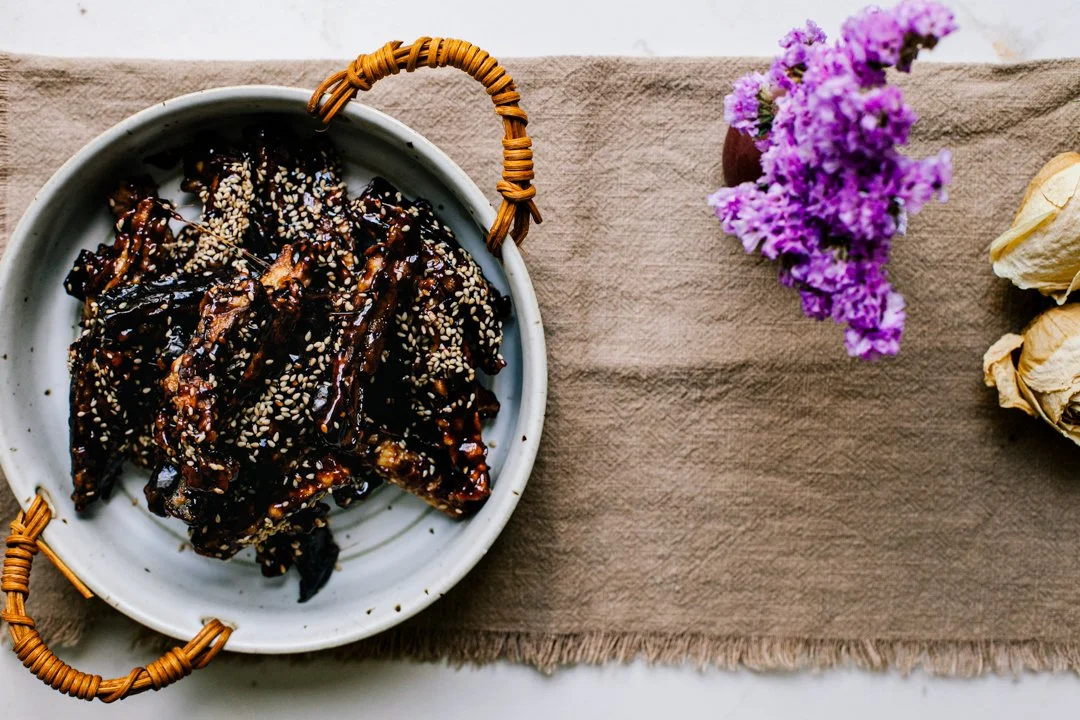
Shaanxi Crispy Eggplant in Sugar Glaze
脆皮茄子
English: Shaanxi Crispy Eggplant in Sugar Glaze
Chinese: 脆皮茄子
Pinyin: cui pi qiezi
Literal: Crispy-skinned eggplant
I’ve long been fascinated by the way eggplant is treated in Chinese kitchens. I think it’s because in the UK, without a greenhouse, they’re difficult to grow, and our recipes tend to reflect that: often soggy, bland and underwhelming. But in China, I’m always encountering new methods that transform the eggplant into something extraordinary. On a recent trip to Xi’an, it was this: golden fried eggplant wedges coated in a glossy, sweet glaze.
Despite China’s reputation for vast megacities, it doesn’t take long to reach farmland from the centre of cities like Beijing or Xi’an. On the outskirts of Beijing, you’ll find orchards and fields in every direction, and farmers selling cucumbers, tomatoes, yellow plums, white melons, preserved peaches, bayberry wine, and eggplants of all sizes. It usually late July when I’m overwhelmed with eggplants as our roof garden seems to give five or so new ones every day.
As I wrote a few months back in my newsletter, this dish reminds me of an Andalusian favourite where eggplant slices are lightly battered, fried and then drizzled with local molasses.
The Shaanxi version puts a distinct Chinese spin on that idea, using the liu li technique, or ‘glazed glass’, which heats the sugar to the hard crack stage, resulting in a brittle, glass-like shell around the eggplant when tossed and cooled.
There are many versions of this dish - traditionally, the eggplant is tossed in the sauce after frying, but sometimes I find it too sweet, and a quick drizzle over the eggplant gives a nice contrast between crispy parts and sweet glaze.
Serves 2–3
Ingredients
2 medium Chinese/long eggplants (about 500g)
2-3 cups of oil for frying
For the batter
2 eggs
Salt, a pinch
4-6 tbsp cornstarch
2-4 tbsp flour
For the sauce
150g white sugar
1 tbsp oil
1 tbsp water
To Finish
2 tbsp sesame seeds
Method
Cut the eggplants into batons about 8–9cm (3.5 inches) long and roughly 2–3cm (½ inch) thick. A simple way is to slice each eggplant into three equal sections, then halve each piece lengthwise, and cut into quarters or eighths depending on thickness. To prevent browning, place the cut pieces in a bowl of clean water. After a few minutes, drain them thoroughly in a colander.
In a bowl, crack the eggs and add a pinch of salt. Beat the egg lightly. Add the drained eggplant pieces and mix until they are all evenly coated. Sprinkle the cornstarch and flour over the eggplant and mix well again, ensuring every piece is fully coated. A light, even dusting will create a crispier shell.
Heat about 2-3 inches of oil in a deep pot or wok to 180°C (350°F). Test the temperature by placing the tip of a wooden chopstick in the oil; if it immediately bubbles vigorously, the oil is ready. Carefully add the coated eggplant pieces in a single layer, avoiding overcrowding the pot. Fry for 2-3 minutes until they are lightly golden. Remove with a slotted spoon and drain on a paper towel. Increase the oil temperature to around 200°C / 390°F and fry the eggplant pieces again, in batches if needed, for another 30-60 seconds until they are deep golden brown and extremely crisp. Drain on fresh paper towels.
Create the glaze. In a clean wok, add 1 tablespoon of oil, 1 tablespoon of water, and the sugar. Cook over medium-low heat, stirring gently with a spatula. The sugar will melt and then begin to bubble. First, it will form large, thick bubbles. As the water evaporates, the bubbles will become smaller and the mixture will thicken into a syrup. As the syrup thickens, it will start to turn a pale yellow, then a deeper amber, and finally a rich caramel colour. The moment it reaches this transparent amber stage, remove the pan from the heat immediately to prevent burning.
Immediately add the fried eggplant and sesame seeds to the hot caramel. Using two spatulas or spoons, toss and turn the pieces very quickly until they are all evenly coated with the glossy syrup. Work fast because the caramel will begin to harden as it cools.
Pour the glazed eggplant onto a large, oiled plate or a sheet of parchment paper. Use two forks or chopsticks to carefully separate the pieces before the caramel hardens completely. Let it cool for a few minutes. As it cools, the sugar coating will solidify into a beautiful, crunchy, glass-like shell. Serve immediately while hot and crispy.
Alternate method: The tossing method will result in a sweet caramel shell forming on each fried baton of eggplant. This can be too sweet for some, so instead, you can plate your eggplant and drizzle the sauce over the top in a zigzag so you have the contrast of sweet and savoury.
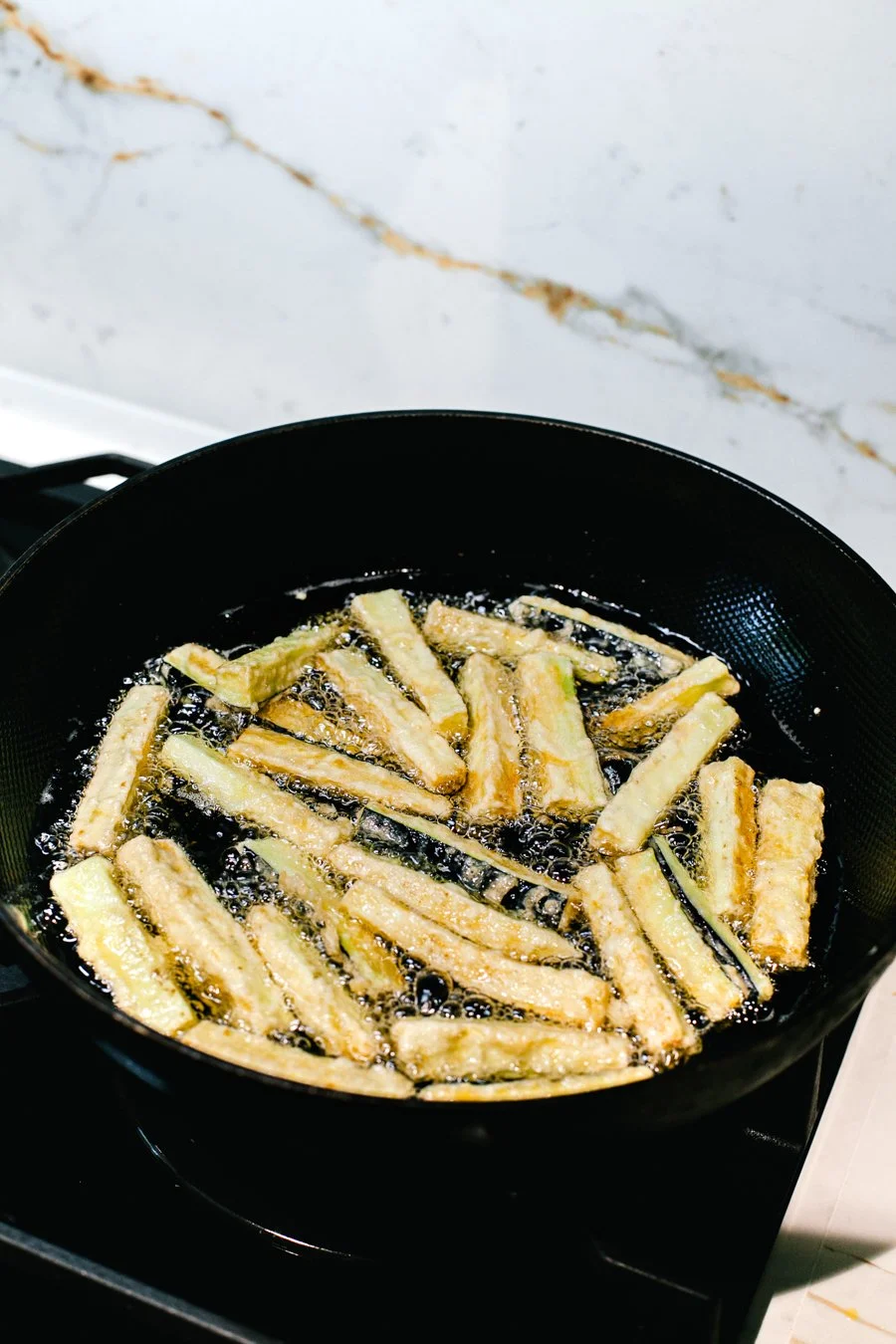
Frying the Eggplants
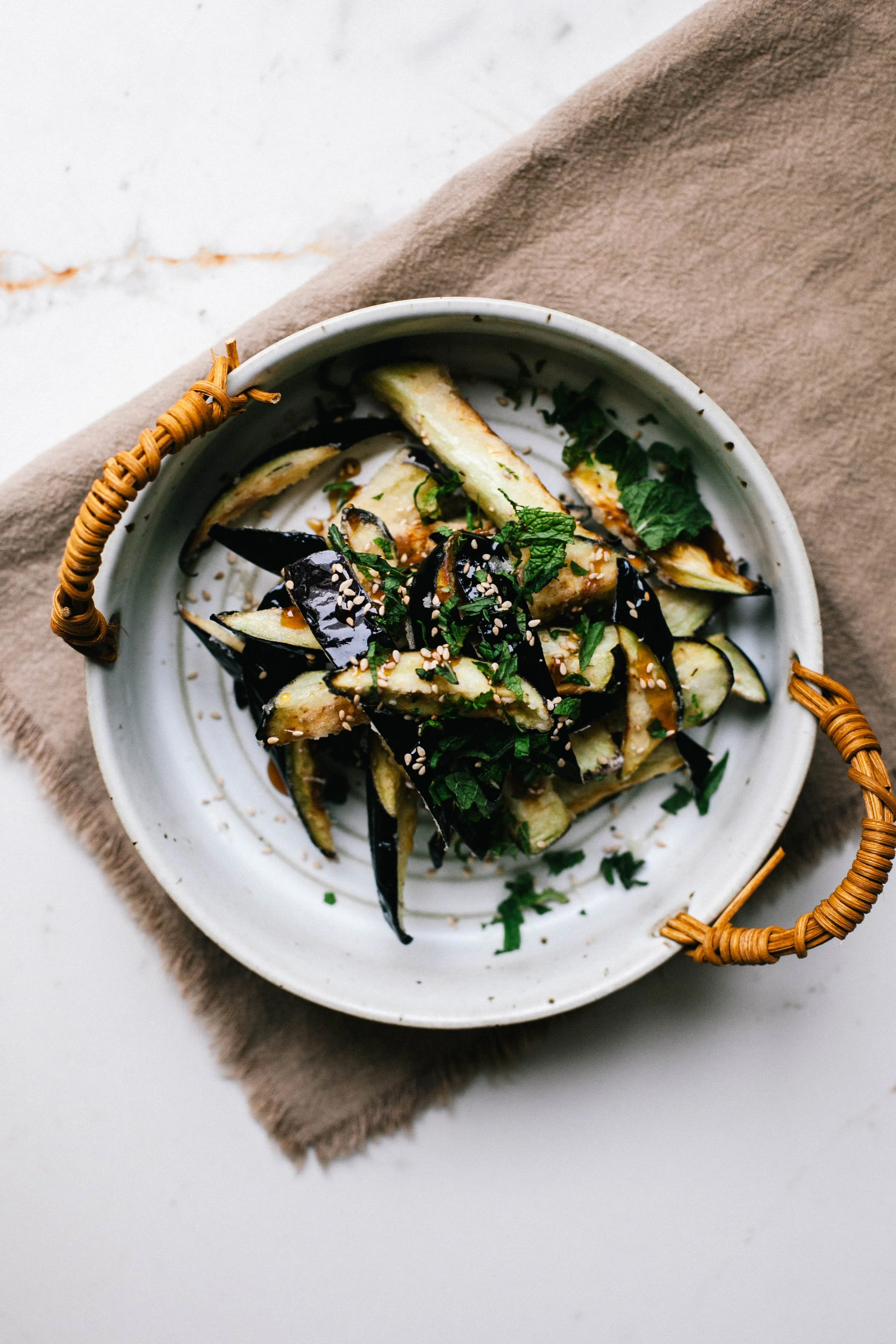
The drizzled sauce version
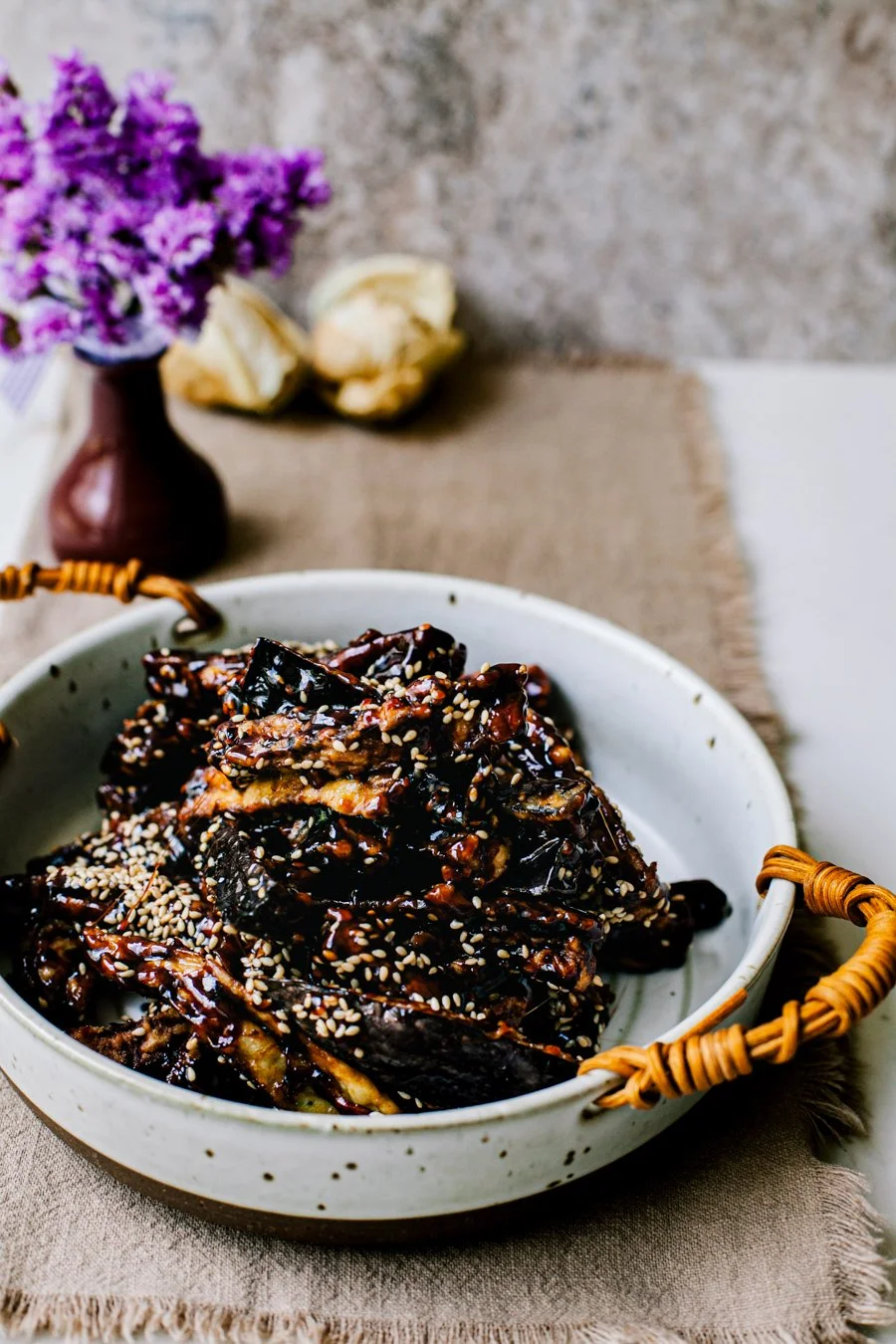
The tossed version