Shanxi Kao Lao Lao
烤姥姥
English: Shanxi Kao Lao Lao
Chinese: 烤姥姥
Pinyin:kao lao lao
Literal: Woven basket / No real meaning
Can any dish in China exist without a story explaining where it came from? In a country that loves both food and folklore, apparently not.
So here we are, the origin story of kao lao lao is an amusing misunderstanding rather than grand myth. The tale goes that Li Yuan, the future founder of the Tang dynasty, back when he was still a duke, was once exiled to Shanxi and stayed at a temple. During a meal, he pointed at something and asked what it was called. A monk replied, "kao lao lao", assuming Li Yuan was asking about the woven basket holding the food rather than the food itself. Is it true? Who knows, but the name stuck, as did the story.
So... what exactly is kao lao lao?
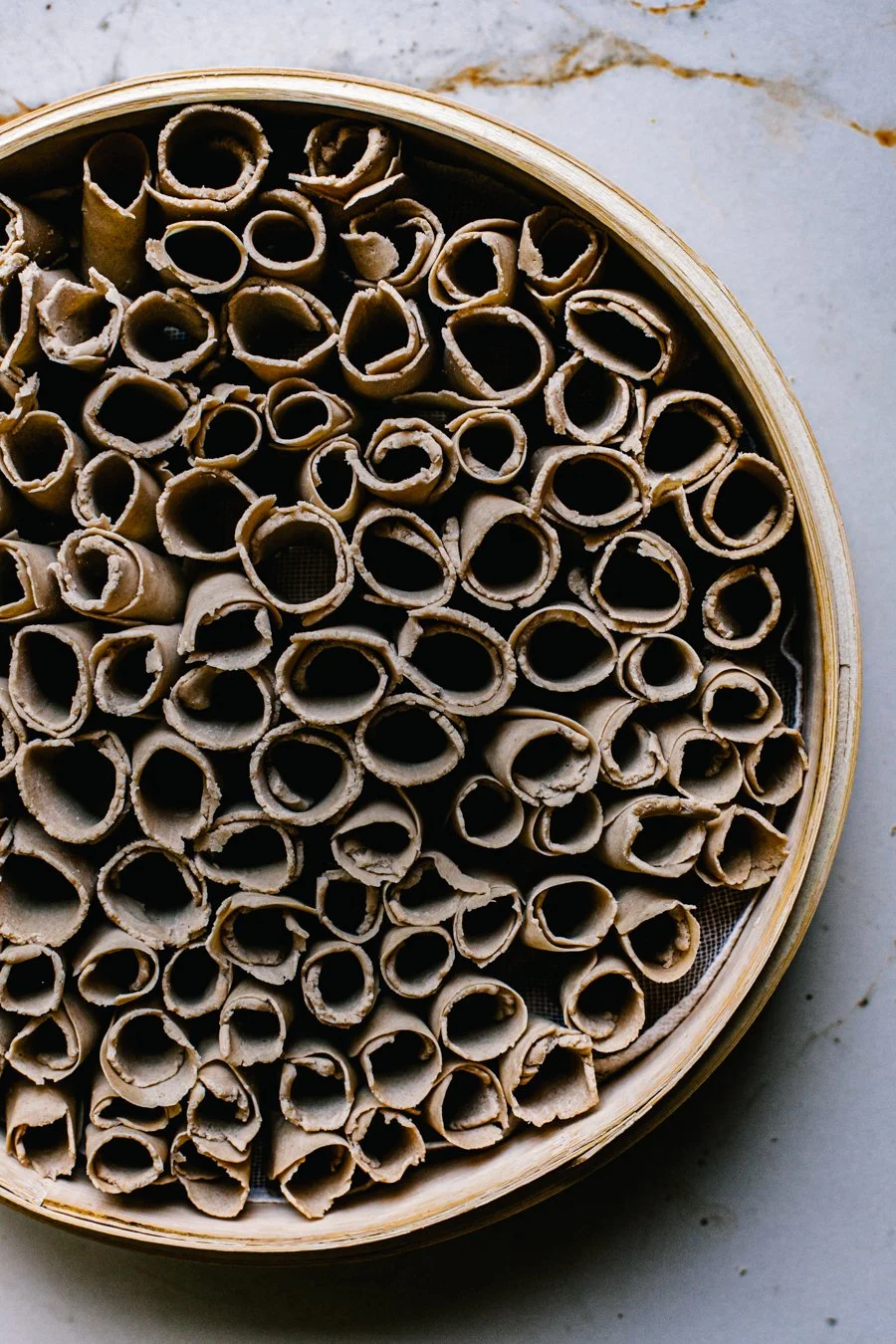
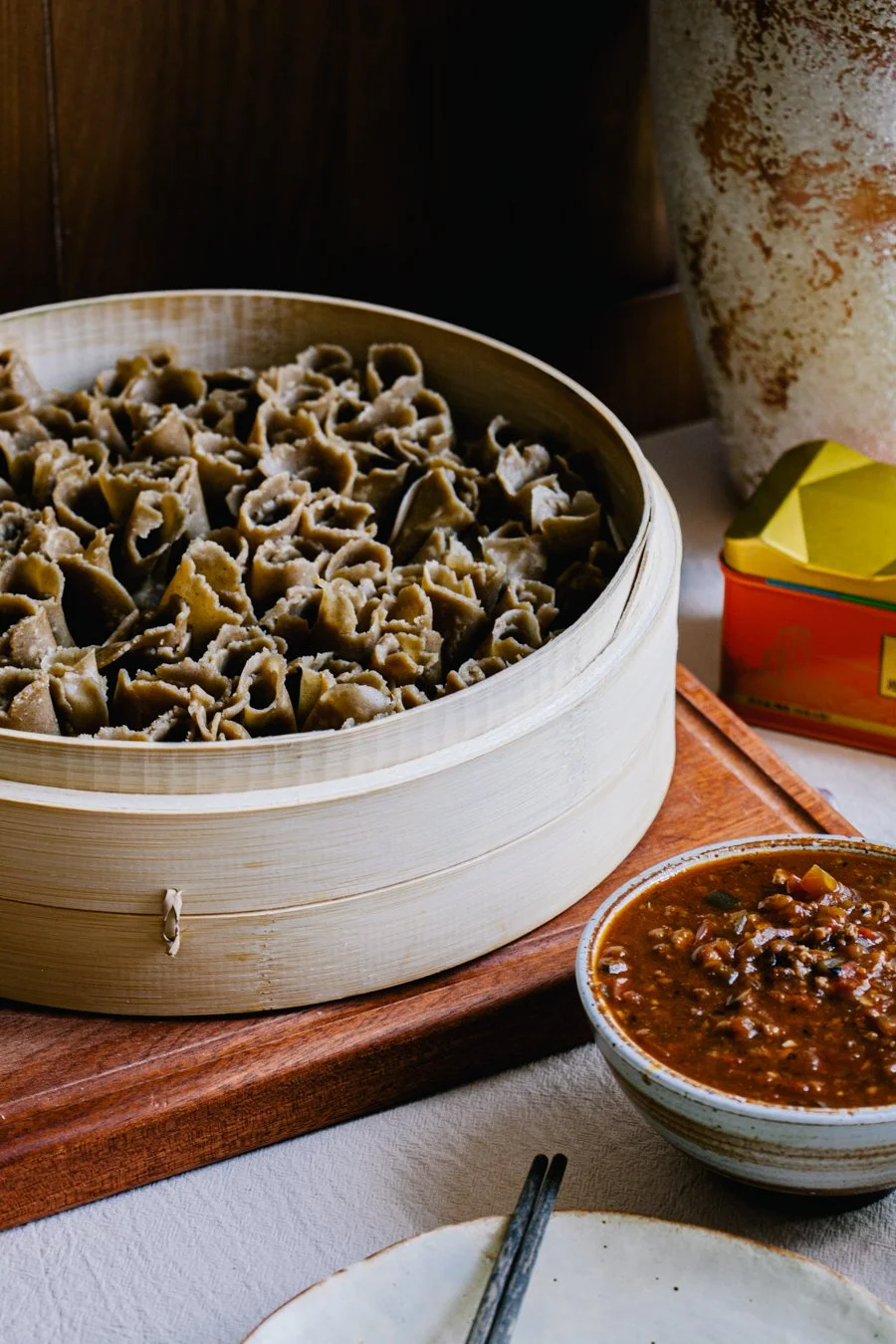
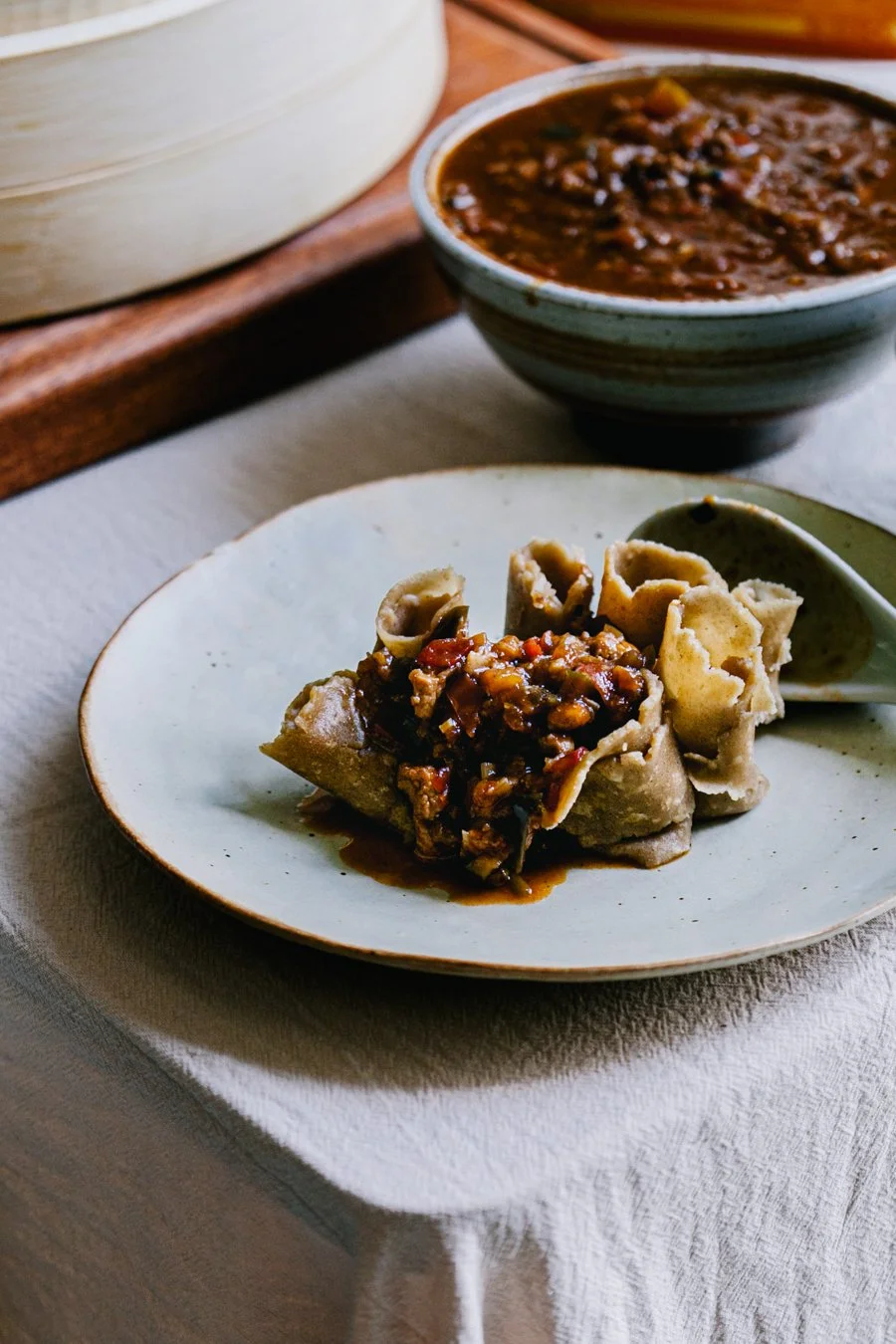
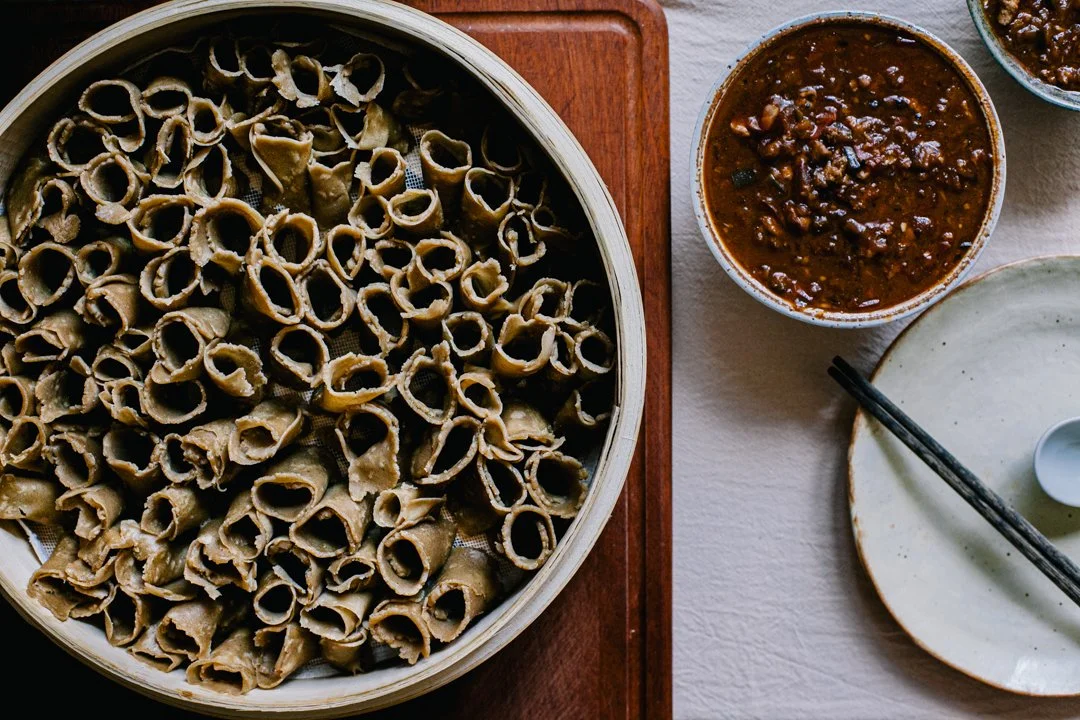
Imagine little tubes of pasta made from oat flour, steamed until tender and served with a rich, savoury sauce. You can spoon the sauce over the top, though that's a good way to make a mess of your steamer, or serve it on the side for dipping. They look a bit like stubby rigatoni, and yes, the sauce wouldn't feel out of place on an Italian table.
Making them does take a little patience. Oat flour contains no gluten, so the dough doesn't stretch the way wheat dough does. Traditionally, you smear each little piece across the work surface with the heel of your palm, then roll it around your finger into a tube. The first few will probably be terrible. Mine certainly were. Don't worry. You can always use a rolling pin to help, or simply keep practising. You'll need around a hundred of them anyway, so practice, practice, practice and you’ll get there.
Serves 2 to 3
See the Instagram video of me making Kao Lao Lao here.
Ingredients
For the oat rolls
500g naked oat flour (莜面)
400-450ml boiling water
pinch of salt
For the sauce
2 (about 400g) Chinese eggplants
4 cloves garlic – finely chopped
1 tbsp of ginger – finely chopped
2 spring onions (scallions) – chopped, white and green parts separated
200g pork shoulder – diced
500g ripe tomatoes chopped into 2 cm chunks
2 tbsp tomato paste
2 tbsp light soy sauce
1 tsp dark soy sauce
1 tsp sugar
½ tsp white pepper
250 ml (1 cup) water or stock
To finish
1 tsp sesame oil
1-2 tbsp coriander (cilantro) – chopped
Making the dough
Place the oat flour into a large bowl. Pour over about 90% of the boiling water while stirring vigorously with chopsticks (the boiling water ‘cooks’ the dough and allows the dough to be rolled, even though it contains no gluten).
The flour should immediately form shaggy clumps. The dough should look slightly dry rather than wet so resist adding too much water at this time.
Once the dough is cool enough to handle (2-3 minutes), knead for about 8 minutes. At first it will feel crumbling, but then it should becomes smooth and pliable, almost like modelling clay. It should not be sticky not cracking. If it is cracking, add a bit more boiling water, a tablespoon at a time.
Time to roll the tubes. Cut off a walnut-sized piece of dough. Roll it into a small ball and place onto your work surface. With the heel of your palm, push down on the dough and keep pushing away from you. The dough should ‘smear’ across the surface. You want the dough about 2mm thick.
Peel the dough carefully from the surface (or use a dough scraper). Start with the near edge and roll the dough around your index finger (or a chopstick).
Slide it off. You should now have a tube of oat flour pasta. Arrange the tube into a lightly oiled steamer.
Continue this process until your steamer basket is full. This dough will make about 100 - 150 tubes.
Bring your wok or pot of water to boil first. Then place your steamer on top. Steam the pasta for 10-12 minute or until the tubes become slightly glossy and firm. Don’t overcook otherwise they will loose their chewiness.
Serve whilst steaming hot alongside the sauce.
For the sauce
Cut the eggplants into 2 cm (¾-inch) cubes. Toss them with ½ tsp salt and let sit for 10 minutes, then pat dry with paper towels.
Heat 2-3 tablespoons of oil in a wok over medium-high heat. Add the garlic, ginger, and the white parts of the spring onions. Stir-fry for 30 seconds until fragrant.
Add the ground meat to the wok. Break it up and cook until it changes colour and starts to brown slightly – about 4–5 minutes.
Add the diced eggplant to the wok. Stir-fry for 4–5 minutes until the eggplant starts to soften and turns slightly translucent at the edges. The oil will get absorbed quickly – that's normal.
Add the chopped tomatoes and paste and stir-fry for 2–3 minutes until they begin to release their juices.
Add the light soy sauce, dark soy sauce, sugar, salt, and white pepper. Pour in the water or stock. Bring to a boil, then reduce the heat to medium-low, cover, and simmer for 10–12 minutes.
Cook until the eggplant is completely soft and silky, and the tomatoes have broken down into a thick, chunky sauce. If it's too thick, add a splash more water; if too thin, simmer uncovered for a few extra minutes to reduce. I love to run a stand blender quickly through the sauce at this point so that half the sauce becomes smooth and the rest remains chunky.
Turn off the heat, stir in the sesame oil, and garnish with the green parts of the spring onions and coriander (cilantro). Serve hot with the freshly steamed kao lao lao.