Shanxi Stir-Fried Cat’s Ears
炒猫耳朵
English: Shanxi Stir-Fried Cat’s Ears
Chinese: 炒猫耳朵
Pinyin:chao mao er duo
Literal: Stir-fried cat’s ears
Shanxi is the heartland of Northern Chinese cuisine: wheat and dough-based cooking through and through. It’s home to hundreds of noodles, although perhaps what we, in English, might classify as ‘pasta’ - doughs shaped into all kinds of forms, sizes and textures, made not only from wheat flour, but also oat flour and buckwheat.
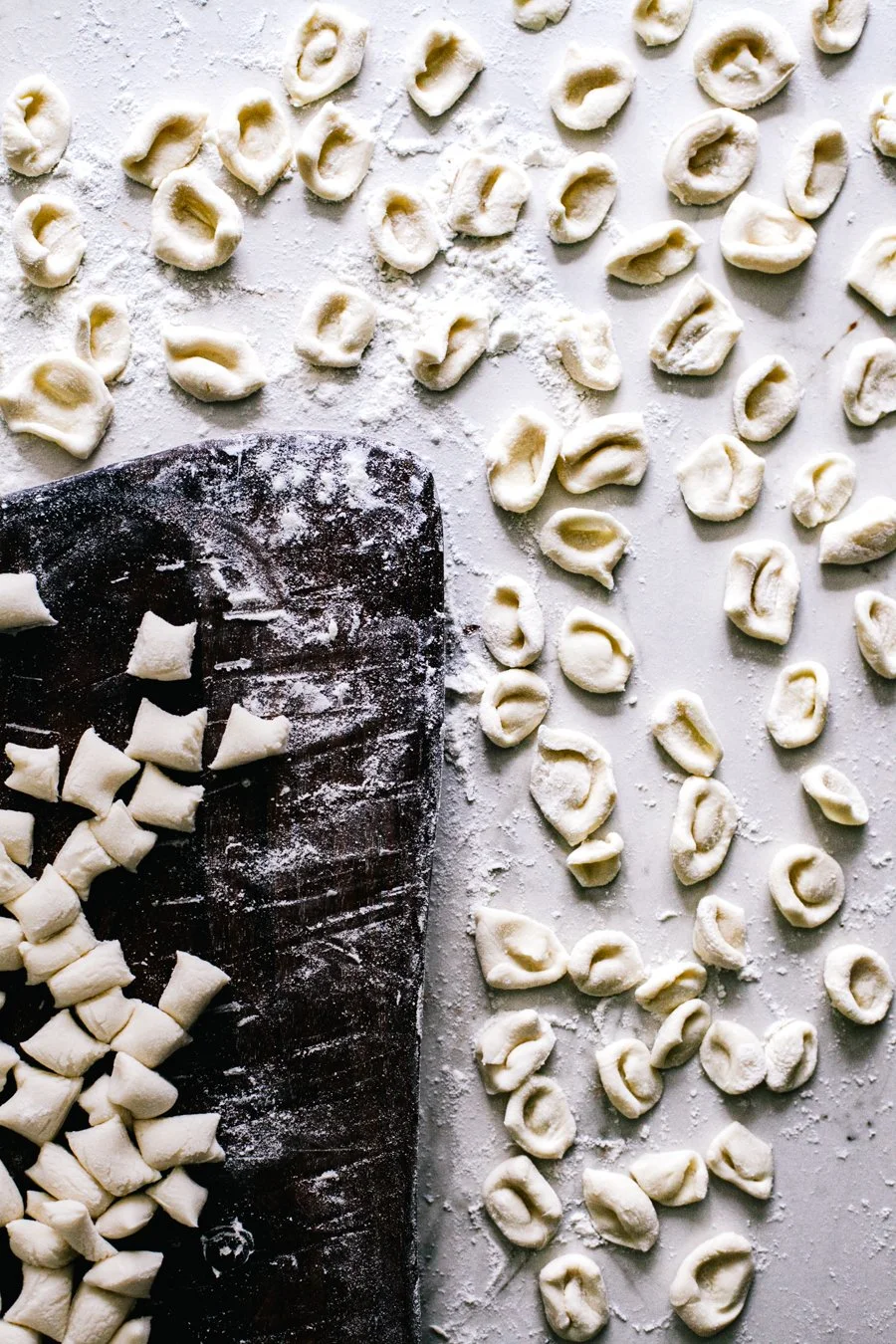
Cat’s Ears is a traditional pasta made by taking small squares of dough and pushing them with your thumb across a surface until they curl. Thankfully, no cats are harmed in the making of this dish. Instead, the name refers to their shape, each small piece of pasta resembling the small ear of a cat. The end result is something similar to Italian orecchiette.
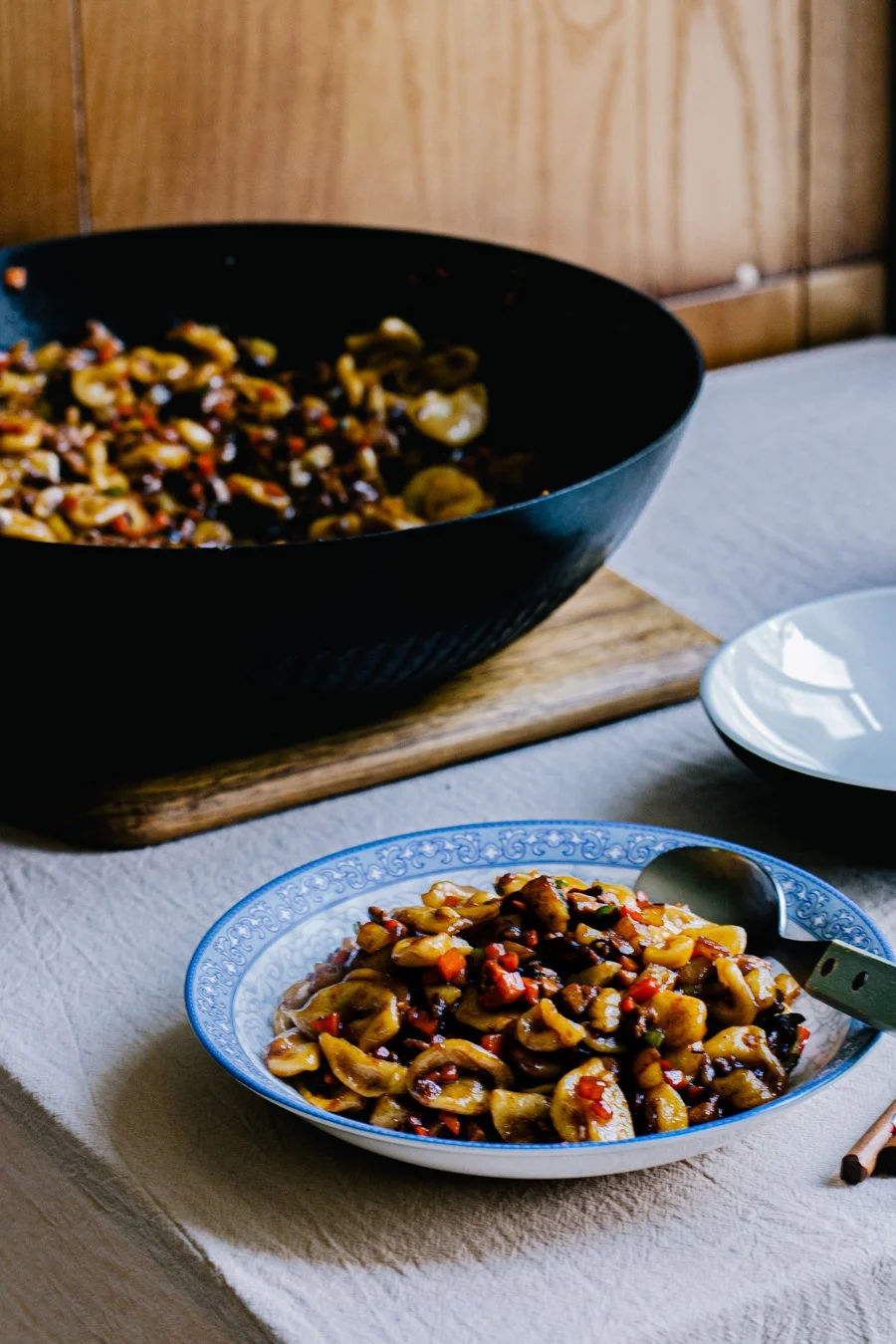
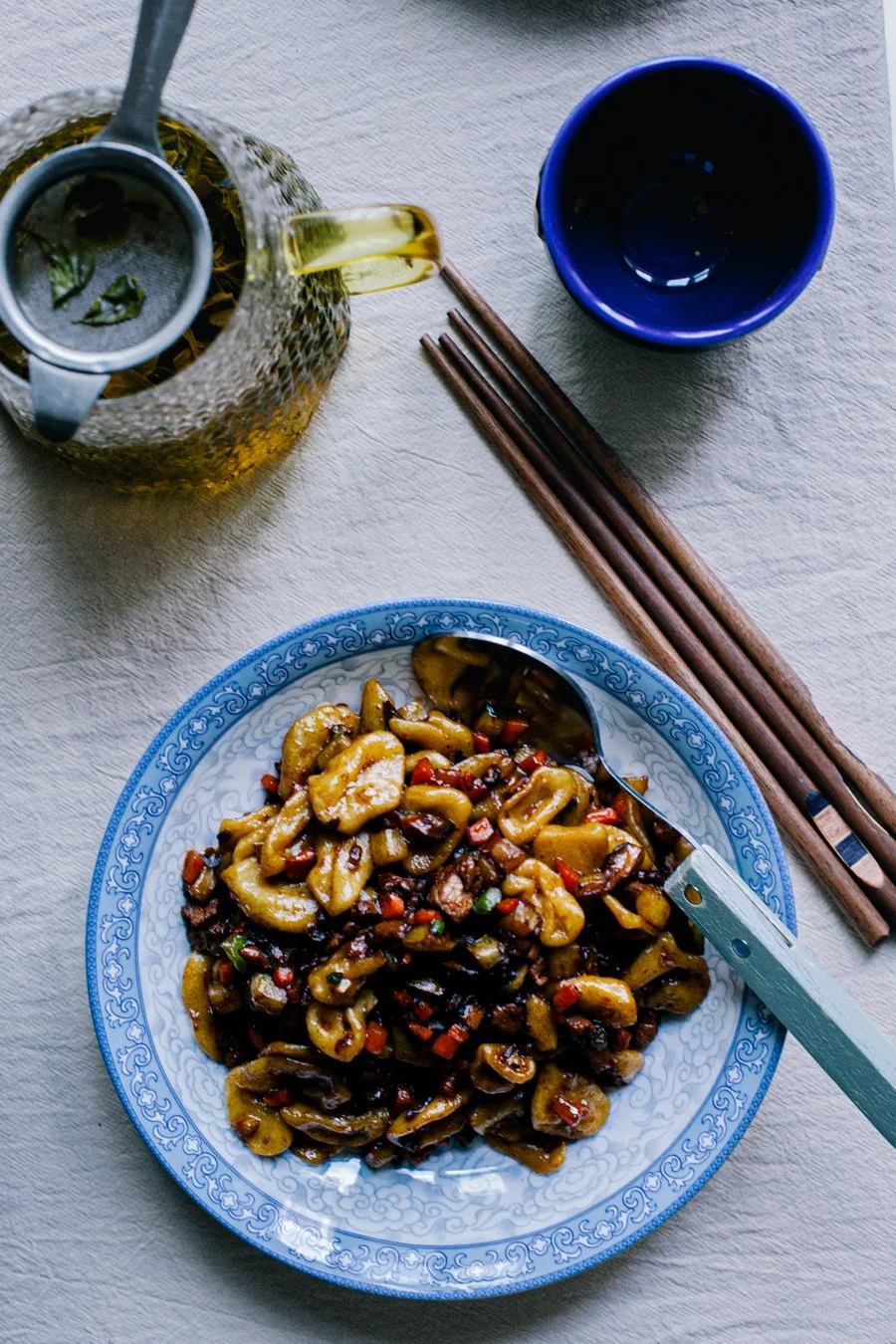
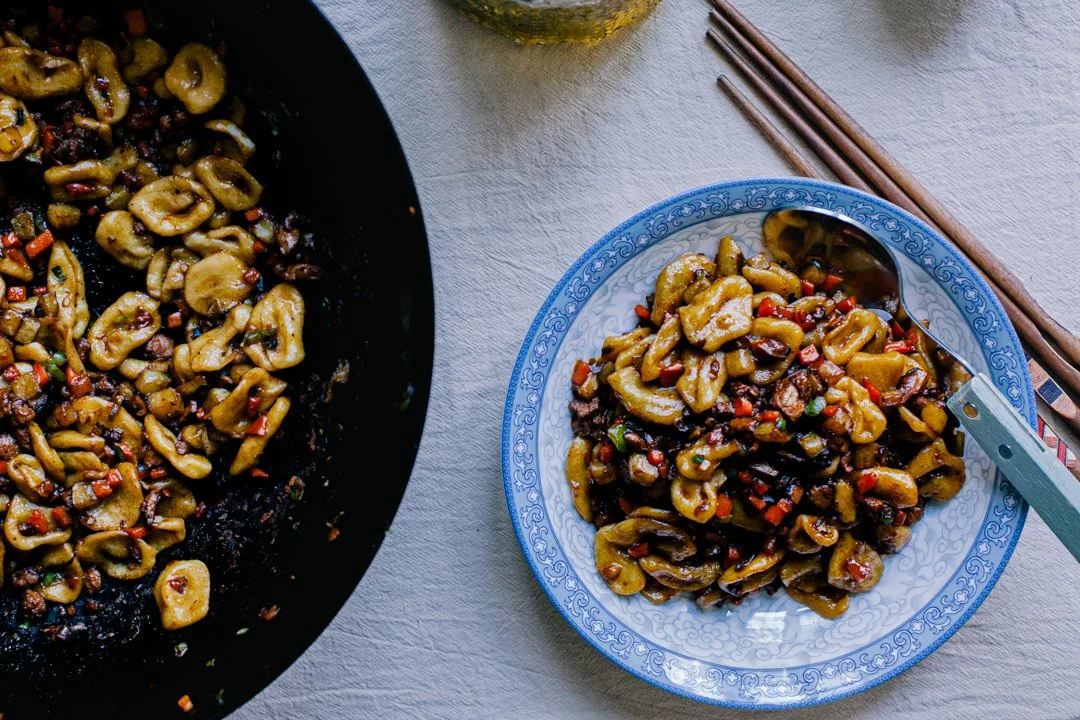
Cat’s Ears can be used in many ways – in soups and broths, dressed with vinegar or tomato-based sauces or, as in this recipe, stir-fried with pork shoulder, diced peppers and carrot. This is how the Chinese do pasta - the ears stir-fried over a high heat in a subtle sauce that is simple but moreish.
Serves 3-4
Ingredients
For the Cat’s Ear Dough
300g plain flour (all-purpose)
150ml room temperature water
½ tsp salt
For the Stir-Fry
150g pork loin or shoulder - diced into 1cm cubes
1 tbsp light soy sauce
1 tsp Shaoxing wine
1 tsp cornflour
1 potato - diced into 1cm cubes
1 carrot - diced into 1cm cubes
½ green pepper - diced into 1cm cubes
4 dried shiitake mushrooms - soaked and diced into 1cm cubes
2 cloves garlic - finely chopped
2 spring onions - sliced
1 tbsp ginger - finely chopped
1 tbsp Shanxi black vinegar (optional)
For the Sauce
2 tbsp light soy sauce
1 tbsp dark soy sauce
2 tbsp Shanxi black vinegar
1 tsp sugar
2 tbsp stock or water
½ tsp sesame oil
Method for the Cat's Ears
Mix the salt into the water until dissolved. Gradually pour the water into the flour, stirring with chopsticks until a shaggy dough forms.
Knead for 8–10 minutes until smooth, then cover and rest for 30 minutes.
Knead briefly again, then rest for another 20 minutes. The dough should be firmer than most Western pasta doughs – dense but still pliable.
When ready, cut the dough into four pieces. Roll each piece into a long rope around 2 cm thick.
Cut each rope into small pieces, roughly 1 cm long. Dust the pieces lightly with flour and dust your work surface too.
Now shape each piece. Place one piece onto the floured surface, press your thumb into the dough and pull it towards you while dragging it lightly across the surface. The dough should curl over itself, forming a little shell with a hollow centre. It should resemble a tiny ear, hence the name.
Continue until all of the dough is shaped, dusting with a little more flour as you work to prevent the cat's ears from sticking together.
Bring a large pot of water to the boil. Add the cat's ears and cook for 3–4 minutes, or until they float while remaining pleasantly chewy.
Drain and rinse briefly under cold water, then toss with a little oil. Set aside until ready to stir-fry.
Method for the Stir-Fry
Add the diced pork to a bowl with the soy sauce, Shaoxing wine and cornflour. Mix well and marinate for at least 15 minutes.
Meanwhile, combine the sauce ingredients, stirring until the sugar has dissolved, then set aside.
Heat your wok over a high heat. Add 1 tablespoon of oil, followed by the pork. Stir-fry for 2–3 minutes, until just browned and cooked through. Remove and set aside.
Add another tablespoon of oil and stir-fry the potatoes for about 3 minutes.
Add the carrot, pepper and mushrooms and continue stir-frying until the potatoes begin to soften.
Add the garlic, spring onions and ginger and fry for 30 seconds, or until fragrant. Return the pork to the wok.
Add the boiled cat's ears, toss to combine, then pour in the sauce. Stir-fry for 2–3 minutes, until everything is glossy and well coated. Stir in a splash of Shanxi black vinegar and serve immediately.