
In Place of Tea: 8 Chinese Tea Alternatives You Should Know
From hawthorn and red dates to flower teas and sour plums, a look at ‘dai cha yin’ (代茶饮), the traditional drinks you'll find in flasks across Beijing.
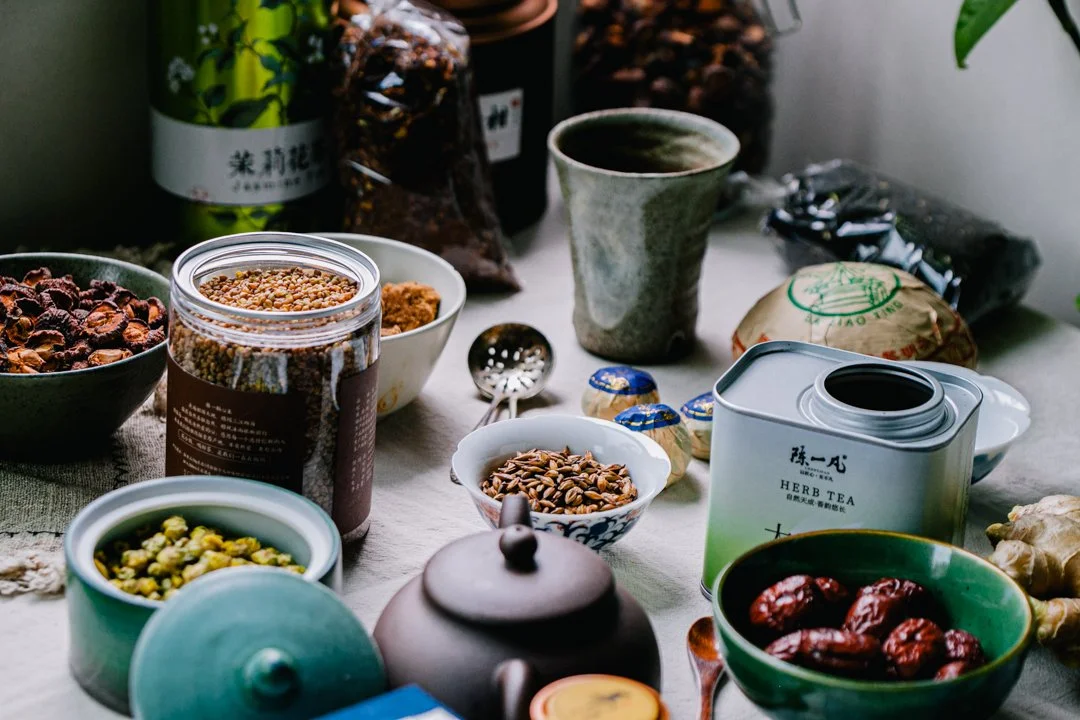
Tea is hugely important in China and is a world as complex as wine. For thousands of years, tea was drank medicinally but later became an every day beverage. Today, you’ll find it as part of high-end Chinese tea ceremony but also in the the flasks of local taxi drivers and security guards. A truly democratic drink.
But there’s more to tea (that is, camellia sinensis) than black, green and white. There’s a whole world of other plants, brewed or steeped in hot water, that are a substitute for tea. In English, we tend to call anything hot and brewed with water a ‘tea’, but in China, non-tea drinks are known as dai cha yin (literally meaning tea substitute drink).
These drinks have historically been popular in Beijing and northern China, partly because tea isn’t grown in the north. Transporting it from southern China was incredibly expensive, putting it out of reach for ordinary people as an every day drink. Instead, they turned to local fruits, bitter leaves and medicinal plants. Over time, these habits stuck, and people discovered that some of these alternatives could be more useful than tea for certain ailments, whether cooling the body, aiding digestion or easing period pains.
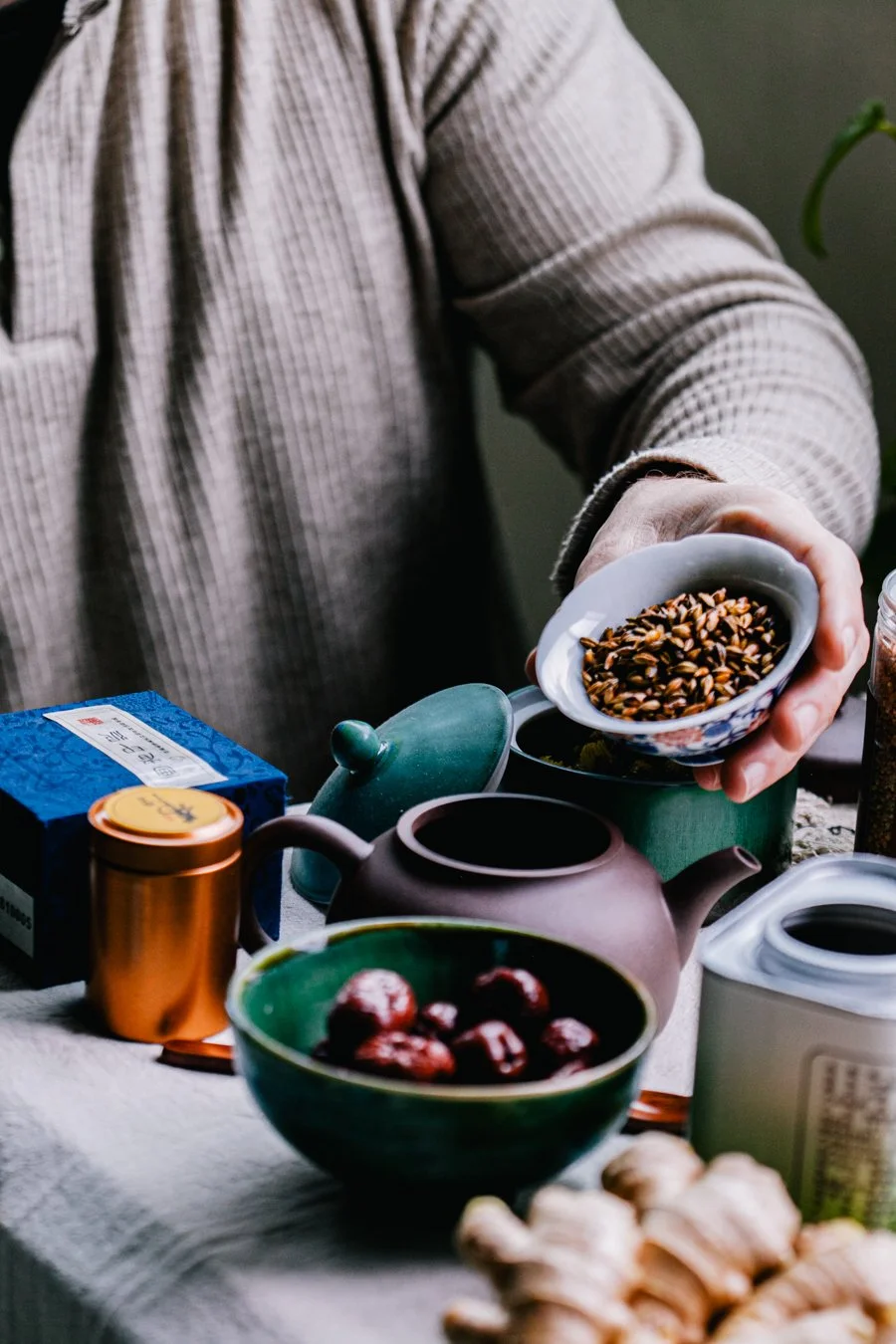
Nowadays, I rarely go a day without seeing someone drinking dài chá yǐn. It might be at the gym, in the hands of my community’s cleaner, or among the old boys playing wéiqí (Go), taking the occasional sip between moves, and most restaurants serve up their own blends to customers are they peruse the menu.
Below are eight of the tea substitutes I see most often. I enjoy them all, but I definitely don’t drink them as religiously as most people here in Beijing.
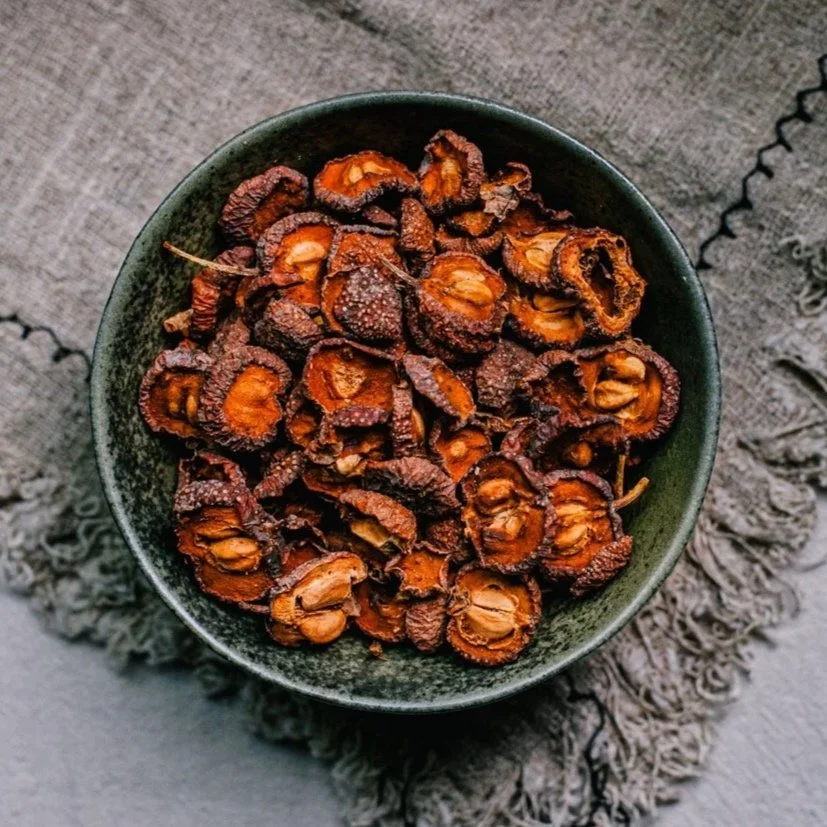
Hawthorn Tea | 山楂茶 | shanzha cha
Hawthorn trees are common in hedgerows across the UK, and in autumn and early winter their red fruit lights up the countryside, and yet, only foragers take advantage of the fruit. In China, the trees are all over Beijing city: in communities, parks and gardens but the fruit is loved and used for desserts and drinks. For this tea, the fruit is sliced and dried so it resembles small dried apple slices. These are then steeped in hot water, producing a tart but fruity drink. You can add rock sugar if you like a sweeter drink. In Traditional Chinese Medicine, this is a great tea for supporting digestion, especially if you’re feeling bloated after too much meat or fatty foods. Sometimes a ‘blend’ is made - combining hawthorn with aged orange peel (chenpi | 陈皮) to add a nice citrus note.
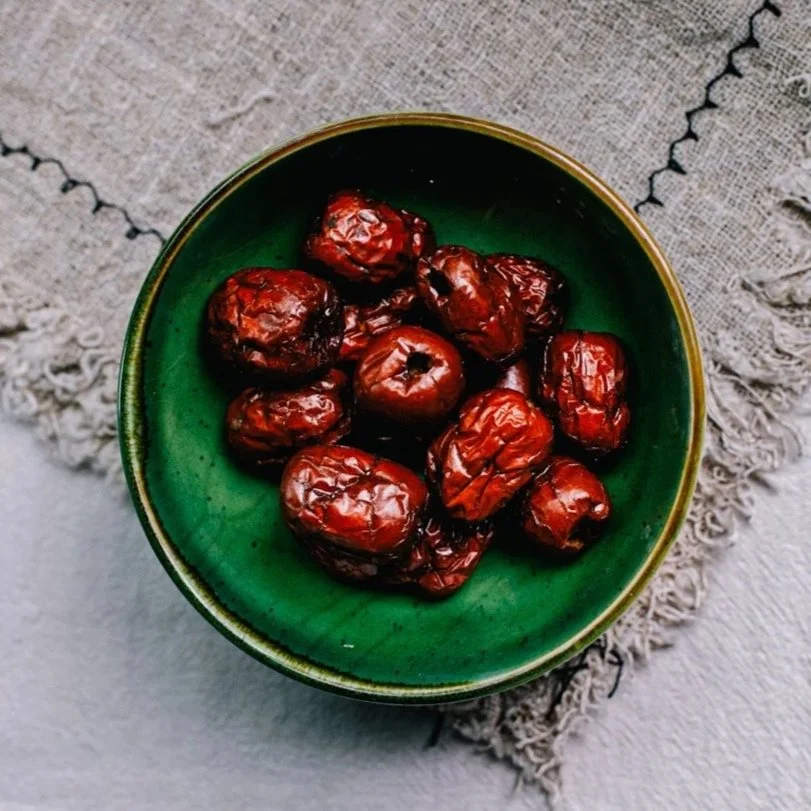
Chinese Red Date (Jujube) | 红枣茶 | hong zao cha
There’s no one recipe for Chinese red date teas, but dried red dates are a powerful food in TCM, known for nourishing the blood - so if you have low blood pressure, feel tired or dizzy, or even irregular menstrual cycles, red dates may be encouraged. Dried red dates give a woody but caramel sweetness to a tea. A common pairing is red date and goji berries - helping to warm the body and increase one’s qi (or ‘vital energy’) - but the goji adds a sharpness that I feel balances out the sweetness of the dates. Another pairing is to add fresh ginger, perfect for winter when you need a warming, almost spicy tea.
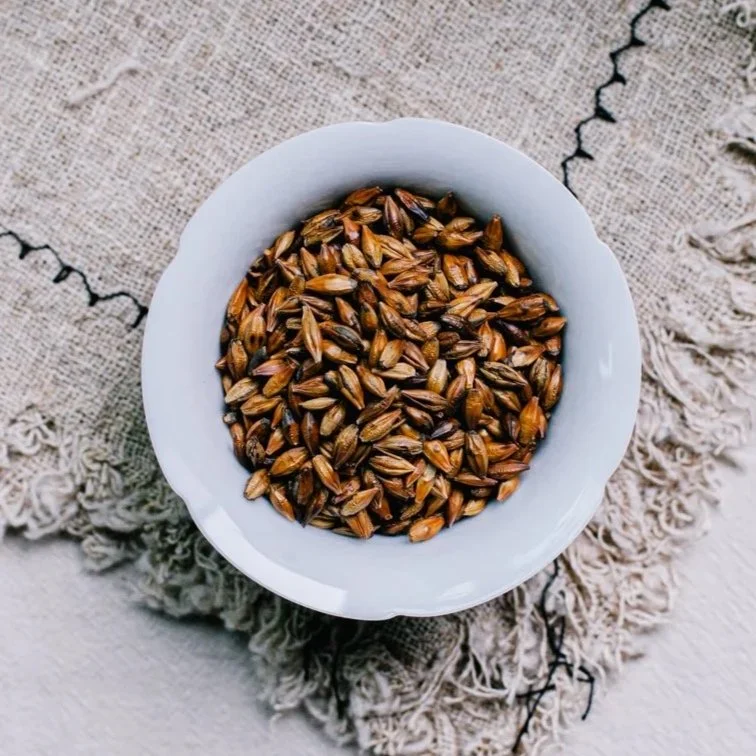
Roasted Barley Tea | 大麦茶 | damai cha
The North has relied on wheat and grains for so much of its diet for thousands of years. But it’s not only food, but also drinks that use them. Here, barley is roasted until dark then steeped in hot water to give a toasty almost coffee-like brew (if roasted dark). The water turns a subtle gold, like sunlight flickering through autumn leaves.
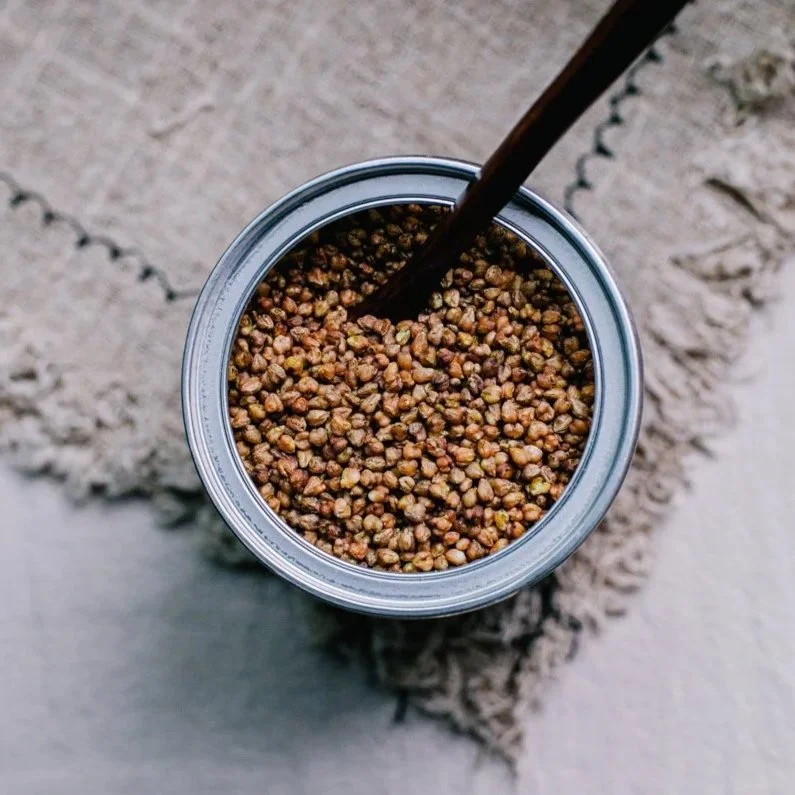
Buckwheat Tea | 荞麦茶 | qiaomai cha
I absolutely love roasted buckwheat tea, it’s nutty and warming and a routine of mine once the autumns get chilly in Beijing but the heating is not yet turned on (there’s an official date set my the government to turn on the heating each year). I cannot believe buckwheat tea is not drank more across the world - I’ve never seen it in the UK or US. Producers can roast light or dark to bring out different flavours - I prefer the more delicate nutty, almost grassy light roasts, whereas the darker roasts tend to have almost a oilier hint to me.
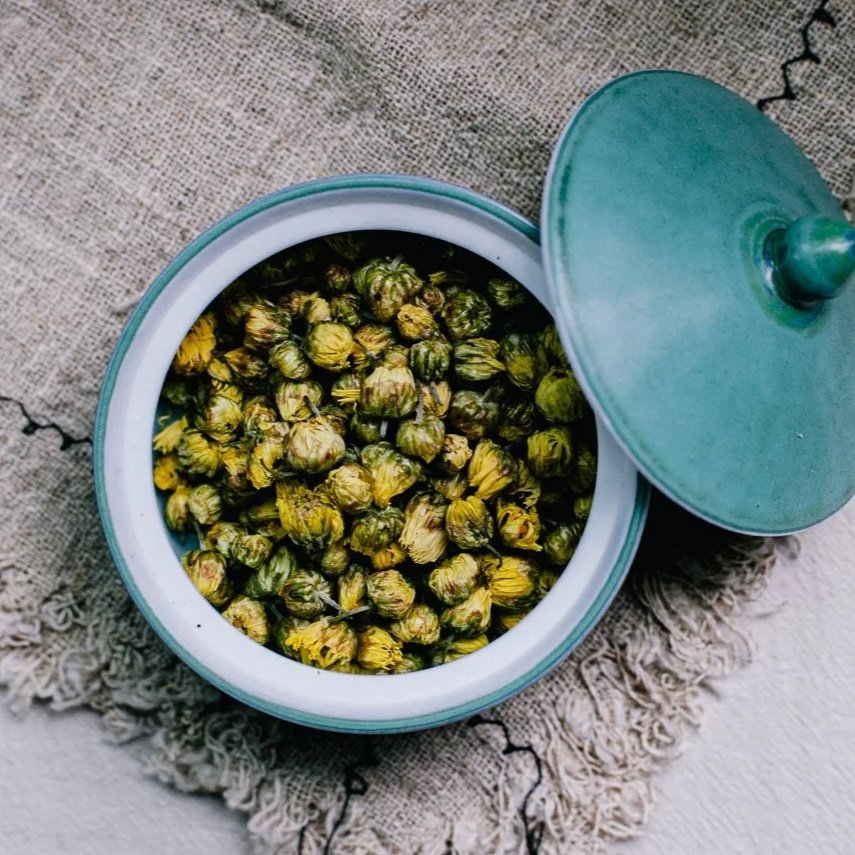
Chrysanthemum tea | 菊花茶 | juhua cha
Beijing has a long tradition of flower-tea and although chrysanthemum flowers are not traditionally grown in the northern provinces, they are frequently consumed. Historically, they were purely a medicine, helping people to cool down in the hot summers of the city, shipped from Anhui province and Zhejiang. The flowers are usually dried whole and once hot water is poured over, they ‘turn into nto a beautiful soft floating blossom that tickles your lips as you sip. For those not used to flower teas, they can be unusual - floral and round,a touch of bitter grassiness with some, but a sweetness that lingers underneath.
Chrysanthemum is often paired with goji berries for those concerned with eye health, especially those who spend long hours in front of screens. For an extra touch, cassia seeds can be added to make a “three treasures for eye brightening”.
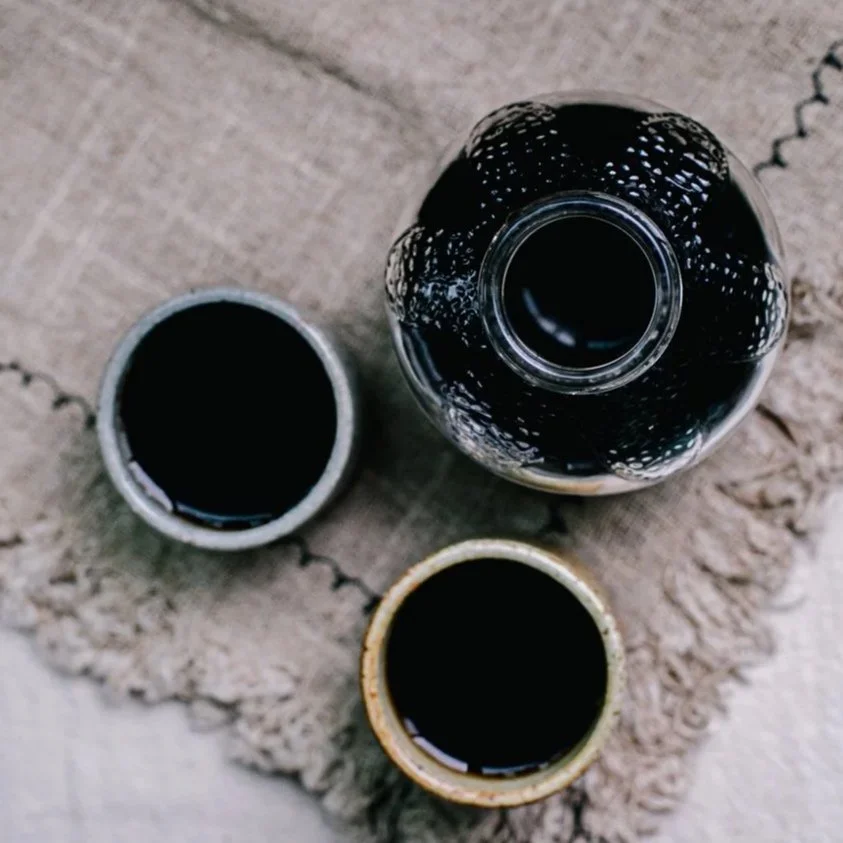
Sour plum drink | 酸梅汤 | suanmei tang
Is this a “tea”? Perhaps not if we consider tea as a hot beverage, but according to TCM, it certainly is. However, it’s become such a popular drink that you’ll find cheap bottled versions of sour plum drink in convenience stores, which are a long way from the traditional Beijing drink that actually originated in the Qing imperial "tea office” or tea room (御茶房). This tea office was tasked with creating tea blends for the Emperors. Emperor Qianlong asked for a tea to help aid digestion and cut through hate greasy meat dishes of the time and thus, the tea office concocted a new tea made from smoked sour plum, hawthorn, licorice, aged orange peel and sometimes osmanthus or rock sugar. It later spread to the people of Beijing and the city became famous for this iced summer drink.
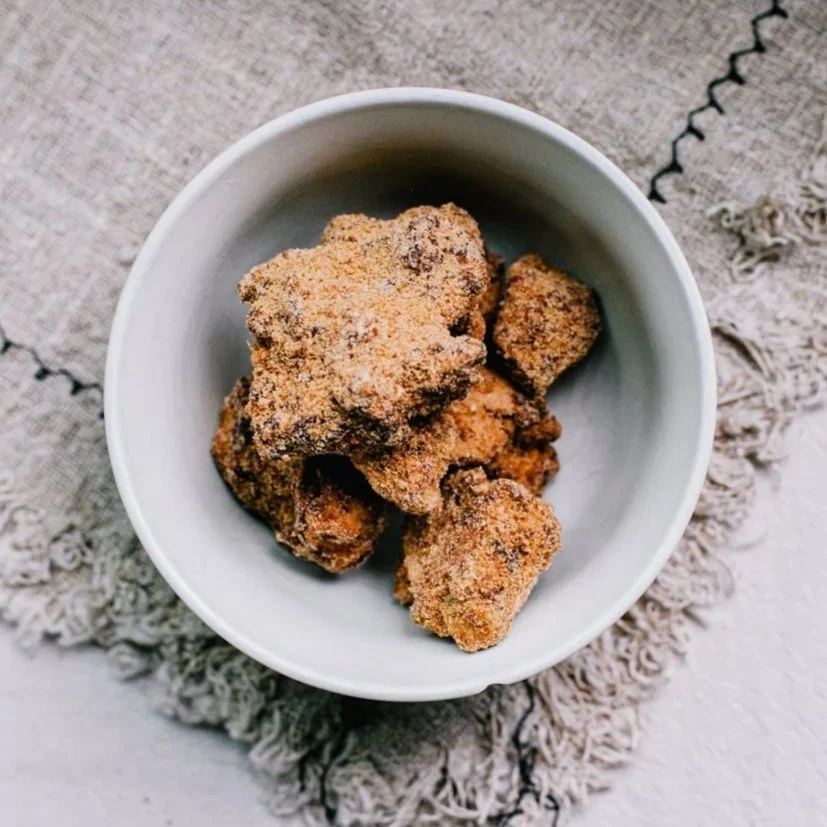
Brown Sugar & Ginger tea | 姜茶 | hong tang jiang cha
In TCM, ginger is believed to disperse cold and promote circulation, while brown sugar is thought to warm the uterus and invigorate blood. As such, this one is drank almost religiously with women on their period. It is thought to relieve menstrual cramps as the warming effect can help relax tense smooth muscle.
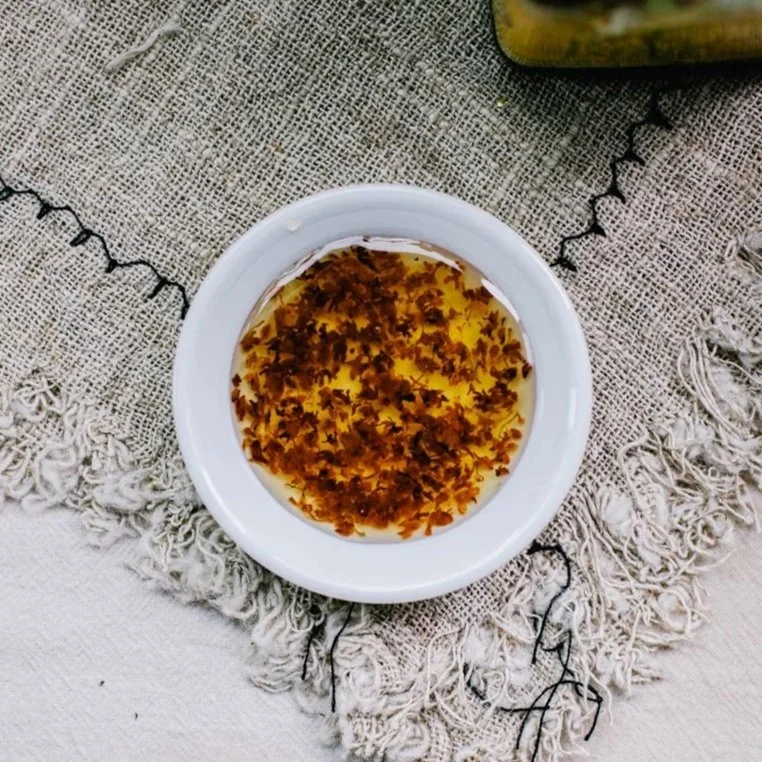
Osmanthus Tea | 桂花茶 | gui hua cha
Osmanthus has a uniquely heady, floral, sweet, almost apricot-like fragrance that reminds me of the hot British summers when the perfumed blossom fills the air. In Beijing, the dried flowers are steeped in hot water with a touch of honey or combined with red dates. It’s a aromatic tea is much loved in Beijing. It’s often sold in a jar already steeped in syrup, like the picture above.