
From northern jiaozi and Cantonese dim sum to soup dumplings, rice dumplings and regional specialities.
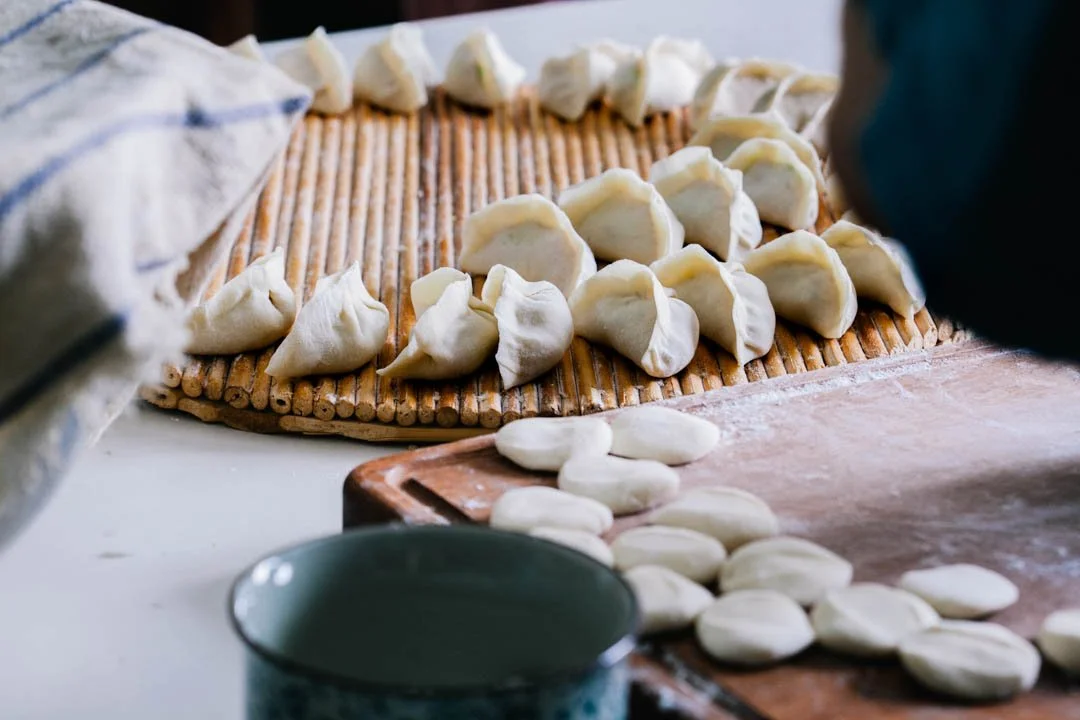
To claim this could be a complete guide to every Chinese dumplings is setting myself up for failure. Guides on any Chinese food run into the problem that there are almost endless varieties of everything, always one more hyper-regional twist on a dish, a new invention, an ancient method that’t been long forgotten. And so what I can offer you here is a guide to the most common dumplings that I have come across over my years in China.
But another problem. When does a dumpling stop becoming a dumpling? Is a baozi really just a thick, bready dumpling? Or is it a bun? And what about Shanghai’s Shen Jian Bao, those delicious pan-fried nuggets, stuffed and wrapped? I need to create some boundaries somewhere and so I suggest that anything that contains yeast, and that might be described as a bread, ceases to be a dumpling. And another question: does a dumpling have to be wrapped or stuffed? Some might argue that folded doughs such as Shanxi’s kao lao lao or the dough drops in dough drop soups are dumplings too, but I’m leaving these out.
So my dumpling definition:
It has a wrapper and is stuffed.
It does not contain yeast.
‘Chinese dumplings’ is a whole universe, rather than one category of food. In China, people often distinguish them not just by filling, but by wrapper, shape, cooking method, texture, meal occasion, and region. A boiled Northern dumpling and a Cantonese har gow are as different as lasagna and spaghetti carbonara.
For this guide, I will break down the world of Chinese dumplings into three very broad categories:
PART 1: THE NORTHERN WHEAT-BASED DUMPLINGS
PART 2: SOUPS & SOUP DUMPLINGS
PART 3: RICE DUMPLINGS & REGIONAL SPECIALTIES
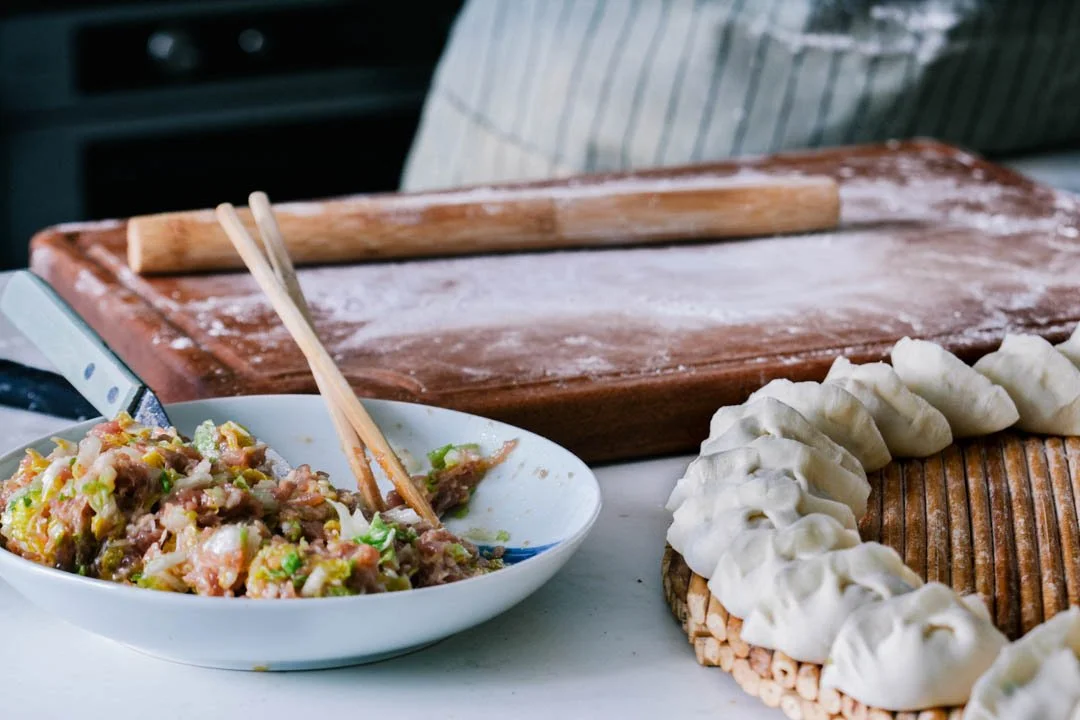
THE NORTHERN WHEAT-BASED DUMPLINGS
The North is often seen as the home of dumplings probably because a Beijing dumpling is the purest, unadulterated example of a dumpling. The following few examples are what most Northern Chinese people mean when they say ‘dumpling’, particularly boiled.
Dumplings | 饺子 | jiaozi
The archetypal Chinese dumpling: a wheat wrapper, usually crescent-shaped, pleated by hand. Strongly associated with Northern China and Lunar New Year. In Beijing, pork and napa cabbage is the original (and best) filling, but pork and Chinese chive, lamb and carrot, egg and shrimp or suancai and pork are all common too.
Dumplings are symbolic foods in Northern China, dumplings are often cooked and eaten when someone is leaving for a journey. Dumplings resemble gold ingots and the superstition is that eating dumplings before departure with give the traveler good luck and will make a fortune on their journey.
All Northern jiaozi are made the same way, from wheat dough wrappers, then stuffed. However, there are a few ways they can be cooked:
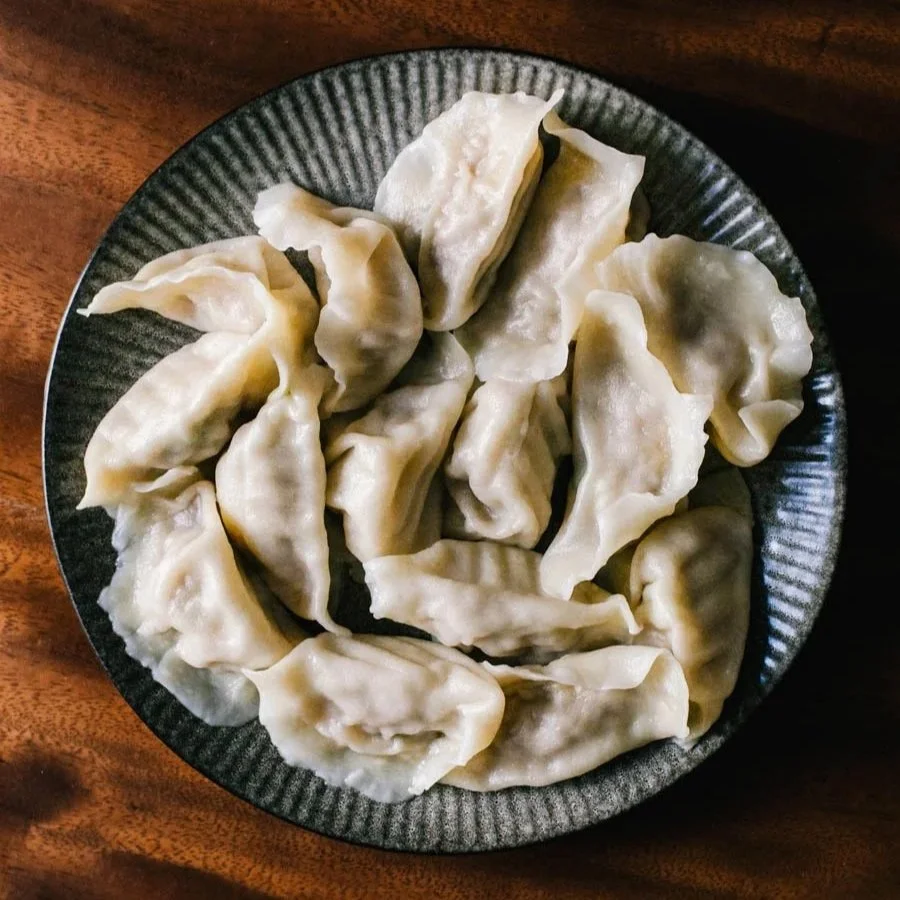
Boiled Dumplings | 水饺 | shuijiao
Boiled dumplings are by far the most common method, found all across the North: at home, in local restaurants and fine dining. They are soft with slippery skins, sliding across the plate. They are usually eaten with a dipping sauce of black vinegar, garlic and sometimes soy sauce. The boiling starch water (mian tang | 面汤) is also an important part of eating dumplings too. A small bowl is often served alongside, as it’s believed that the soup helps digest the food.
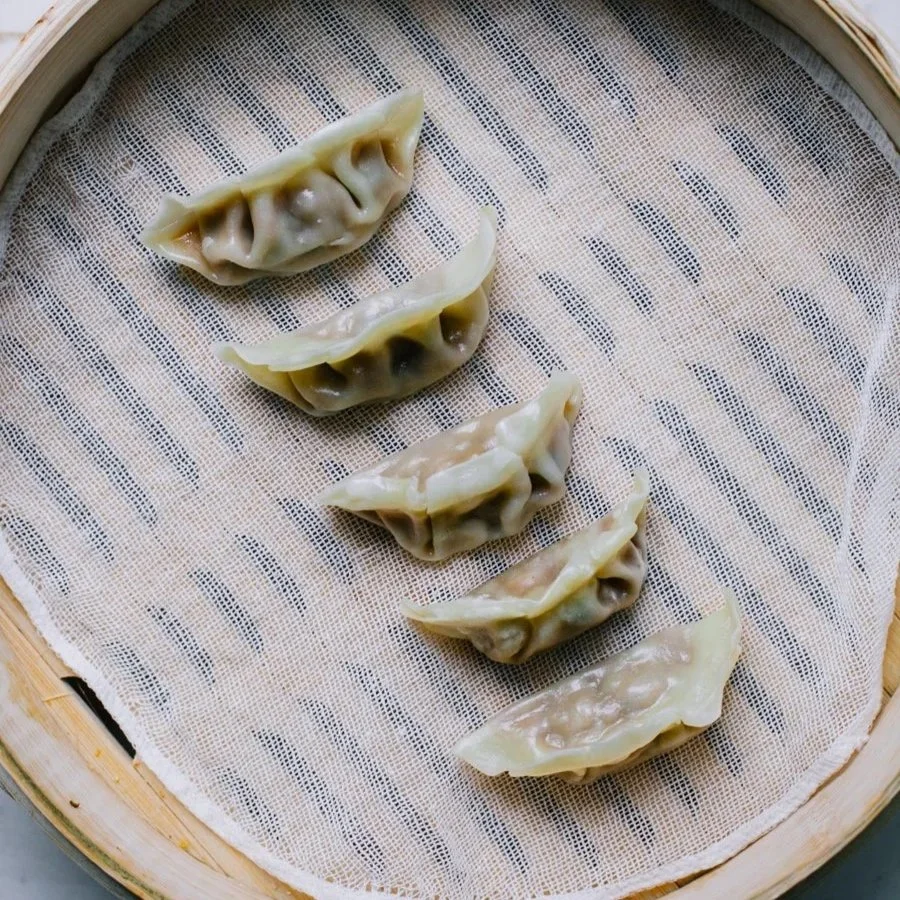
Steamed | 蒸饺 | zhengjiao
Dumplings can also be steamed (and are actually my favourite way to eat dumplings). If steamed, the skins can be rolled thinner. Steamed dumplings are chewier with stickier skin, rather than slippery. They are often served with the same vinegar dipping sauce.
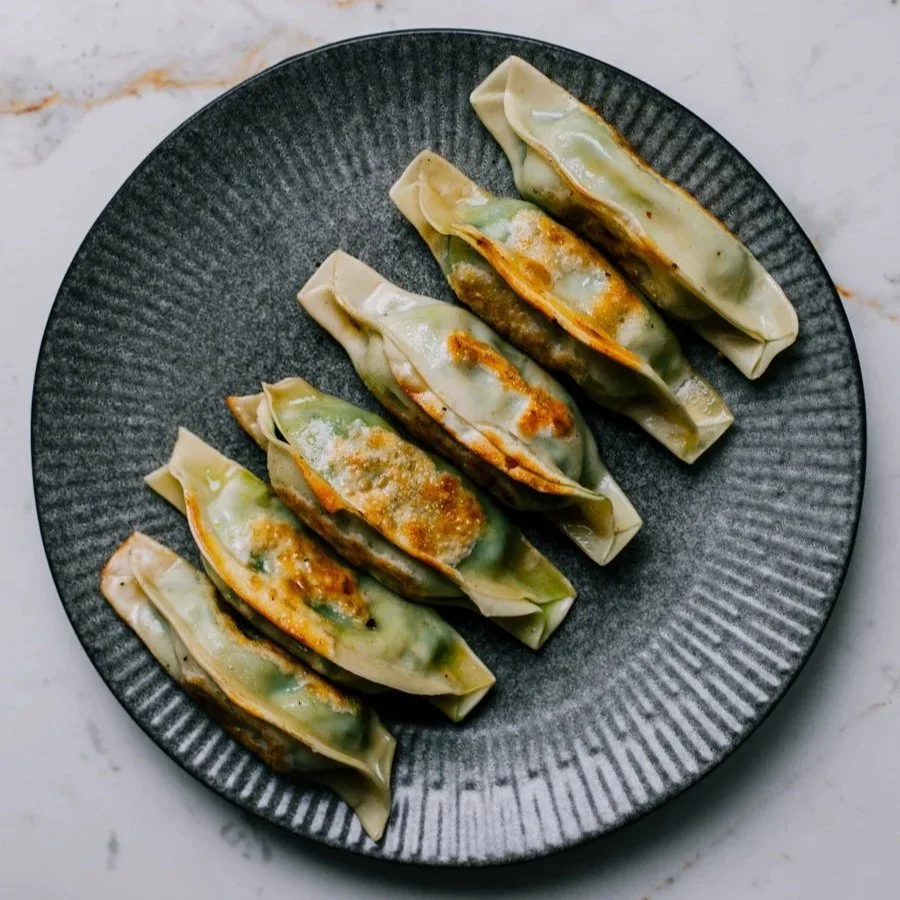
Pot Stickers | 锅贴 | guotie
A true pot stick is fried fresh and then once crispy, water is poured into the wok or pan, a lid placed on top and steamed. Whereas boiled or steamed dumplings are common at lunch or dinner, pot stickers are more common in breakfast stores.
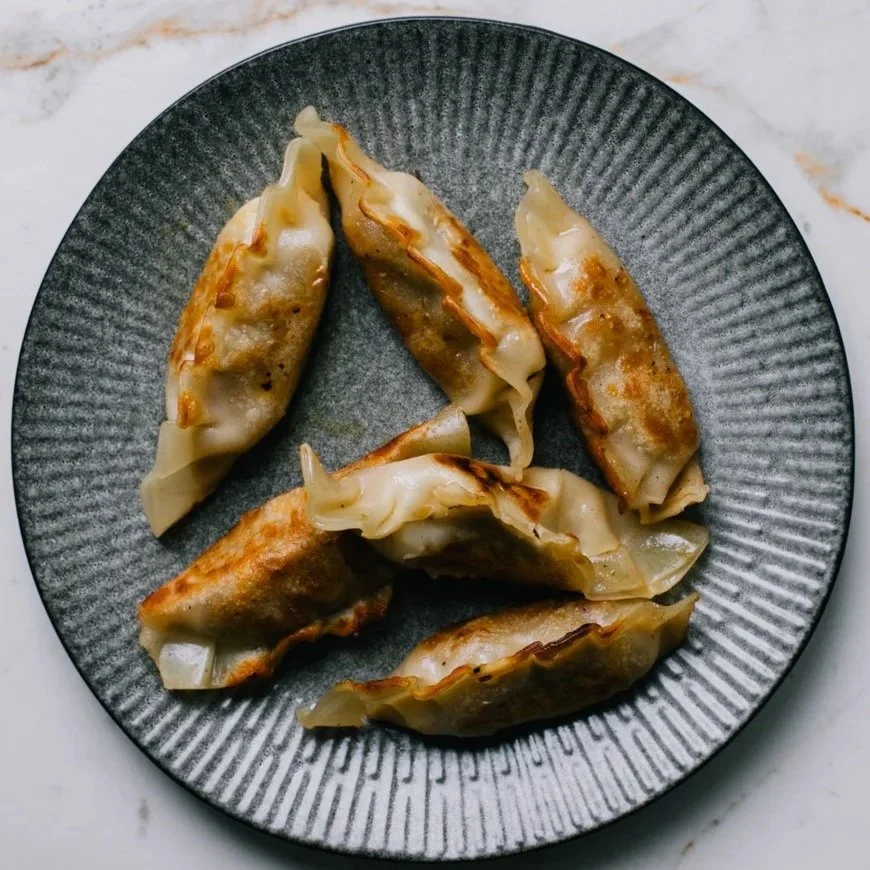
Fried Dumplings | 煎饺 | jianjiao
Fried dumplings are the home-style version of pot stickers. They are usually made with leftover dumplings that have been steamed earlier in the day or the previous day, then fried until the flat base is crispy. Some might call these ‘guotie’ but really they are just fried dumplings.
OTHER TYPES
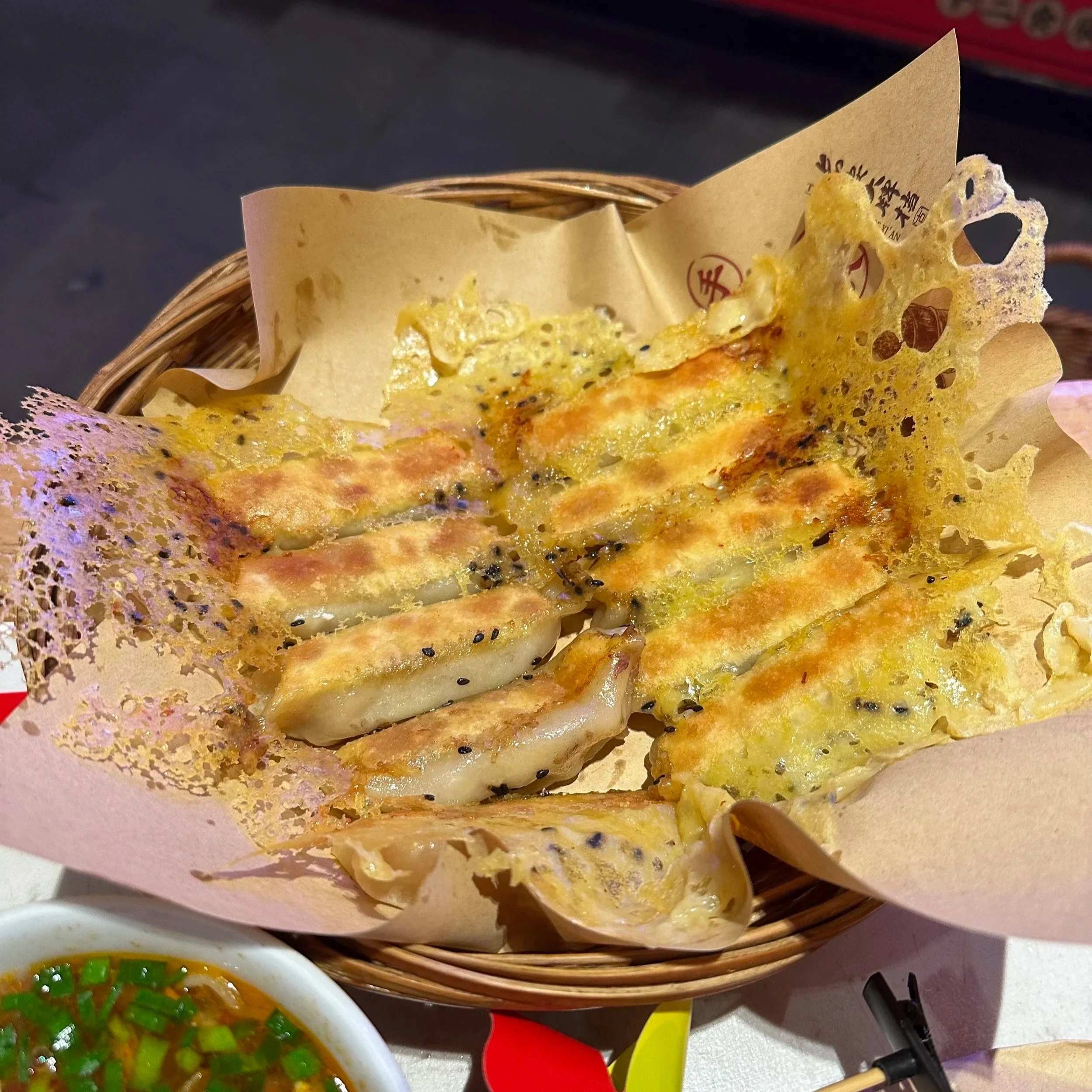
‘Lace Crust’ Dumplings | 冰花煎饺 | binghua jianjiao
These are pot stickers taken to another level. As the dumplings are frying, a “lace skirt” is added to the dumplings, made from a flour slurry. This slurry turns crispy and sticks all the dumplings together so the dinners have to snap off each dumpling. The lace skirt gives a super crispy base whilst the top of the dumplings remain soft. The dumpling itself is usually different in shape too - longer and made in a uniform crescent shape, similar to Japanese gyoza or even tubes, like mini cannoli. These are most common in Shaanxi. Lace Crust Dumplings are cooked as one and then turned out onto the serving plate so the lace skirt is face up.
Dumpling Soup | 汤饺 | tangjiao
Dumpling soup is similar to the more familiar wonton soups of the South, but made with Northern style fat dumplings dropped into a pork or chicken broth. A simple but delicious lunch or dinner.
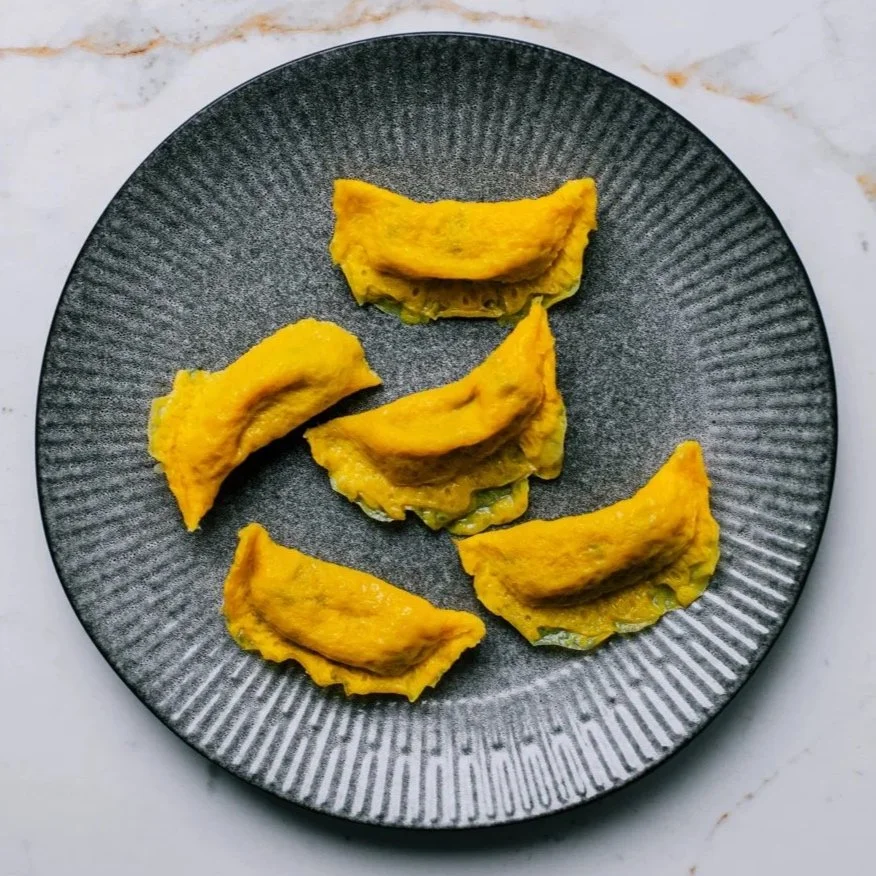
Egg Dumplings | 蛋饺 | danjiao
Egg dumplings replace the wheat wrapper with egg, like mini omelettes. I know the Hebei version, where they heat a ladle very hot and then pour in a thin layer of raw egg, swilling it around as it sets. This then becomes the skin which can be stuffed.
SHAOMAI
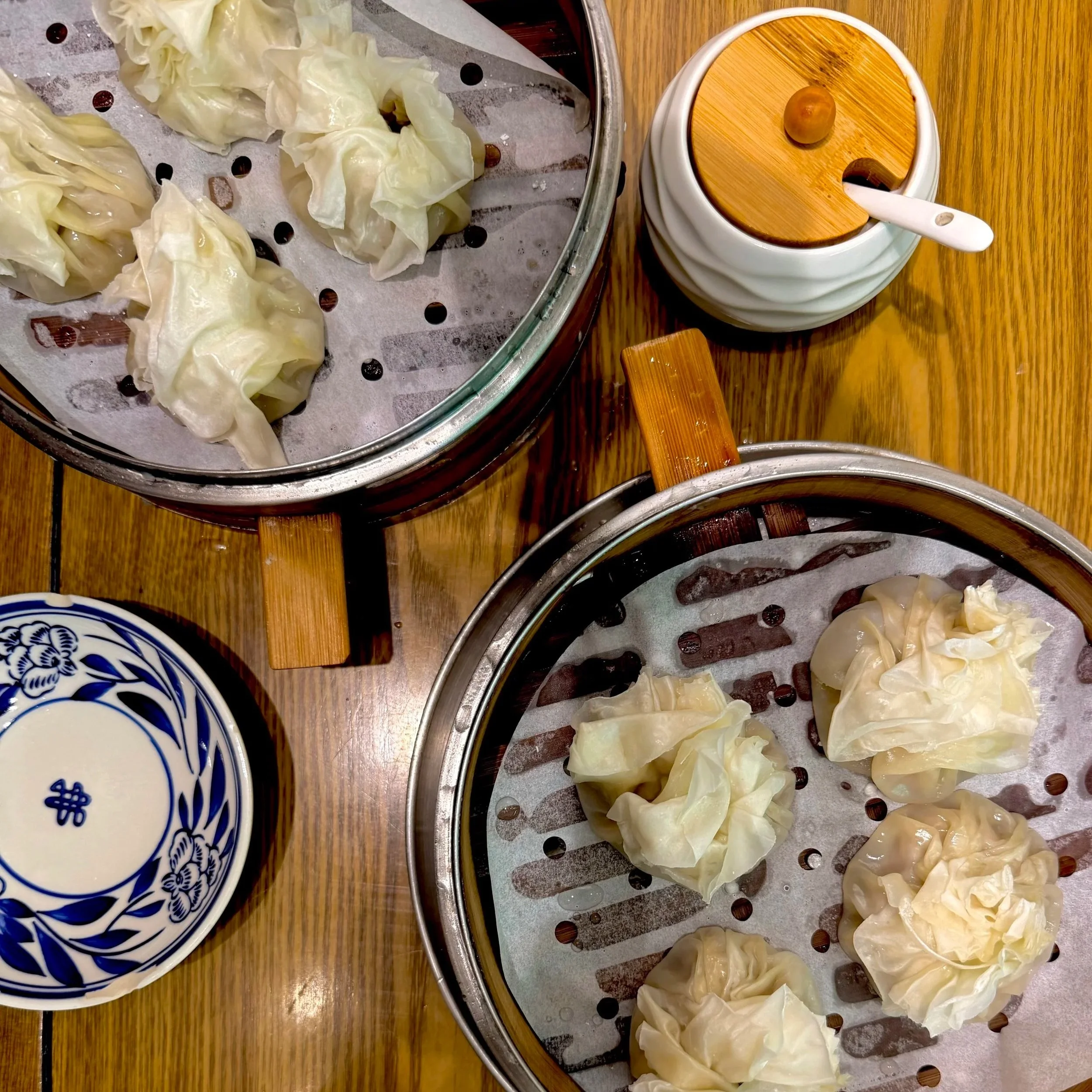
Also known as shumai or sui mai (烧卖) in Cantonese, these are distinct from jiaozi. They are still made with wheat wrappers, but most shaomai are open-topped, rather than sealed. The wrapper is stuffed, folded up with the top flared so they resemble little gift bags. Shaomai is believed to have originated in Inner Mongolia before spreading far and wide. As they moved south, they seemed to change quite dramatically from their Inner Mongolian roots.
Shaomai | 烧卖 | shaomai
The original Shaomai come from Inner Mongolia. They are plump and stuffed with chunks of juicy lamb and scallion. The wrapper is extremely thin and yet somehow manages to hold the juicy, almost soup-like stuffing. They are always steamed and one of the great joys in life is lifting the lid of the steamer basket as a plume of fragrant steam escapes and you see the flour-dusted dumplings, the tops like overripe pomegranates that have started to open. For Inner Mongolians, they don’t consider any stuffing except lamb, but restaurants need something more on their menu and so will add beef stuffing, shrimp, mixed vegetables or a combination of all three.
Some cooks will also pan-fried them, turning the base into a crispy delight, whilst the tops remain delicately soft. You can find Inner Mongolian Shaomai across the North, if you know where to look. They become less common the further you move away from Inner Mongolia or Shanxi.
Cantonese Sui Mai | 广式烧卖 | guangshi shaomai
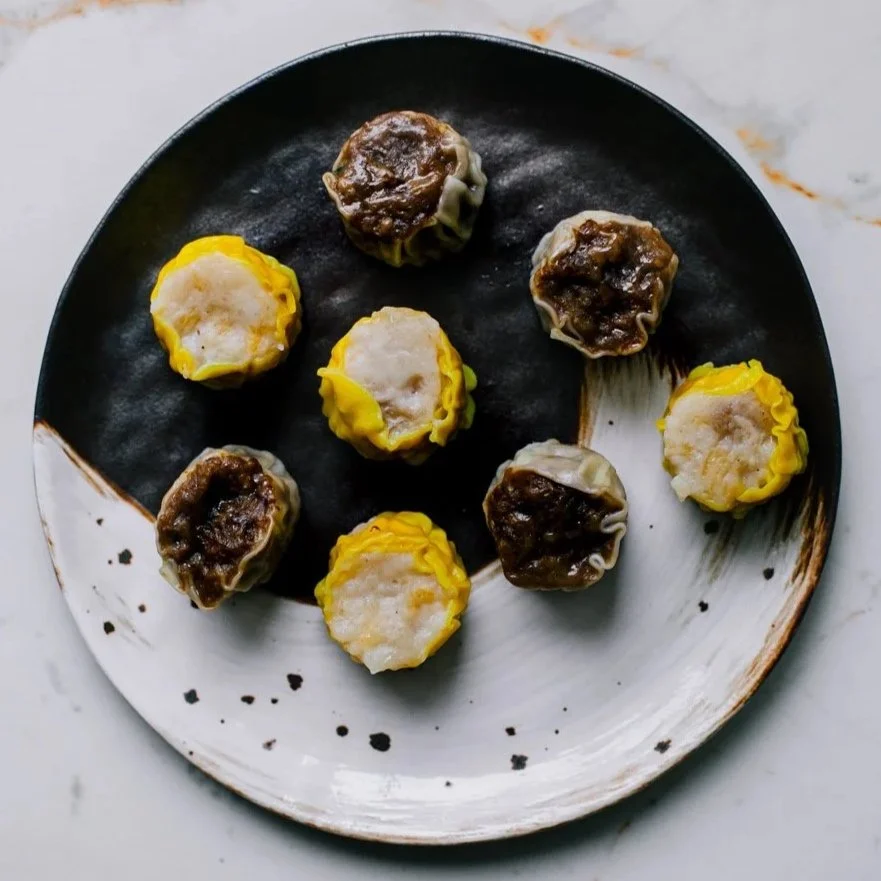
Sui mai is has a stickier quality. The wrapper is often yellow, chewy and springy and after steaming, shrivels and sticks tightly to the stuffing. There is no lamb to be found in the South, instead the stuffing in Cantonese is pork or shrimp, mixed with shiitake mushroom, perhaps bamboo shoots and the crunch of water chestnuts. They are commonly garnished with fish or crab roe to give a flash of orange.
Glutinous Rice Shaomai | 糯米烧麦 | nuomi shaomai
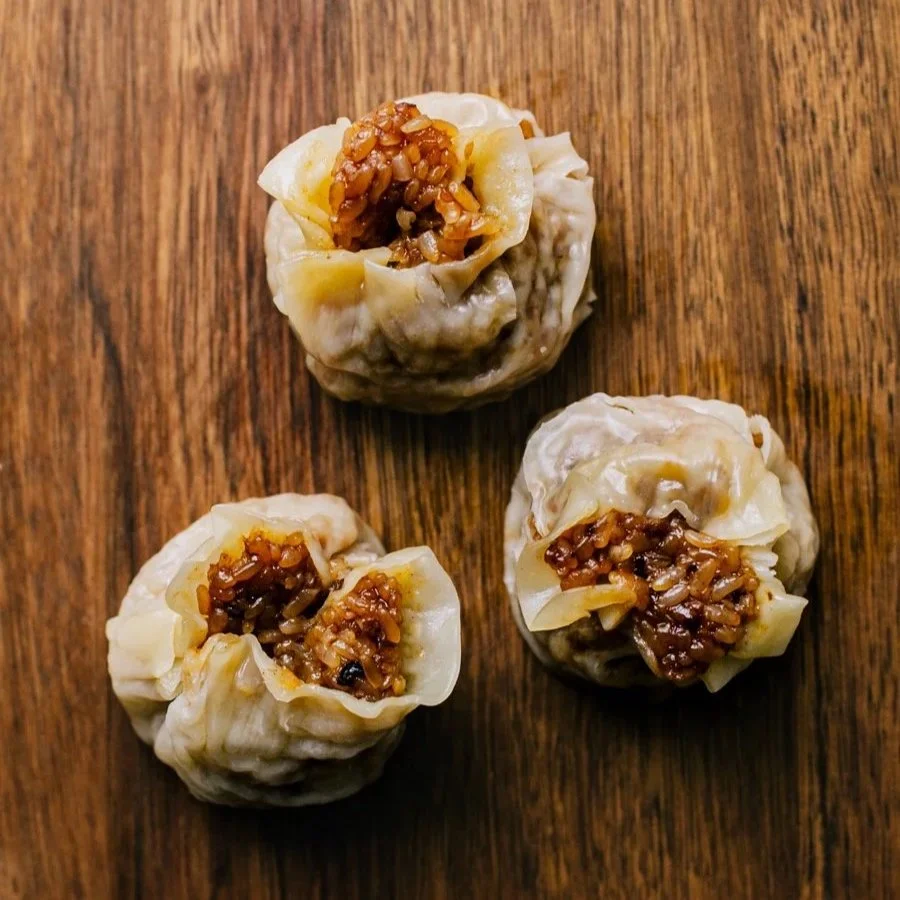
Gutinous rice dumplings originated in the Jiangnan region, and are especially popular in Shanghai, Jiangsu and Zhejiang,. The idea of stuffing rice into dumplings was born in this rice-rich region where people adapted the northern meat dumpling concept by substituting cheaper, abundant glutinous rice for the expensive meat filling. The common method is to soak sticky rice in soy sauce and lard, mix with mushrooms, a small amount of meat and bamboo shoots. This is then steamed to create a soft and chewy dumpling, a real carb-on-carb southern breakfast classic.
OTHER TYPES
As with most foods, the concept of Shaomai gets taken by other regions or towns, adapted and turned into something new by using local produce - be it duck fat or bamboo shoots - creating something that locals love and call their own. In Wuhan, they have taken the glutinous rice shaomai of Jiangnan and added extra lard and black pepper to create something known as Heavy Oil Shaomai (重油烧梅), in Yangzhou, their Shaomai wrappers can be green with vegetable stuffing (spinach or bok choi with rice) known as Jade Shaomai (翡翠烧麦). Nanjing uses duck fat instead of lard, Hangzhou uses fresh bamboo shoots in the stuffing and Hunan crumbles egg yolk over the top to create what they call a chrysanthemum Shaomai.
PART 2: SOUPS & SOUP DUMPLINGS - COMING NEXT WEEK.