Beijing Chun Bing (Spring Rolls)
春饼
English: Beijing Chun Bing (Spring Roll)
Chinese: 春饼
Pinyin:chun bing
Literal: Spring pancake
If you grew up in the West, your only exposure to “spring rolls” is likely the miniature, deep-fried parcels of finger food found in supermarkets or Chinese takeaways. These familiar snacks actually take their inspiration from chun bing - the traditional Northern Chinese “spring pancake”. In Beijing, chun bing are large, delicate wheat pancakes, almost crêpe-like, thin enough to become translucent when held up to the light.
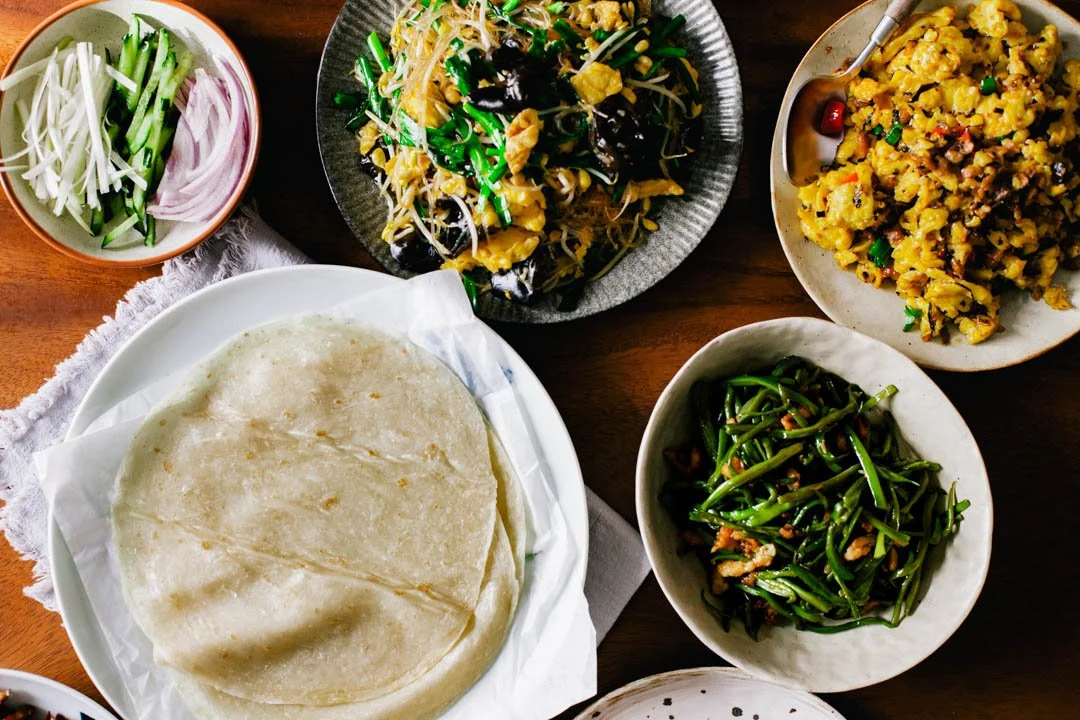
Chun bing were originally associated with the Spring Festival, which gives them their name, but they proved far too enjoyable to remain an occasional treat. Today, chun bing restaurants can be found across Beijing, and at home they regularly appear as a relaxed, sociable meal. A typical spread centres around a tall stack of warm pancakes, surrounded by small plates of braised meats, stir-fries, cold cuts, pickles or crisp vegetables, all served with rich tianmianjiang (Sweet Bean Sauce) and fine slivers of scallion, cucumber and red onion.
It’s fun food, giving diners the option to stuff their own pancakes with whatever they want. First, diners take a pancake and peel it, as every pancake is actually cooked in pairs, then spreading on sauce, scattering aromatics, and adding whichever fillings they like. The pancake is folded up and eaten by hand, much like a burrito. There’s simply no way you can stop after one, or two, or, well, three…
Makes 16 - 20 pancakes
Ingredients
250g all-purpose flour
180ml boiling water
½ tsp salt
2-3 tbsp neutral oil
To Serve (for 4)
1 cucumber - julienned
6 spring onions - julienned
1 small red onion - sliced
4 tbsp tian mian jiang (sweet flour sauce)
Method
In a large bowl, mix flour and salt. Make a well in the centre. Pour in the boiling water in a steady stream while stirring immediately with chopsticks or a fork. Mix until all the water is absorbed and it forms a shaggy dough with no dry flour.
Once cool enough to handle, gather the dough and knead on a lightly floured surface for 5-8 minutes until it becomes a very smooth, soft, and elastic ball. The dough should be soft like an earlobe not sticky. Cover with a damp cloth and let it rest for at least 30 minutes to 1 hour.
After resting, knead the dough for 1 minute, then roll it into a long log (50-55cm / 20-21 inches). Cut it into 16-20 equal pieces (about the size of a small walnut). Keep them covered.
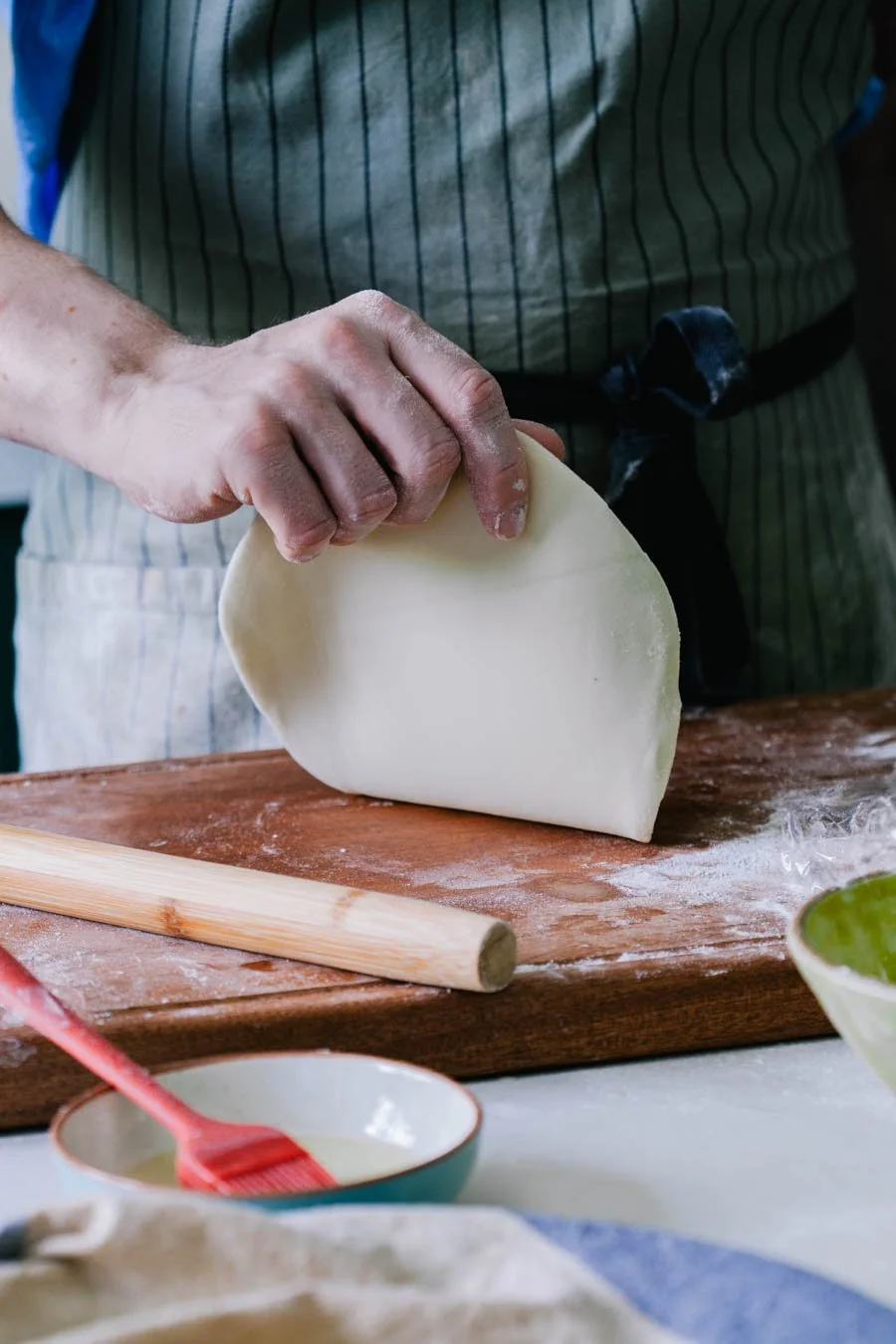
Take two pieces. Flatten each into a small disc (about the size of a coaster) with your palm. Brush the top surface of one disc generously with oil. Place the second disc directly on top of the oiled one, pressing them together. You now have an oil-sealed pair. Repeat with all remaining pieces to make 8-10 pairs.
On a lightly floured surface, take one oiled pair. With your rolling pin, roll the pair together into a thin, uniform circle, about 15-18cm (6-7 inches) in diameter. Roll from the centre outward, turning the pancake frequently to keep it round. The goal is to have both discs roll out to the same, paper-thin size, sealed together by the oil in the middle. Repeat with all the pairs.
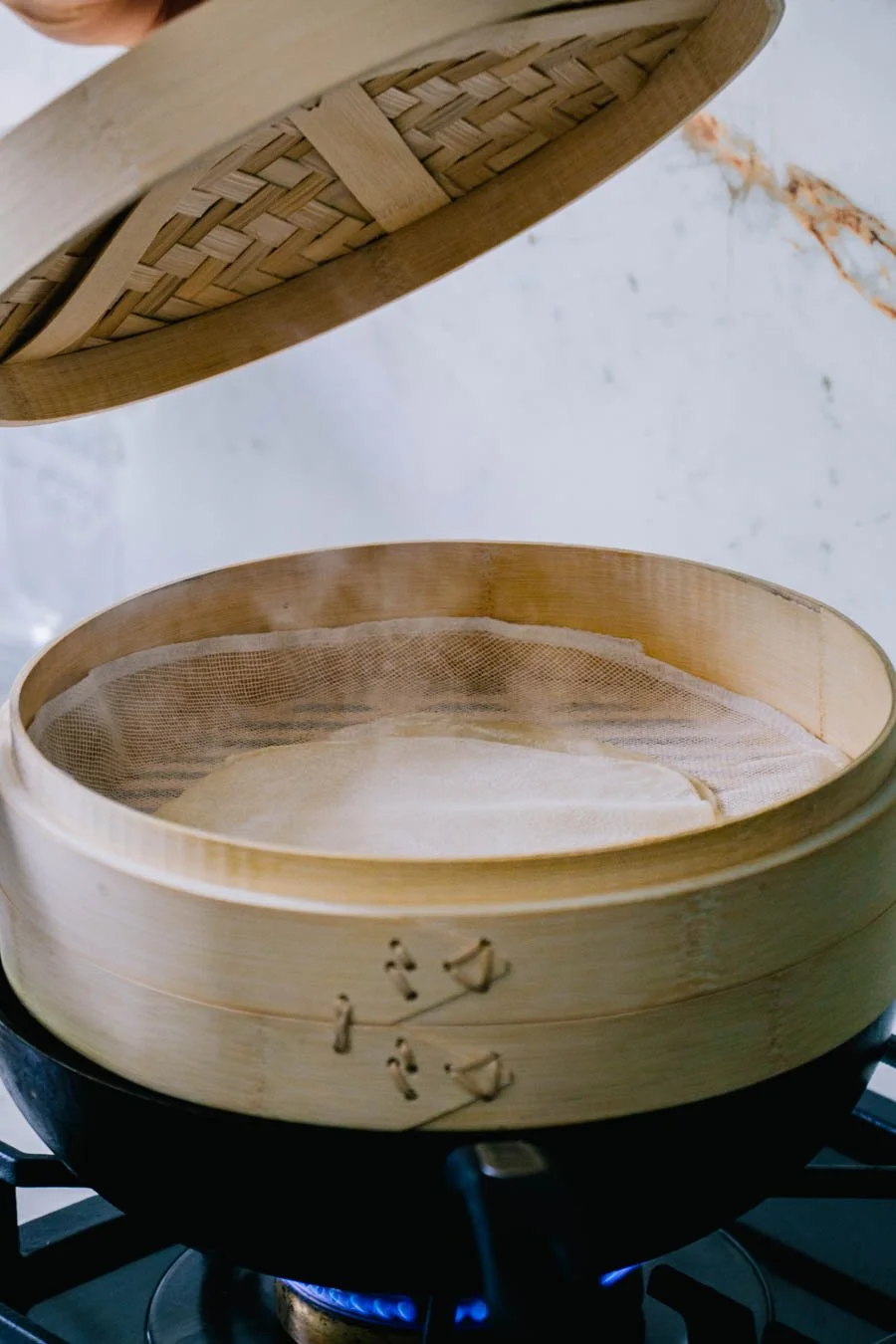
Prepare your steamer and layer your steamer basket with parchment paper, punching a few holes in the paper. Make sure the water is boiling and the steamer is hot.
Place one pancake pair onto the lined steamer. Cover and steam for about 1 minute, until the top looks set and slightly puffed. Then place the next pancake pair directly on top of the first and steam for 1 minute. Repeat this process; every time you add a new pair of pancakes, steam for 1 minute before adding the next pair. You can steam 5-6 pairs stacked together at once.
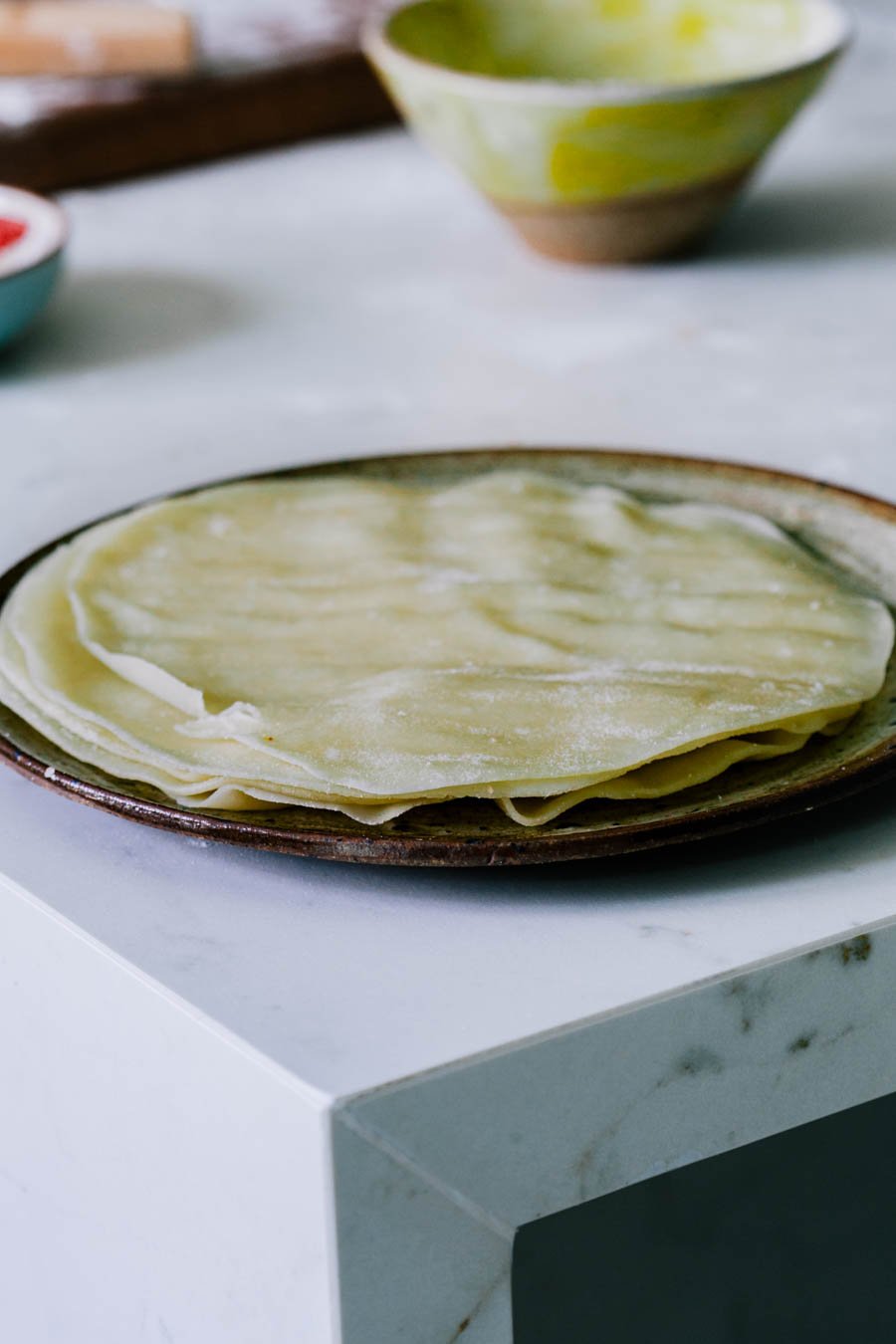
Once your stack is in, steam for 8-10 minutes from the time you added the last one. The stack will puff up slightly and become opaque. Carefully remove the entire stack to a plate. Repeat the steamer method with the remaining pancakes.
How to Peel - This is usually done by the diners not the cook
While the pancake is still warm (but cool enough to handle), take one pancake from the stack. You'll see it's actually two pancakes stuck together by the oiled centre.
Slowly prize the pancakes apart from the edge and then gently peel the two pancakes. They should separate easily into two perfectly thin, soft, and translucent pancakes. The
Place one pancake back on the pile and fill the other.
It’s best to keep the pancakes warm under a towel, or a tea-light warmer. Warm pancakes are easier to peel.
Serve your pancakes and stuffings with cucumber, spring onion, red onion and tian mian jiang.