Beijing Home-made Noodles
北京家常面
English: Beijing Home-made Noodles
Chinese: 北京家常面
Pinyin:beijing jia chang mian
Literal: Bejing homestyle noodles
It all begins here. Doughs are the lifeblood of Beijing and of Northern cooking more broadly. Every home cook can bring together a noodle dough, baozi dough or dumpling dough in minutes, often without weighing or measuring. Unlike the dramatic stretch of Lanzhou’s hand-pulled noodles, or Shanxi’s elaborate knife-cut strands, Beijing’s everyday noodles are modest and practical. There is no theatre here: the dough is rolled out, loosely folded, then sliced into long ribbons.
Texture matters. A good Beijing noodle should be firm, springy and just a little uneven, something for the sauce to cling to. At first glance the dough looks much like dumpling dough, but the method shifts the result. The aim is a firmer, less extensible dough. Using cold water, together with a relatively short resting time, limits gluten relaxation and produces a noodle with satisfying chew.
Serves 2-3
Ingredients
300g all-purpose flour
140–150ml water
½ tsp salt
Method
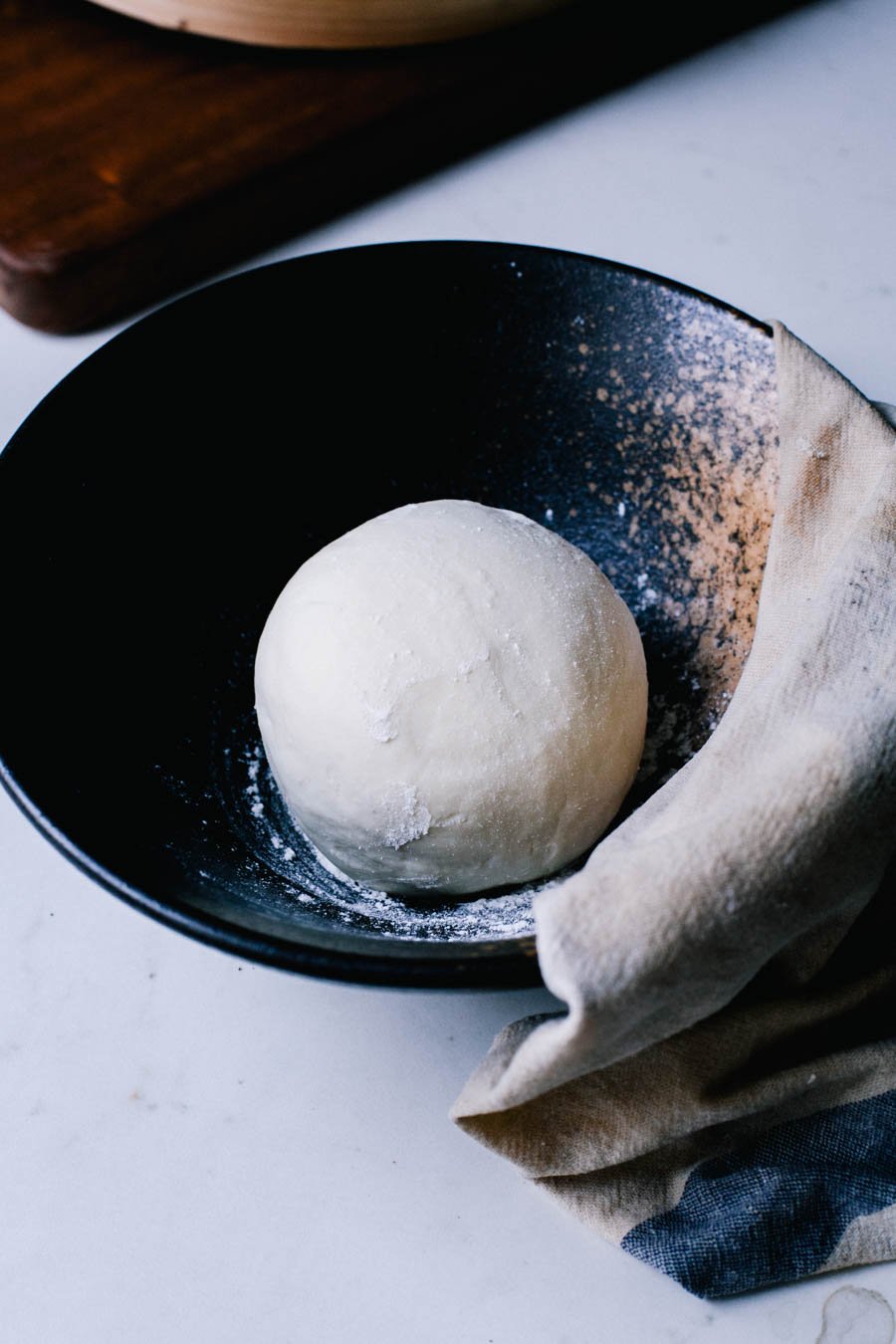
Dissolve the salt in the water. Gradually add to the flour, mixing until it comes together into a rough dough.
Turn out onto a lightly floured surface and knead for 8–10 minutes until smooth and elastic. Alternatively, use a stand mixer fitted with a dough hook for 5–7 minutes. The dough should feel fairly firm — slightly stiffer than dumpling dough. This tighter dough gives the noodles their characteristic chew.
Cover and rest for at least 30 minutes (up to 1 hour). This allows the gluten to relax, making the dough easier to roll.
Roll the dough into a thin rectangular sheet, about 2–3mm thick. Dust both sides generously with flour to prevent sticking.
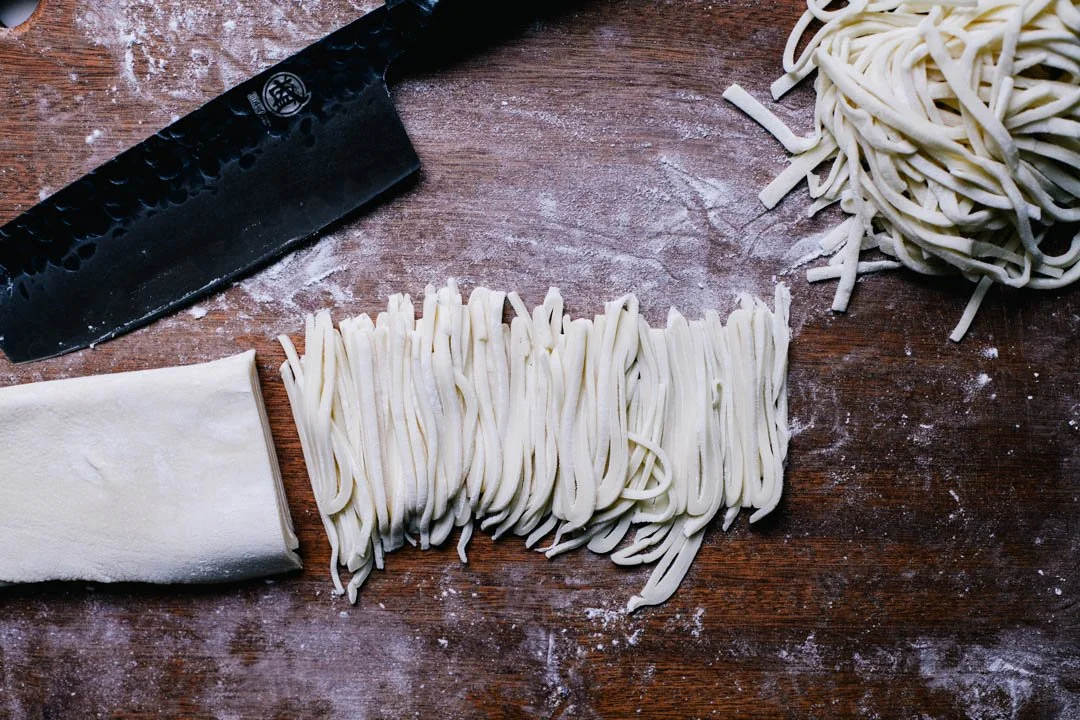
Fold the sheet into loose layers: lift the far edge of the dough and fold it back towards you by about 5–7cm, then repeat, gently layering the dough back and forth like folding a ribbon or making a loose accordion. Avoid pressing down on the folds — they should remain light and well-floured so the strands separate easily after cutting.
Using a sharp knife, cut across the folded dough into strips of your preferred thickness, typically 1–2mm for everyday noodles.
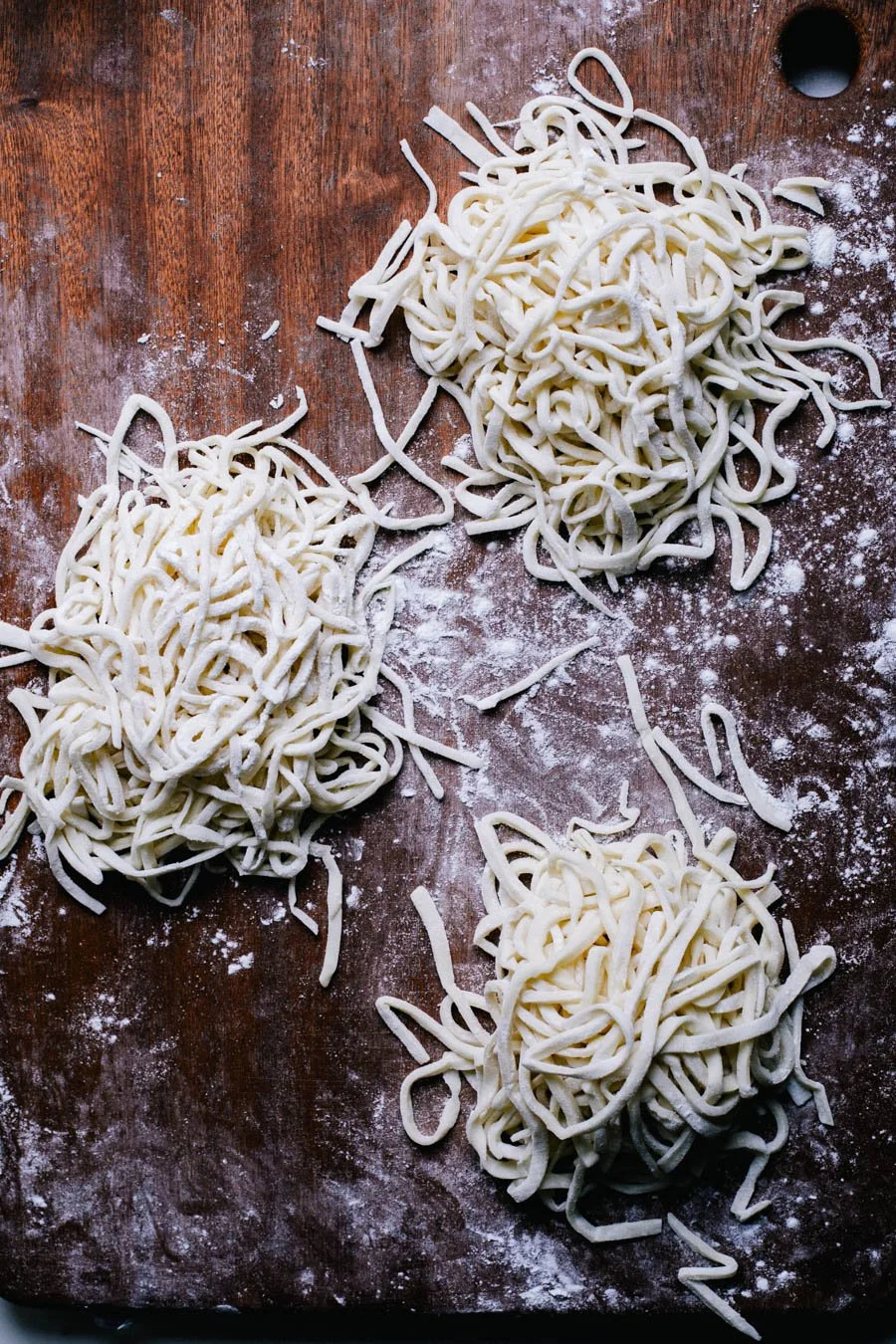
Toss the cut noodles generously with flour and gently shake them loose to separate the strands.
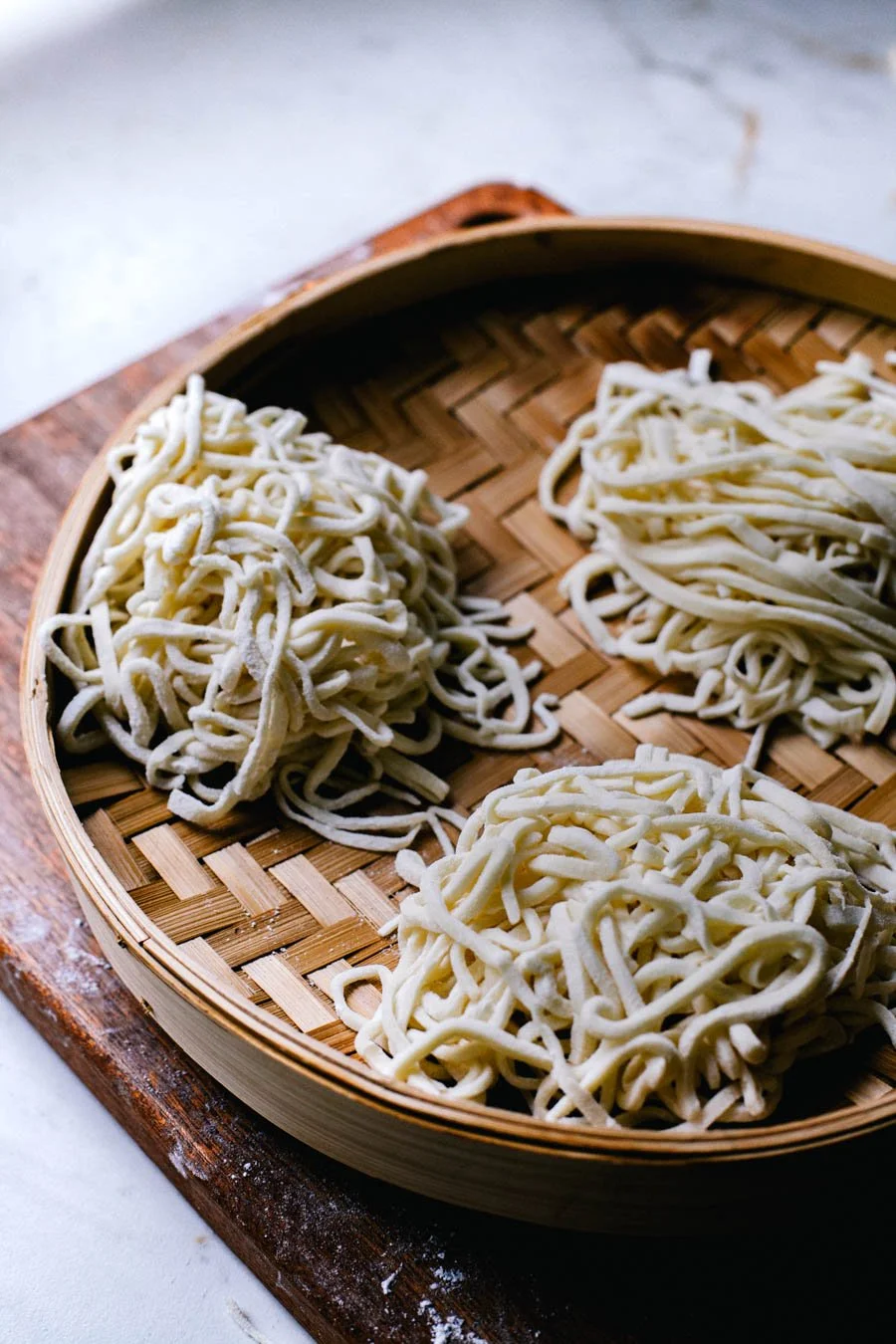
Cook immediately, or divide into portions, dust well with flour and freeze. Fresh noodles do not keep well in the refrigerator, as they tend to stick together and lose their texture.