The Classic Beijing Baozi
北京包子
English: The Classic Beijing Baozi
Chinese: 北京包子
Pinyin: beijing baozi
Literal: Beijing baozi
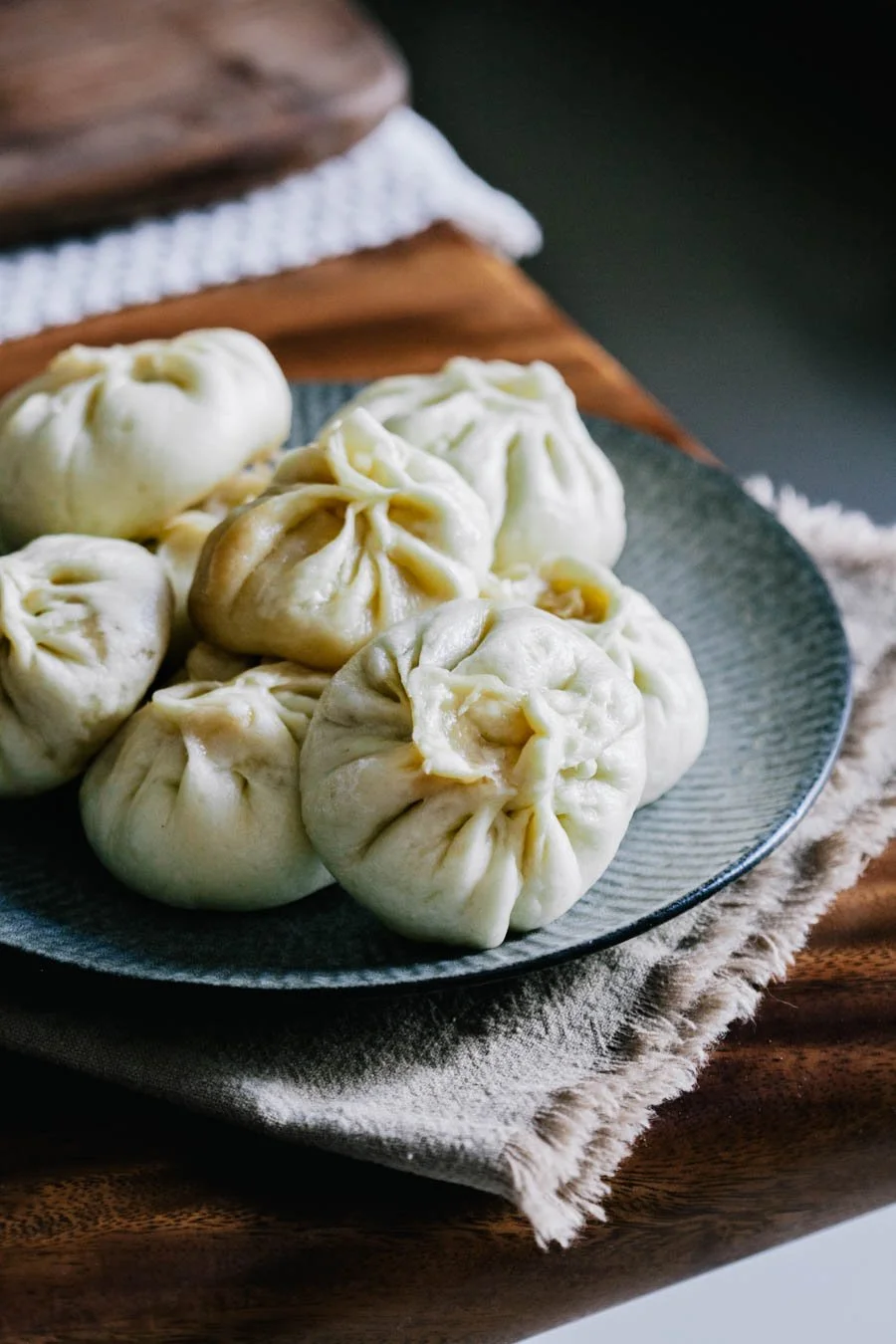
Most people are familiar with baozi. They’re found all across across China, Chinatowns and Chinese restaurants throughout the world. And yet the Beijing baozi - the city’s own version - rarely travels beyond the capital. We’re talking about the king of all steamed buns here. It’s not thick and fluffy like a Cantonese char siu bao, nor dense and bread-like like a Shanghai shengjianbao. Instead, Beijing baozi are wrapped in a dough that is thin, slightly translucent, sticky at the edges and gently chewy, stretched tight around a filling of juicy pork and leek.
I’ve spent years eating baozi in Beijing, searching for the ideal version. The recipe below brings together that time and obsession: a dough that is thin but chewy - the key to any Beijing baozi - and a stuffing that relies on well-worked minced pork but with an added secret ingredient of stock set with gelatine.
Baozi are what keep Beijing moving. From early morning until late at night, thousands of bakers across the city turn them out in ceaseless rhythm, feeding delivery drivers, construction workers, night-shift guards, and office workers on their lunch break. One is a snack. Three is a cheap meal. Half a dozen will set you up for a hard workout.
If you master just one Beijing recipe, make it this one. It isn’t easy - the folds take practice, the dough demands attention - but once your hands learn the rhythm, it becomes addictive. If I had to choose a single Beijing food to live on, it would almost certainly be baozi.
Makes 12-14 buns
Ingredients
For the stock gelatin
180 ml pork or chicken stock
1 teaspoon gelatin powder
For the dough
500g All-Purpose flour
240-260ml lukewarm water (about 105-115°F / 40-46°C)
2-3g of dried yeast
1 teaspoon sugar
¼ teaspoon baking powder
1 tablespoon vegetable oil
For the stuffing
400g ground pork (70% lean / 30% fat)
3-4 leeks, finely minced
1 tablespoon ginger, finely minced/grated
3-4 tablespoons water
3 tablespoons light soy sauce
2 tablespoons Shaoxing wine
1 tablespoon sesame oil
1 tablespoon oyster sauce
½ teaspoon white pepper
½ teaspoon salt
1 teaspoon sugar
Method
For the stock gelatin
Make the stock gelatin. This step can be done well in advance. Pour the cold stock into a small saucepan.
Sprinkle the gelatin evenly over the surface and let it bloom for 5 minutes (exact method may differ from brand to brand, so follow your packet’s instructions).
Heat gently over medium heat, stirring constantly, until the stock just reaches a simmer and the gelatin is fully dissolved. Do not boil.
Pour into a shallow container and refrigerate for 1–2 hours, until fully set.
Once firm, cut the gel into small, pea-sized cubes. Keep chilled until needed.
For the dough
Dissolve the sugar in the lukewarm water. Sprinkle the yeast over the surface, stir gently, and leave for 5–10 minutes until frothy.
In a large bowl, whisk together the flour and baking powder.
Make a well in the centre and add the yeasted water and vegetable oil. Mix with chopsticks or a spatula until a shaggy dough forms.
Turn out onto a lightly floured surface and knead for 8–10 minutes, until very smooth, firm, and only slightly sticky. The dough should be pliable but denser than bread dough. Avoid adding excess flour.
Place the dough in a lightly oiled bowl, cover, and rest in a warm place for 30–60 minutes. The dough should not double in size - expect only a 25–50% increase. It should feel dense when pressed, not airy or sponge-like.
For the filling
In a large bowl, combine the pork, ginger, soy sauce, Shaoxing wine, oyster sauce, white pepper, salt, and sugar.
Beat in the water (a method known as 打水 or da shui). This will give the filling a springy texture.
Using chopsticks or a fork, stir the mixture in one direction only. Gradually add the water, one tablespoon at a time, waiting for each addition to be fully absorbed before adding the next.
The mixture will become glossy, sticky, and paste-like - this is key to a juicy, cohesive filling.
Add the minced leeks and continue stirring in the same direction until evenly combined.
Drizzle in the sesame oil and mix gently to finish.
Gently fold in the chilled gelatin cubes. Do not overmix, or they will break down.
Cover and refrigerate for at least 1–2 hours, preferably overnight. This step firms the filling and makes wrapping much easier.
For the baozi
Punch down the rested dough and knead briefly (1–2 minutes) to remove large air pockets.
Roll into a log and divide into 12–14 equal pieces.
Roll each piece into a round wrapper, keeping the edges thinner than the centre.
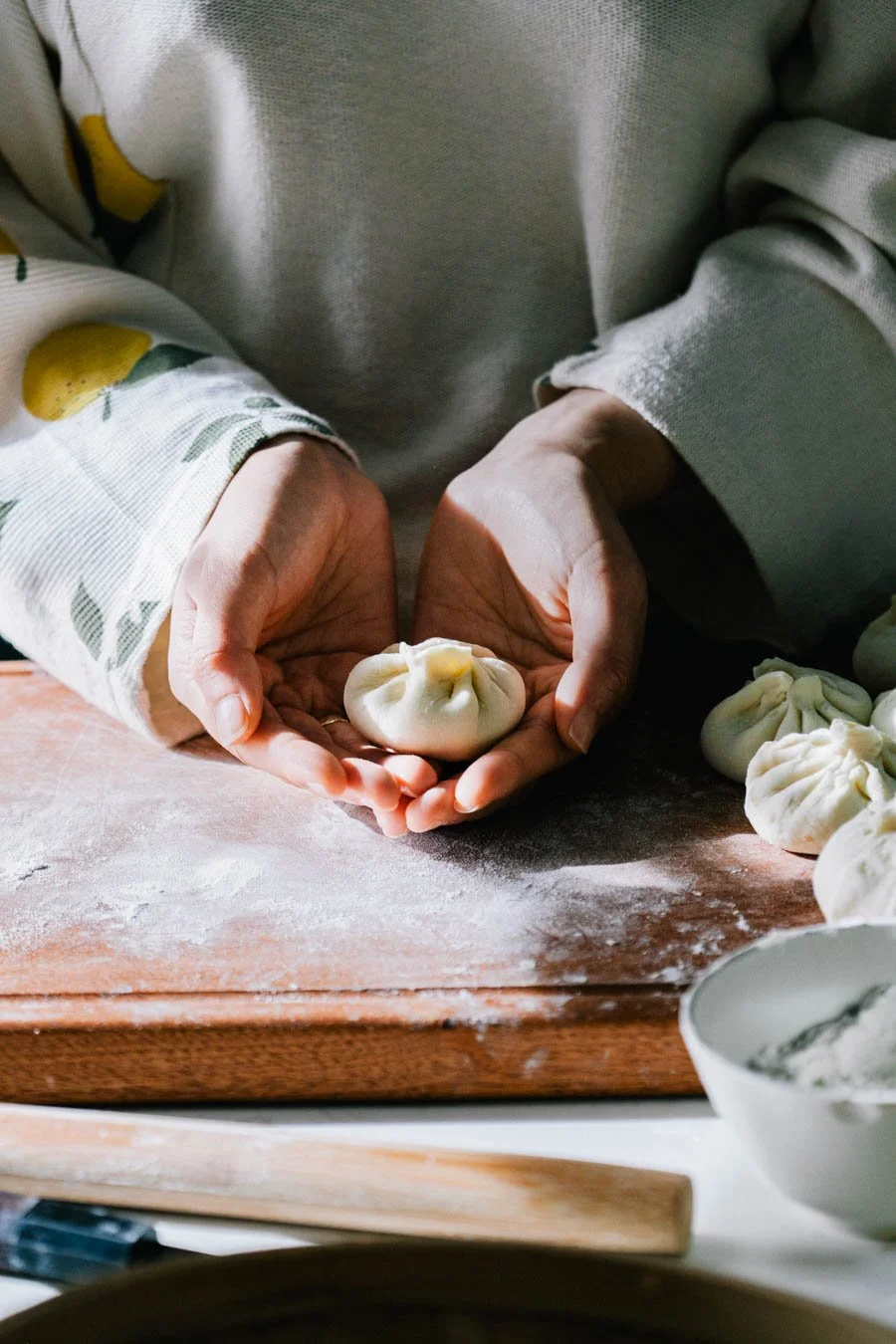
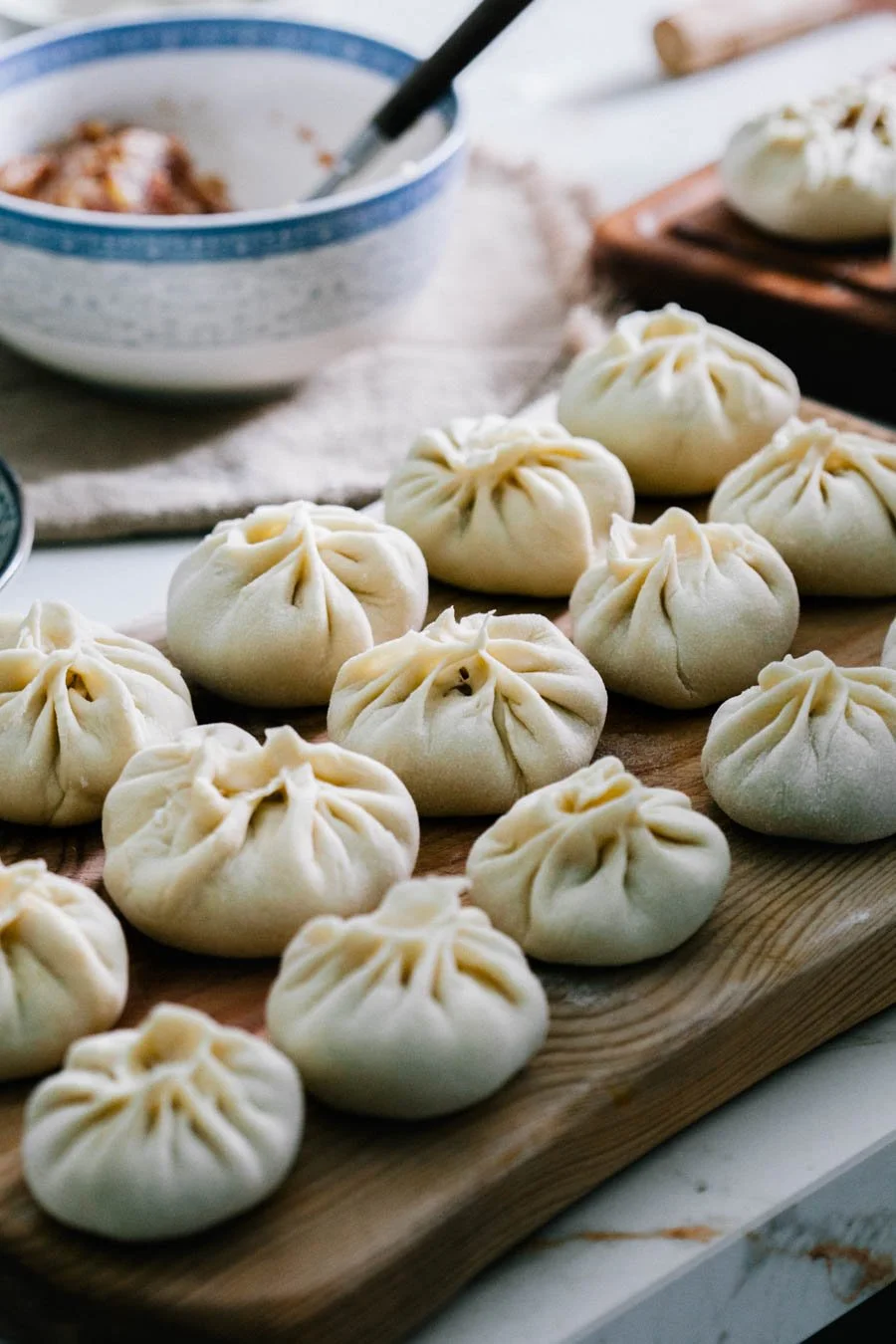
Place a generous spoonful of filling in the centre and pleat to seal (no need to be too neat, just fold the sides up and pinch and twist the top until sealed).
Place each baozi on a small square of parchment paper in the steamer basket, leaving space between them.
Rest for a final 15–20 minutes, until slightly puffed.
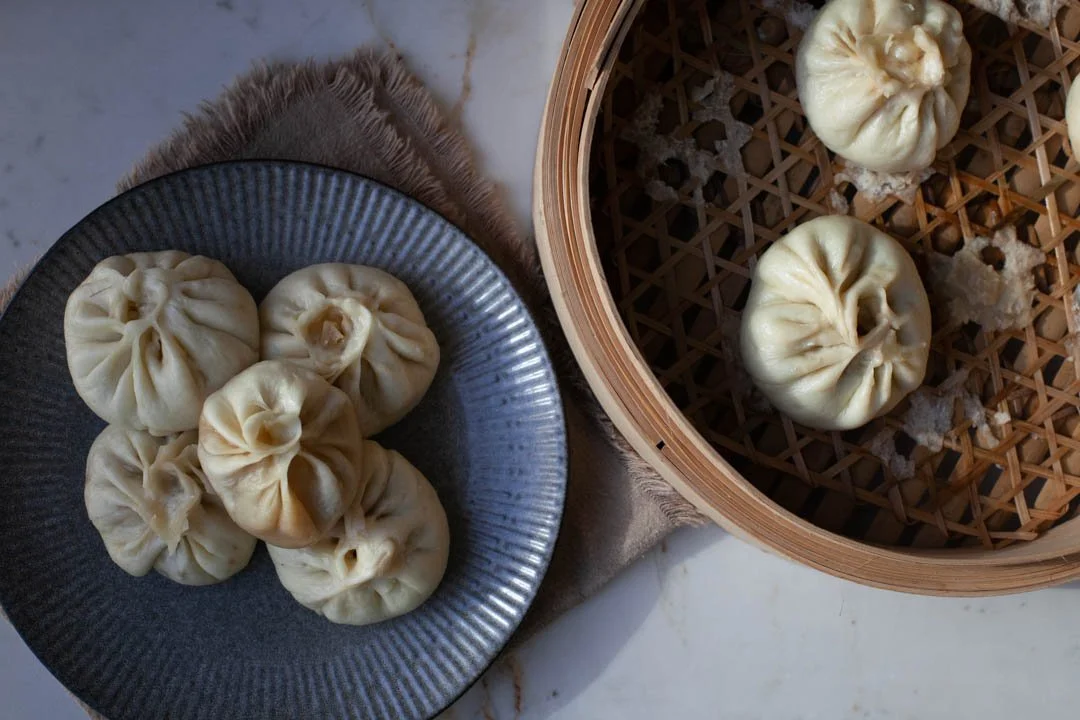
Steam over vigorously boiling water for 15–18 minutes, depending on size.
Critical step: Turn off the heat and leave the baozi in the steamer, lid closed, for 5 minutes before opening. This prevents collapse from sudden temperature change.