
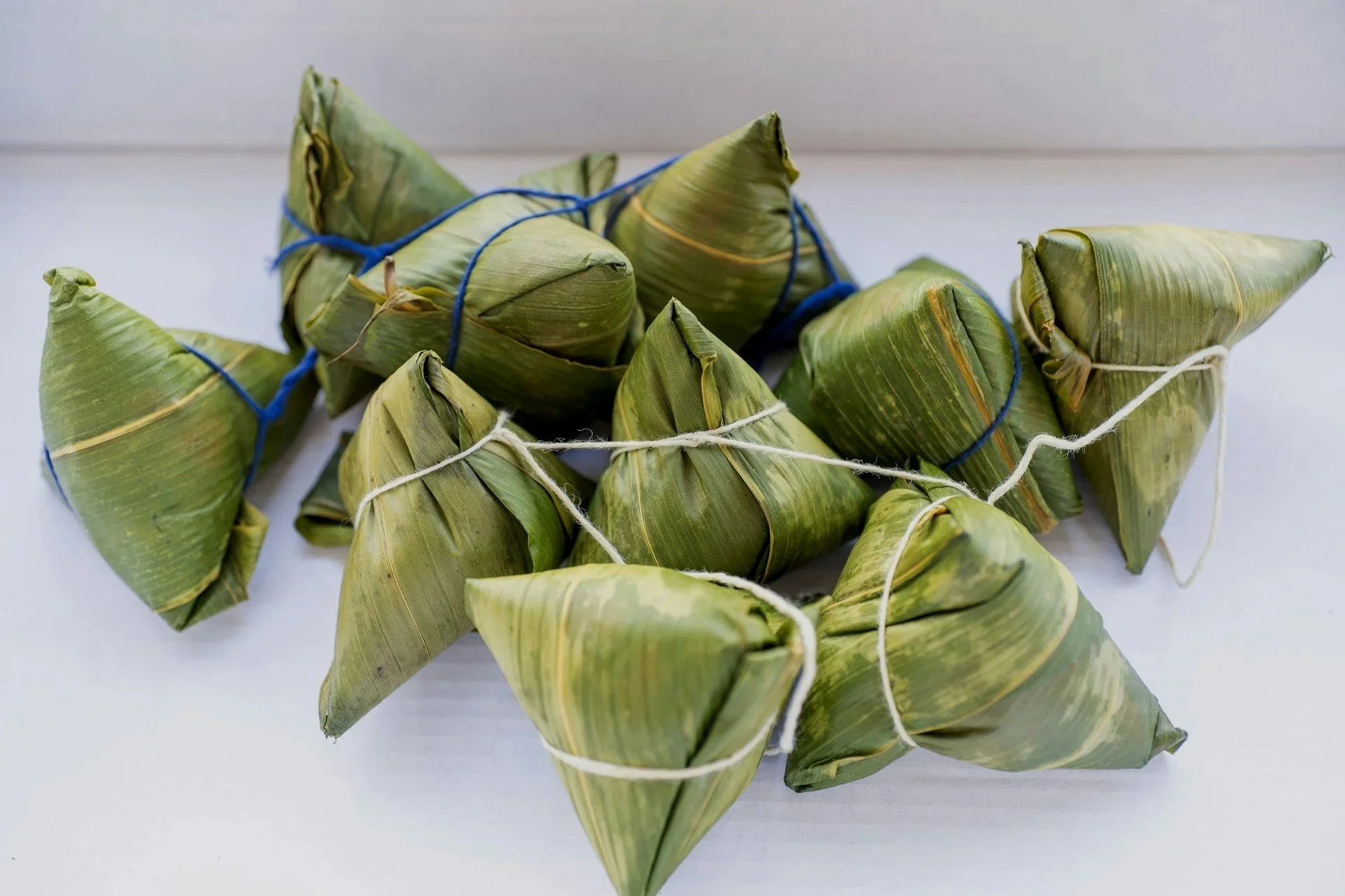
RICE DUMPLINGS
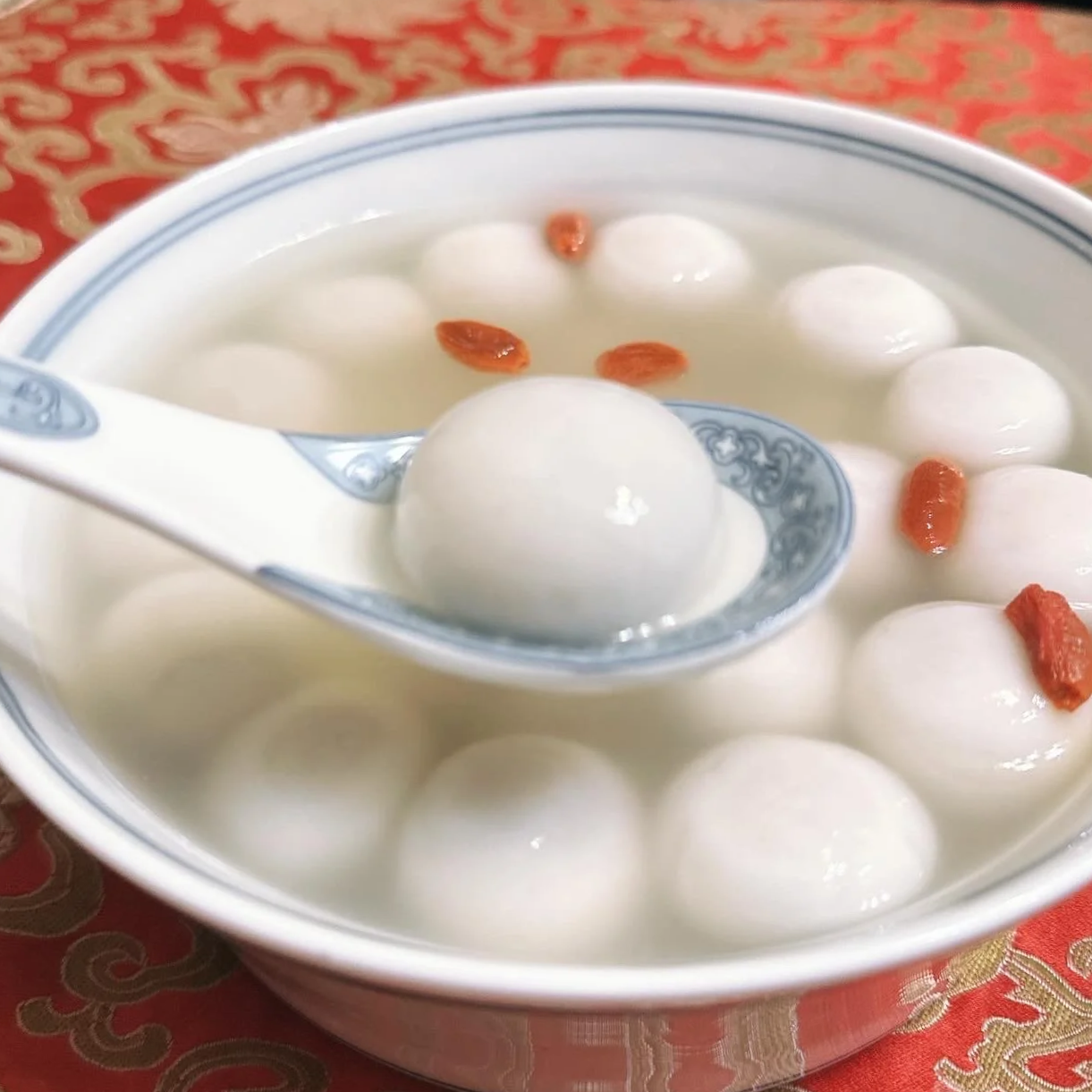
Tangyuan | 汤圆 | tangyuan
Tangyuan are glutinous rice-flour balls (sometimes known as yuanxiao), stuffed and served in a soup, traditionally eaten for Lantern Festival across China. They are supposed to resemble a full moon which in turn symbolises completeness, reunion and togetherness. In the north, the stuffing is usually sweet - black sesame paste, peanut paste (my favourite) or red bean. In the south, there can be savoury fillings of pork, shrimp, mushrooms of vegetables. They are super sticky and gooey, like a mochi on the verge of falling apart.
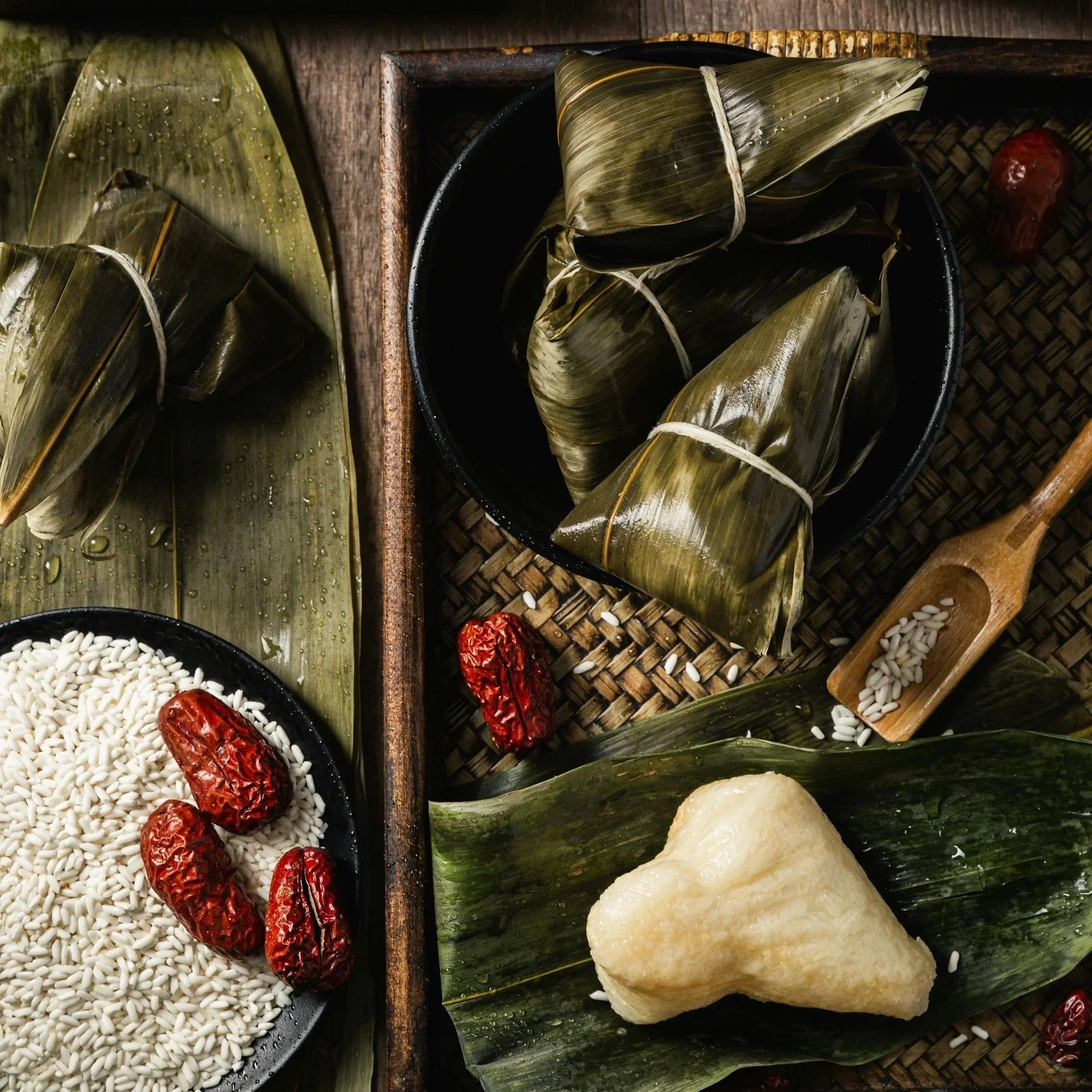
Image by Mae Mu
Zongzi | 粽子
Is zongzi a dumpling? Perhaps not. They are large pyramids of sticky rice wrapped around either braised pork (in the south) or red dates or red bean paste in the north. This is all stuffed into a bamboo or reed leaf and then steamed or boiled. They are traditionally eaten for Dragon Boat Festival in June.
Ham Sui Gok | 咸水角 | xianshuijiao
Cantonese fried dumplings made with glutinous rice flour that is deep-fried so the exterior becomes crispy, blistered with a bit of a chewiness, stuffed with a savoury pork and vegetable filling.
Glutinous Rice Chicken | 糯米鸡 | Nuomiji
Again, is it really a dumpling? These are Cantonese lotus-leaf parcels filled with glutinous rice, chicken, mushrooms and sometimes Chinese sausage.
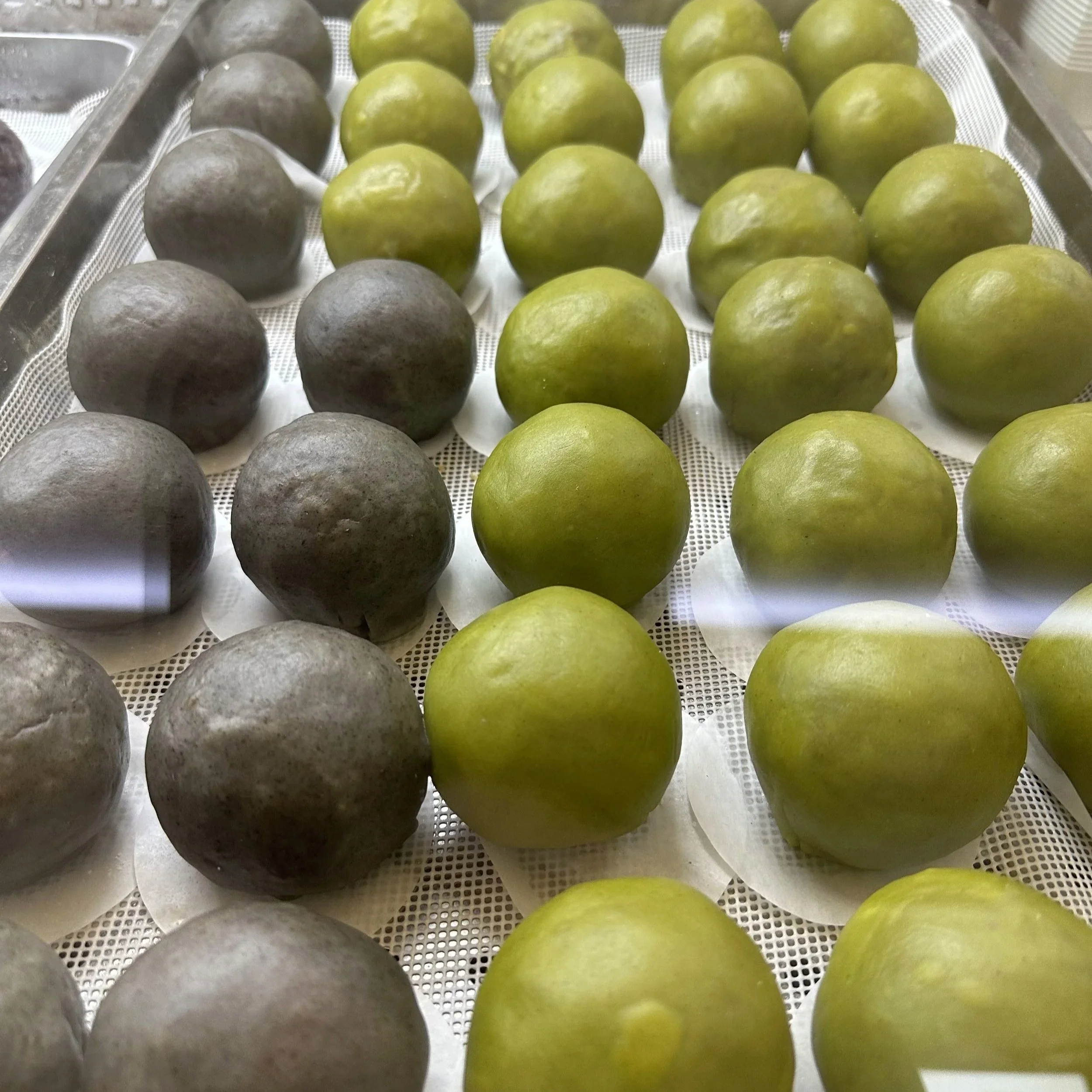
Qingming guo / Qing tuan | 青团
These are similar to mochi but are bright green from the glutinous rice flour flavoured (and coloured) with mugwort or other plants. They are often stuffed with sweet bean paste and are super sticky and fun to eat.
REGIONAL SPECIALITIES
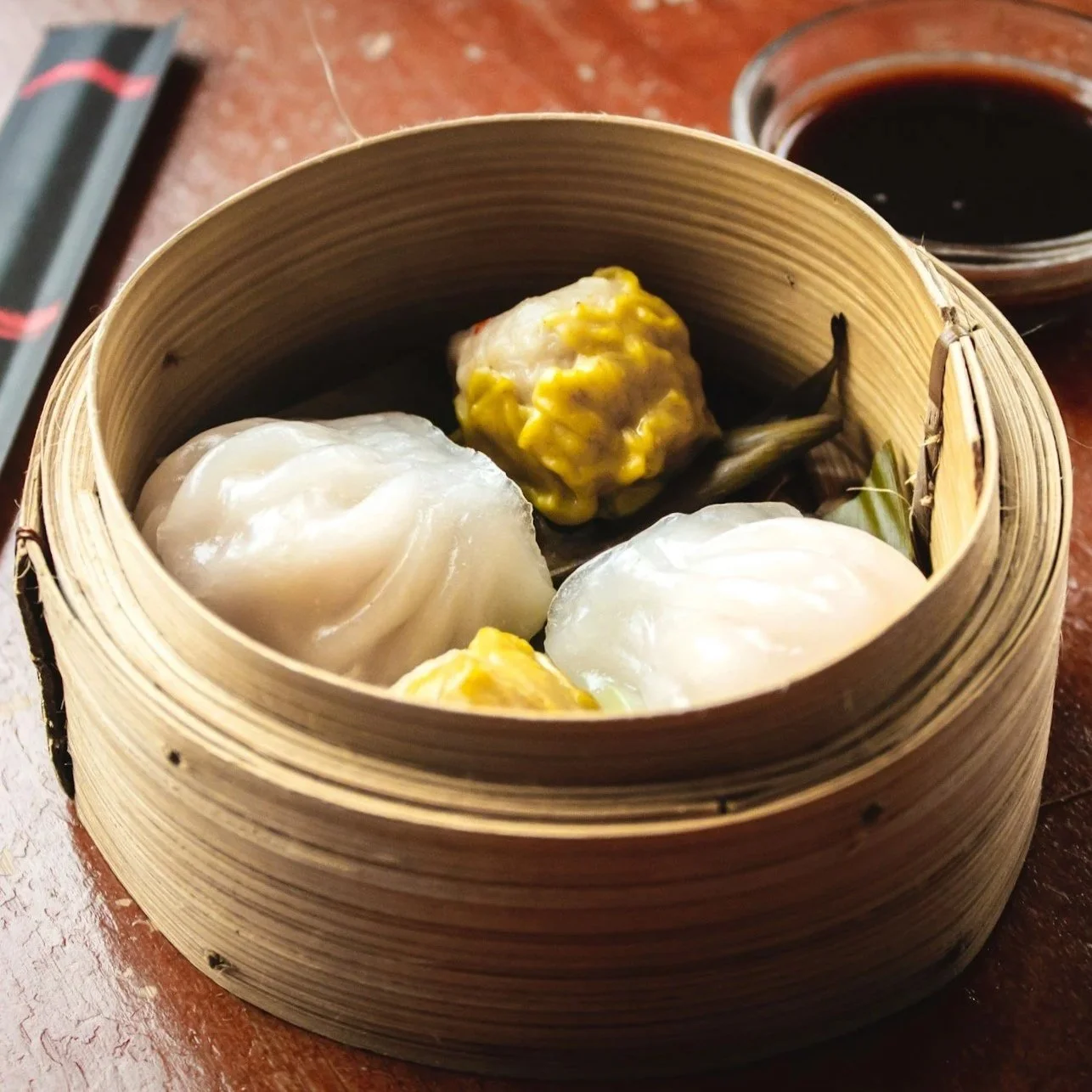
Image by Louis Hansel
Har Gow | 虾饺 | xia jiao
A Cantonese dim sum classic, har gow are delicate steamed dumplings filled with chopped or whole prawns. Their distinctive translucent wrappers are made from wheat starch, giving them a slightly chewy, almost slippery texture that contrasts beautifully with the juicy, sweet shrimp filling. A well-made har gow should be pleated into a neat little parcel and remain translucent enough to show off its filling.
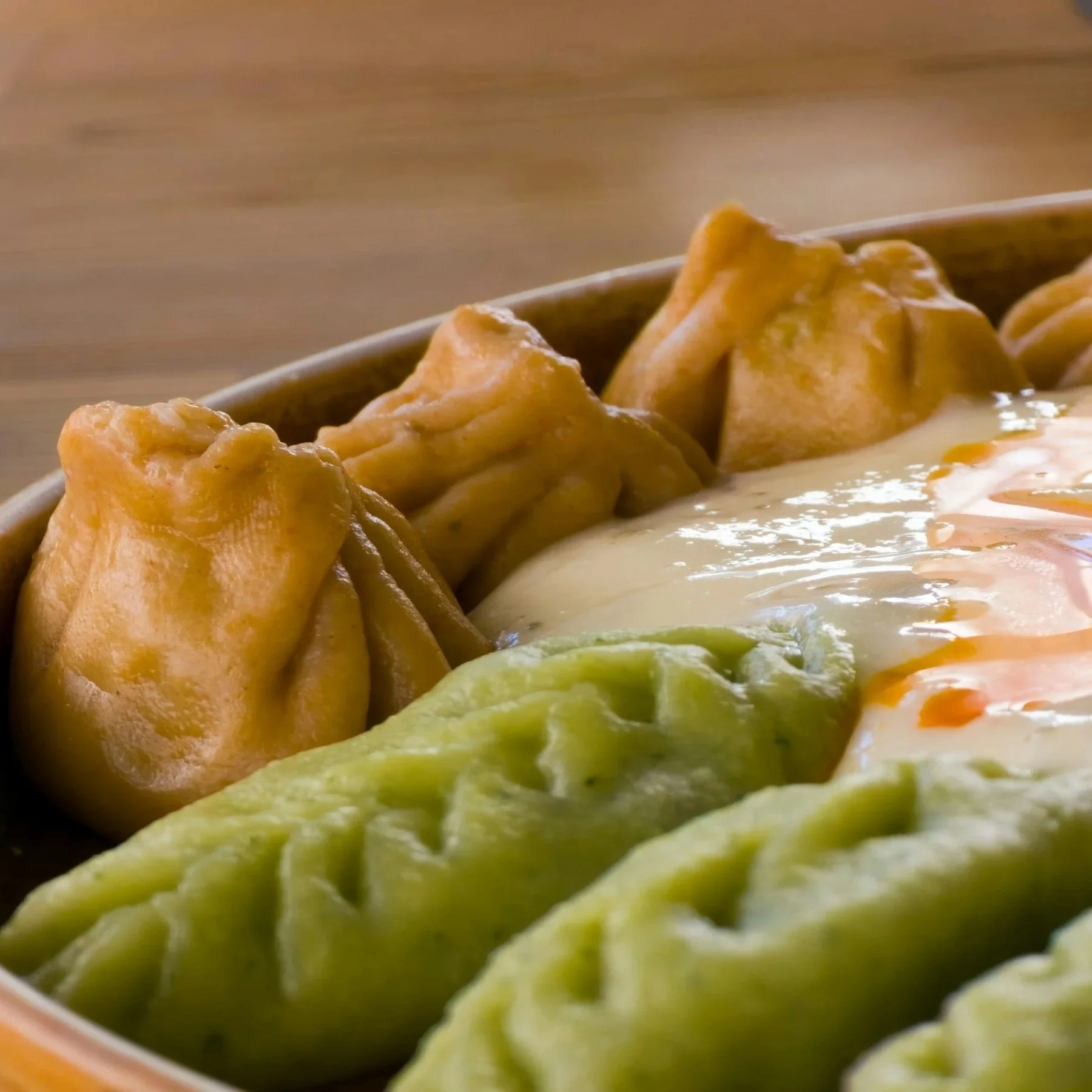
Image by Umut Hasanoglu
Tibetan Momo | མོག་མོག | momo
Originally from Tibet and popular across the Himalayan region, momos are soft, dough-wrapped dumplings usually filled with minced meat, such as yak, beef or pork, alongside onion and spices. They are most commonly steamed, although fried versions are also popular, and are often served with a fiery tomato-based dipping sauce.
Chaozhou Fen Guo | 潮州粉果 | chaozhou fen guo
A steamed dumpling with a translucent, slightly chewy wrapper made from starches. The filling typically combines pork, dried shrimp, peanuts and crunchy vegetables such as jicama. Often served with chilli sauce or soy sauce.
Fish Skin Dumplings | 鱼皮饺 | yupi jiao
A Cantonese speciality in which the wrapper is actually made from fish paste rather than wheat flour. The fish is pounded and worked into a thin, flexible skin, then wrapped around a pork or shrimp filling. They have a wonderfully springy texture and are commonly served in soup or hotpot.
Xinjiang Thin-Skin Dumplings | 薄皮包子 | baopi baozi
Uyghur-style steamed dumplings are made with thin wheat wrappers stuffed with, of course, lamb, onion and black pepper. They’re much fatter than a Northern jiaozi, and can sometimes look like a baozi crossed with a dumpling.