
What is Liangpi? Understanding China's "Cold Skin Noodles"
Understanding any food in China is an undertaking. Tackling noodles, for instance, is a lifelong pursuit; attempting to explore every province, region and town’s local specialty in no easy feat. To prove my point, let’s look at one small corner of the noodle world: liangpi.
Liangpi is usually translated as “cold skin” and, when I first moved to China, I assumed it was a single dish from Shaanxi: a bowl of slippery noodles dressed with chilli oil, vinegar and sesame paste, perfect for a quick summer lunch. But, as so often happens with Chinese food, the reality is more complicated.
Liangpi is not one dish but a family of foods found across Northern China. It includes everything from wheat-based noodles made by washing dough to rice sheets steamed from finely ground rice batter, from translucent ribbons of potato starch to wobbly pea jelly dressed in spicy sauce.
To complicate matters further, the term can refer to the finished dish, but also to the noodles themselves. If we’re being technical, mianpi (”wheat skin”) refers specifically to the wheat-based noodles whereas liangpi refers to the finished and dressed dish, but many cooks use the terms interchangeably, which keeps things confusing.
So what links all of these dishes together? More than anything, I’d argue it is a technique. The “skin” in liangpi refers to sheets of starch that are steamed, cooled and sliced into strips before being dressed and served. Beyond that, ingredients, production methods and seasonings vary from region to region. Even the “cold” part is not always true: some versions are served warm.
Like many Chinese food categories, an entire book could be writing on liangpi but instead, I’ll attempt to simplify it and present an introduction to Cold Skin Noodles.
THE THREE MAIN CATEGORIES
Over the years in China, I’ve come across dozens of types of liangpi but, broadly speaking, they fall into three categories: wheat liangpi (mianpi | 面皮), rice liangpi (mipi | 米皮), and a third group that can loosely be described as starch-based liangpi.
Wheat Liangpi | 面皮
Perhaps the most well-known of all liangpi in Northern China are the wheat flour versions, most closely associated with Xi’an and the Guanzhong Plain. These are not, however, simple wheat noodles. The technique is rather unusual.
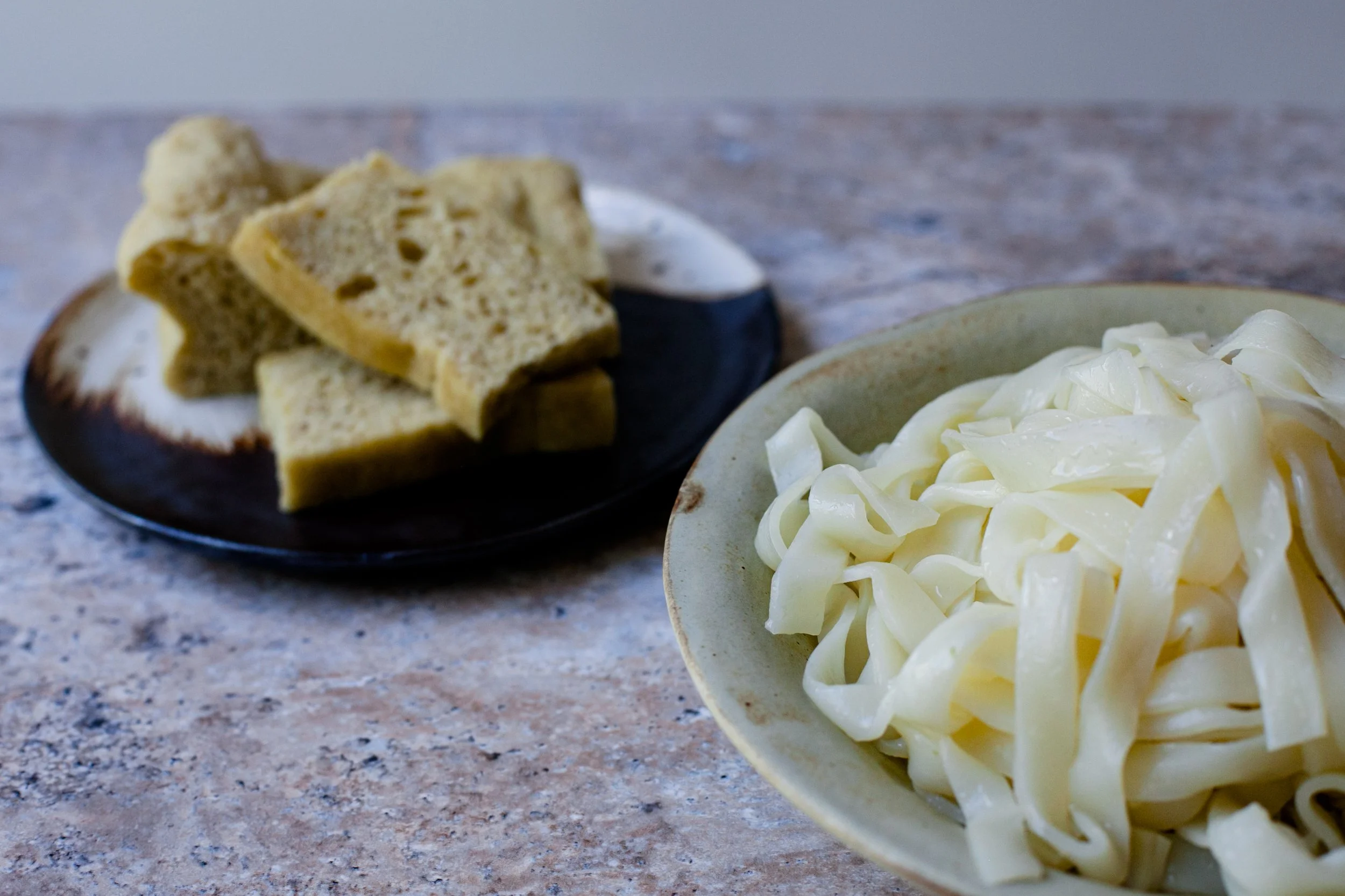
A wheat dough is washed again and again in water until the starch dissolves into the liquid and only the gluten remains. The starchy water is then left to settle overnight. By morning, a layer of white starch has collected at the bottom of the bowl. The water is poured away, the starch stirred into a slurry, and the mixture steamed into thin sheets.
The remaining gluten is not discarded. It is steamed until it puffs into a sponge-like mass, then cut into cubes.
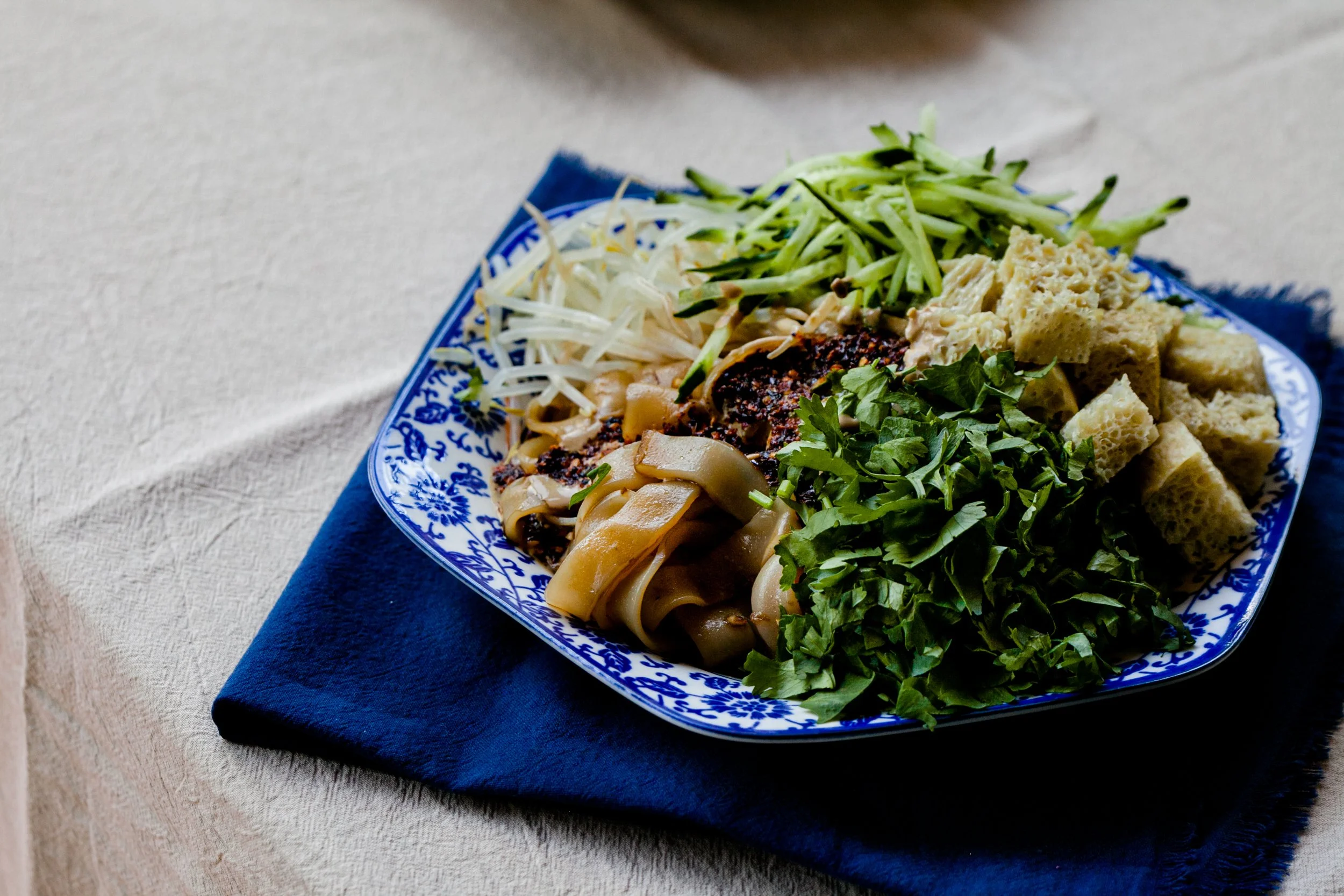
Together, these two ingredients form the basis of many liangpi dishes. The starch sheets are sliced into noodles that are smooth, springy and slippery. They are dressed with vinegar, soy sauce, garlic and chilli oil, and in Xi’an often sesame paste, before being topped with cucumber, coriander and pieces of wheat gluten.
Rice Liangpi (米皮)
Found throughout parts of Shaanxi and neighbouring provinces, rice liangpi is made by soaking rice, grinding it into a batter and steaming it into sheets.
Before they are cut into noodles, the sheets resemble Cantonese changfenpi (肠粉皮). The two are similar enough that one can substitute for the other in a pinch, but the process and texture are different. Rice liangpi is made from rice alone, then cooled before serving.
Shaanxi is an unusual province. It borders Inner Mongolia to the north and Sichuan to the south, and its food reflects both worlds. The wheat fields of the Guanzhong Plain dominate the north, while rice and chilli become more common as you travel south. Where mianpi represents one side of Shaanxi, mipi reflects the influence of the rice-growing regions beyond the Qinling Mountains.
The most famous version is Qinzhen mipi (秦镇米皮), named after a town southwest of Xi’an. Rather than washing dough, soaked rice is ground into a slurry and steamed into soft, opaque sheets. The resulting noodles have a tenderness that wheat liangpi lacks. They cling to one another, soak up dressing and have a habit of slipping straight from your chopsticks.
The dressing is distinct as well. Qinzhen mipi is built around garlic water, vinegar and chilli oil, often with a splash of the starchy cooking liquid used during production. The result is sharper and more direct than many wheat-based versions, with the flavour of the rice still present beneath the seasoning.
Starch-Based Liangpi
Beyond wheat and rice lies a broad collection of starch-based liangpi.
In Northeast China, liangpi may be made from potato, mung bean or corn starch. These noodles are often translucent enough to catch the light, with a chew that sits somewhere between a noodle and a jelly.
While they share the same basic form, they represent a different branch of the liangpi family. In Gansu, the definition can be broader still. Vendors use buckwheat, pea or potato flour to create local varieties that range from black and amber to pale yellow and white.
THE ORIGINS
The origins of liangpi are difficult to pin down with certainty. Many local accounts in Shaanxi trace it back to the Tang dynasty, and some even place its beginnings earlier, during the Qin. This history however, belongs more to oral traditions, than written record, although I admit my research could go deeper. What is obvious, is how woven into regional Shaanxi identity liangpi is.
One of the most common legends on the invention of liangpidescribes a drought in Shaanxi, when farmers were unable to produce rice of sufficient quality for imperial tribute. According to the story, a farmer named Li Shier decided to instead ground the rice into a paste, steam it into thin sheets, and cut it into strips. When presented to the emperor, he was said to be so pleased that he elevated it to a tribute dish.
Other accounts are more pragmatic, suggesting that liangpideveloped gradually from existing cold noodle preparations already common in Shaanxi’s summer food culture.
Shaanxi has long been regarded as the home of liangpi, and by the late imperial period, cold noodle stalls were already established in cities such as Chang’an (modern Xi’an).
In English-language writing, liangpi is often used to refer specifically to the wheat-based version, with rice-based styles treated as regional variations. In Shaanxi itself, however, both traditions have deep roots. They likely developed alongside one another, shaped by different grain economies across the province.Even within Shaanxi, liangpi is not a single tradition but a collection of local styles. If anything, the province contains the widest concentration of variation, rather than a single defining form.
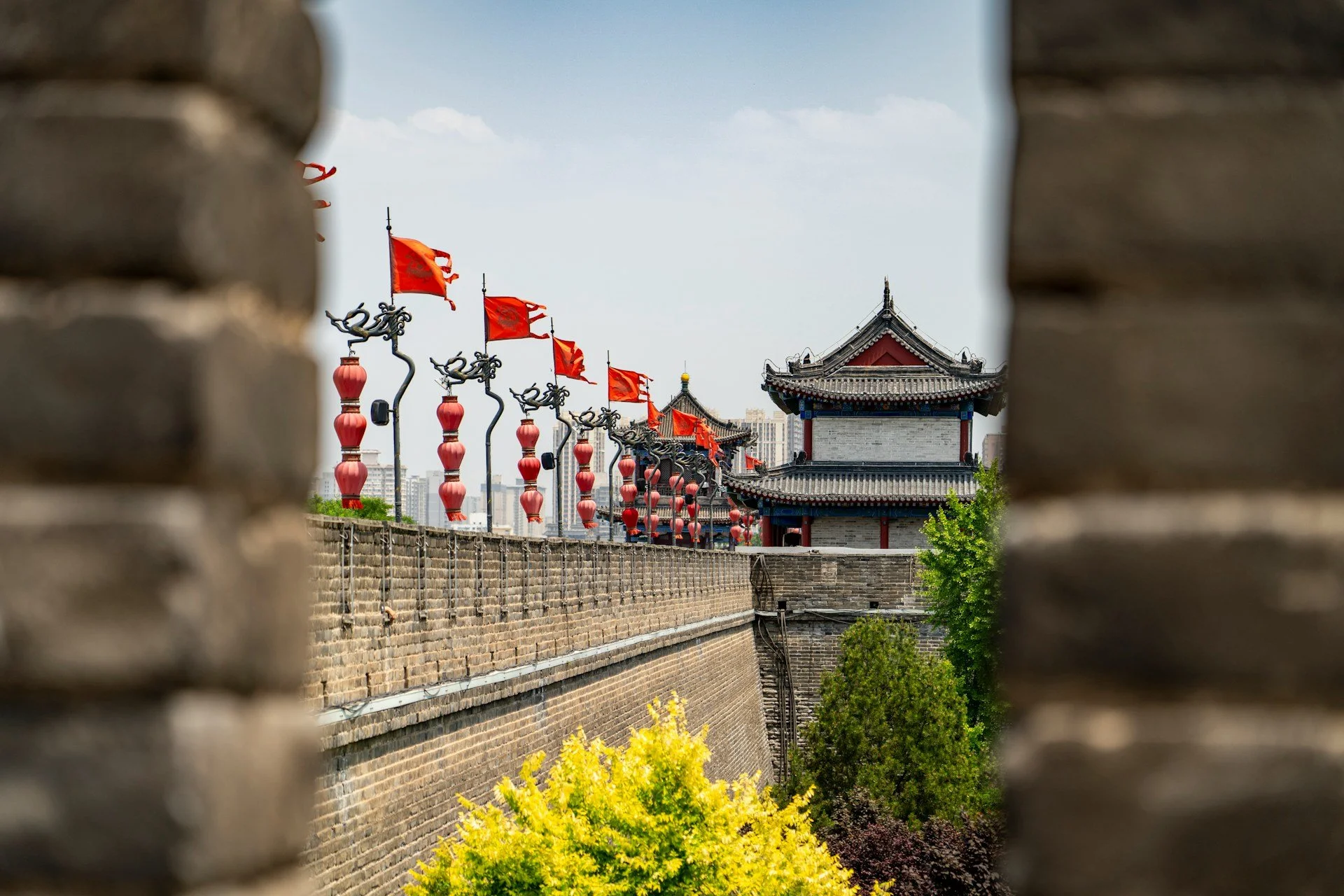
Photo by Yihuan Wang - Unsplash
THE MANY MANY MANY TYPES OF LIANGPI
A incomplete guide.
The problem with trying to definitely list out every liangpi is there are almost infinite variations. On one trip through Shanxi, I was served a bowl of liangpi is a sharp vinegar broth, closer to a sour soup than a dressing. A few hours further along the road, another version appeared entirely different again: thicker, baton-like sheets of wheat starch in a sweeter, heavier sauce.
And so, this is in no way this is an exhaustive list of liangpi in China. It is a list of versions that I’ve encountered over my time in China. I’ve gone back through my notebooks, scrolled through my phone notes and compiled everything into liangpi dishes I’ve personally tried or heard about. This is not a map. It is a set of encounters.
SHAANXI
Xi’an Sesame Liangpi | 西安麻酱凉皮 | shaanxi zhima liangpi
Probably the most famous and recognisable liangpi styles in Northern China. Wheat starch sheets are cut into strips and coated in a sauce built around sesame paste, vinegar, soy sauce and chilli oil. The result is dense, nutty and rich, with cucumber and coriander often added for contrast. This is what most people think of when they hear liangpi.
Wheat Gluten Liangpi | 面筋凉皮 | mianjin liangpi
A variation of the Xi’an style with cubes of steamed wheat gluten. The mianjin acts like a sponge, absorbing the sesame-vinegar dressing and chilli oil.
Qishan Rolled Liangpi| 岐山擀面皮 | qishan ganmianpi
A heavily pressed wheat starch sheet from Baoji and surrounding areas. The texture is denser and more elastic than Xi’an liangpi, often cut into shorter, thicker strips. Locally it may simply be referred to as mianpi or liangpi zi, depending on context.
Hanzhong Rice Liangpi | 汉中米皮 | hanzhong mipi
A rice-based liangpi from southern Shaanxi, often served either cold or warm depending on season. The texture is soft, closer to rice sheets than wheat starch noodles.
Qinzhen Mipi | 秦镇米皮 | qinzhen mipi
One of the best-known rice liangpi varieties, named after a town southwest of Xi’an. Rice is ground into a slurry and steamed into thin sheets. The texture is smooth and slippery, and the noodles tend to cling together before being loosened with sauce. Traditionally it is cut with a wide cleaver-like knife into broad ribbons.
Fufeng Griddled Liangpi | 扶风烙面皮 | fufeng laomianpi
A regional variation where the sheets are lightly pan-heated before serving, giving the surface a slight firmness and toasted edge in places.
GANSU
In Gansu, liangpi often appears under names such as rangpi or niangpi, reflecting local pronunciation and preparation styles. The region has a wide spectrum of starch-based noodles, often shaped by buckwheat, wheat, or potato starch traditions.
Lanzhou Niangpi | 兰州酿皮 | lanzhou niangpi
A common street version often sold as thick, square-cut sheets rather than long strips. The texture is dense and chewy, usually dressed with vinegar, chilli oil and a sharp mustard-based sauce.
Wuwei Mianpizi | 武威面皮子 | wuwei mianpizi
Thick, block-cut starch sheets, sometimes approaching finger-width in size. They are often cut into cubes or slabs rather than noodles, with variations in colour from white to yellow depending on starch composition.
XINJIANG
Xinjiang liangpi reflects Central Asian and northwest Chinese influences, often with heavier seasoning and more liquid-based sauces. I’ve had a few different types in different parts of Xinjiang, but unfortunately, I didn’t catch the local names.
In places such as Shihezi and surrounding towns, liangpi is often extremely thin and smooth, served with a rich, broth-like sauce rather than a dry dressing. The dish can sit somewhere between noodles and soup.
NINGXIA
Rolled Liangpi | | 大武口卷凉皮 | dawukou juan liangpi
A rolled version where liangpi sheets are filled and wrapped into a portable bundle, similar to a cold burrito.
Lamb Liver Liangpi | 盐池羊肝凉皮 | yanchi yanggan liangpi
A regional variation where slices of stir-fried lamb liver are added on top, creating a rich, savoury contrast to the cold starch sheets.
INNER MONGOLIA
In parts of western Inner Mongolia, liangpi is often referred to as mianjing (面精), especially when paired with wheat gluten.
Bayannur Mianjing | 巴盟面精 | bameng mianjing
Thin wheat starch sheets served with chilli, vinegar and garlic-based sauces. The texture is smooth and elastic, often cut into wide ribbons.
QINGHAI
Yellow Liangpi | 黄凉皮 huang liangpi
Golden-coloured starch noodles with a smooth, slightly firm texture, often served with a sharp vinegar-chilli dressing.
Black Liangpi | 黑凉皮 | hei liangpi
A darker variation, typically thicker and more robust in texture, sometimes made using buckwheat or mixed starches.
THE REST OF THE NORTH
Beyond these regions, liangpi appears in many local forms shaped by available starches and regional taste.
Shanxi (山西): Cold noodle dishes often use aged vinegar as a defining seasoning, sometimes closer to soupy mixed noodles than dry liangpi.
Henan (河南): Puyang-style wrapped liangpi (guo liangpi) is served as a handheld roll, where fillings are enclosed in a sheet rather than sliced.
Hebei (河北): Light sesame-based liangpi variations exist, often simpler in seasoning than Shaanxi versions.
Shandong (山东): Some modern versions incorporate vegetable juices such as spinach or pumpkin for colour variation, though these are more contemporary adaptations than long-standing regional traditions.
I’ve have only explored Northern China here, as these are the provinces I know best. Moving south, liangpi changes and adapts, embracing the local spices and ingredients. This list captures only what I have come across in my travels so far. But across towns and villages, countless local versions undoubtedly exist, each shaped by grain, climate and preference.